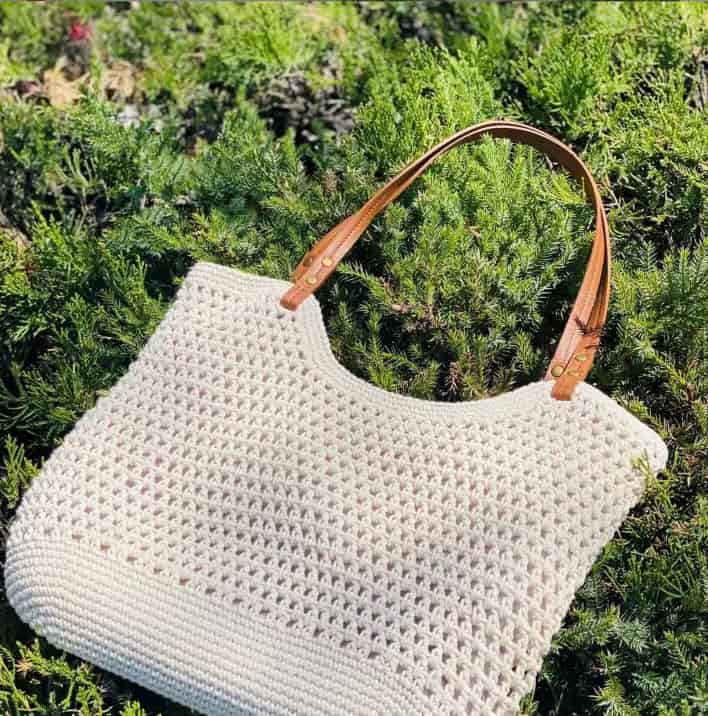
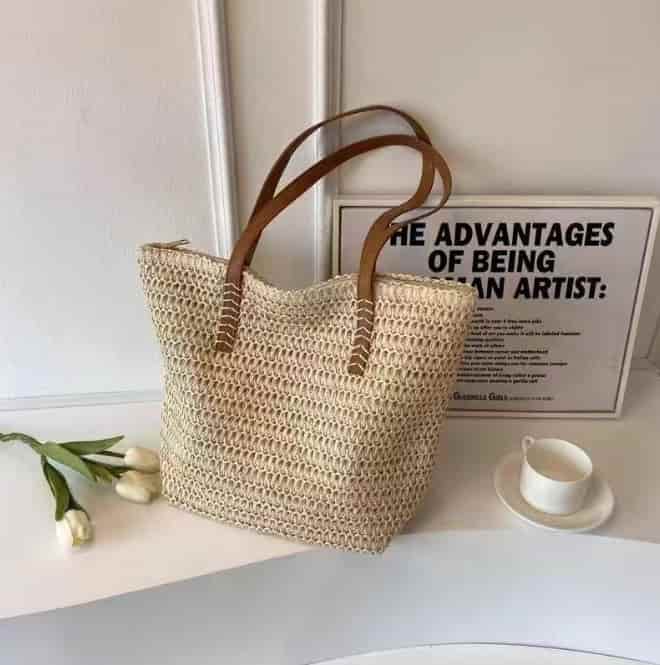
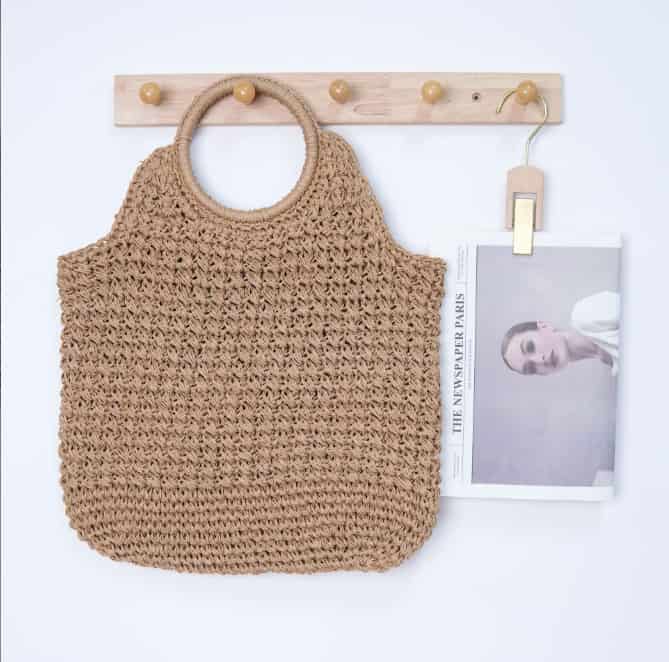
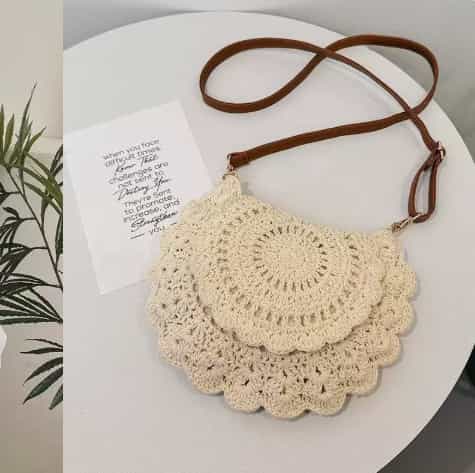
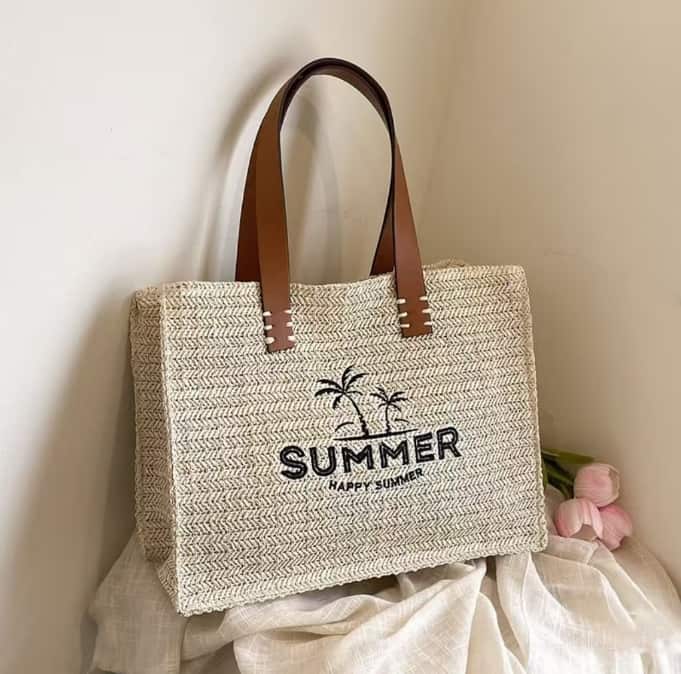
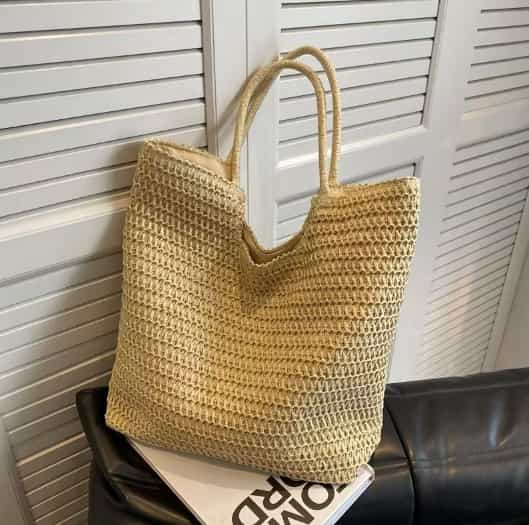
Dyed raffia bags are transforming a natural material into a canvas for brand expression. From earthy neutrals to vibrant corals and mint greens, color gives raffia a new design language.
For brands, the real advantage is customization—matching brand colors, following seasonal trends, all while keeping the natural texture intact.
So, how do you find a dyed raffia bag manufacturer that can deliver custom colors from just 100 pieces MOQ? This guide covers everything you need to know—from dyeing processes to quality control and sourcing tips.
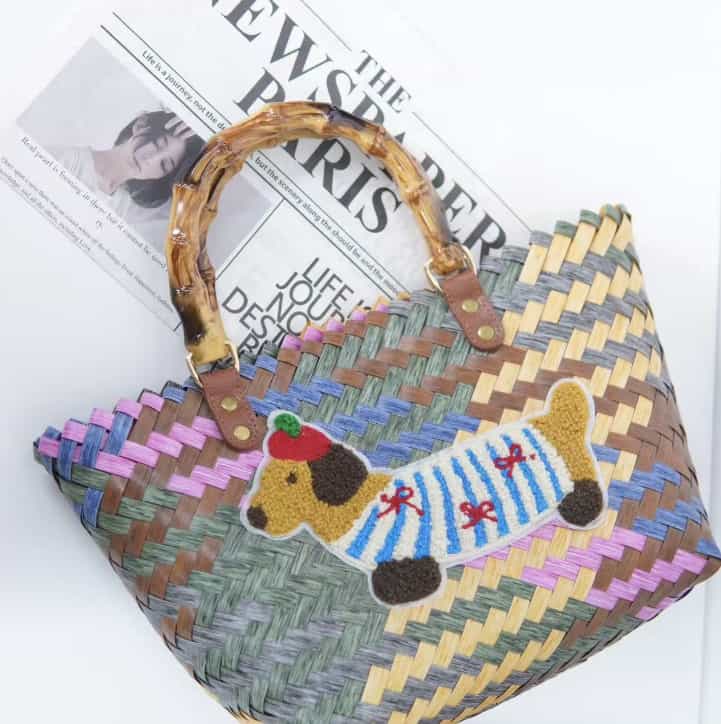
Raffia Dyeing: Process Principles and Material Types
Natural Raffia Dyeing Process
Natural raffia fibers come from palm leaves in Madagascar and other regions. The dyeing process must achieve uniform color penetration while preserving fiber toughness.
According to technical data from professional dyeing facilities, natural raffia dyeing follows these core principles:
Pre-Treatment Stage:
- Low-temperature neutral scouring: Removes natural wax and dust from fiber surfaces
- Chlorine-free bleaching: Uses hydrogen peroxide for gentle bleaching, protecting fiber strength
- Thorough washing: Reduces impurities to ensure even dye uptake
Dyeing Stage:
- Uses eco-friendly reactive dyes or low-irritant plant-based dyes
- Weak acid dye bath with liquor ratio controlled at 1:10~1:15
- Computer-controlled temperature and pH monitoring throughout
Post-Treatment Stage:
- Metal-free eco-friendly fixing agents—replaces traditional copper and chromium salts
- Gradient counter-current washing—gradual temperature reduction in stages
- Low-temperature setting and drying: temperature ≤65°C to prevent fiber brittleness
Synthetic Raffia Dyeing Process
Synthetic raffia (such as PP raffia, Viscose/lyocell fibers, etc.) uses significantly different dyeing processes:
PP Raffia Dyeing:
- Uses eco-friendly disperse dyes; halogen carriers are prohibited
- Low-temperature gradual dyeing process
- Higher colorfastness—suitable for outdoor and high-frequency use
Lyocell/Viscose Dyeing:
- Cellulose fibers with good moisture absorption, high flexibility, and anti-static properties
- Excellent dyeability—bright, long-lasting colors
- Naturally biodegradable—FSC chain-of-custody certified available
Raffia Dyeing Process Comparison
| Dimension | Natural Raffia | PP Synthetic Raffia | Lyocell/Viscose Synthetic Raffia |
|---|---|---|---|
| Dye Type | Eco-reactive/plant-based dyes | Eco-disperse dyes | Reactive dyes |
| Dyeing Temperature | ≤65°C | ≤85°C | Low-medium temperature |
| Colorfastness | Good (natural material characteristics) | Excellent | Excellent |
| Eco-Certification | Biodegradable | OEKO-TEX available | FSC certified |
| Best Applications | High-end, natural style | Durable, outdoor use | Soft, garment accessories |
| Cost Positioning | Mid-high | Mid-low | Mid-range |
Plant-Based Dyes vs. Eco-Friendly Synthetic Dyes
Dyed raffia bags primarily use two color sources—plant-based dyes and eco-friendly synthetic dyes:
Plant-Based Dyes:
- Derived from natural plant extracts: madder (red), indigo (blue), turmeric (yellow), walnut shells (brown), etc.
- Color characteristics: natural and soft, moderate saturation, subtle variation between batches
- Colorfastness: medium—colors change naturally over time
- Eco-friendliness: fully biodegradable; dye wastewater is environmentally harmless
- Best for: natural aesthetics, bohemian style, sustainable fashion brands
Eco-Friendly Synthetic Dyes:
- Chemically synthesized but meet environmental standards (no banned aromatic amines, heavy metals, etc.)
- Color characteristics: bright and vivid, high batch stability, excellent colorfastness
- Colorfastness: high (Grade 4-5)—sun-resistant, abrasion-resistant
- Eco-friendliness: must meet OEKO-TEX, REACH, and other standards
- Best for: modern urban style, brand custom colors, seasonal color collections
How to Choose the Right Dye Type:
- High-end natural aesthetic → Plant-based dyes (more eco-friendly, stronger color uniqueness)
- Brand custom colors → Eco-friendly synthetic dyes (more precise color control)
- Large-volume production → Eco-friendly synthetic dyes (higher batch consistency)
- Eco-story focus → Plant-based dyes (supports natural dyeing narrative)
How Dyeing Affects Raffia Fiber Performance
Dyeing is not just about “adding color”—it directly impacts the physical properties of raffia fibers:
Effects on Natural Raffia:
- Toughness change: Standard low-temperature dyeing has minimal impact on fiber strength (strength retention ≥95%)
- Softness: Fibers become slightly softer after dyeing, improving hand-feel
- Surface texture: Dyeing gently removes some natural wax, giving a “cleaner” feel
- Moisture absorption: Slightly improved after dyeing
Effects on Synthetic Raffia:
- PP raffia: Dyeing does not significantly change physical properties
- Lyocell: Fibers become softer after dyeing with improved hand-feel
Negative Effects of Poor Dyeing Practices:
- High-temperature dyeing (>85°C) makes natural raffia brittle
- Strong alkaline dye baths corrode fiber surfaces
- Over-washing removes too much natural wax protection
- Insufficient fixing leads to subsequent colorfastness issues
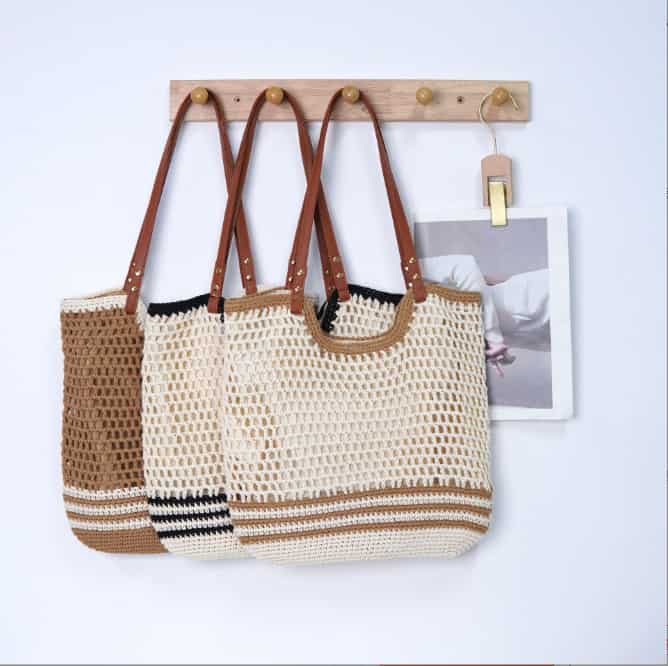
Customization Workflow for Dyed Raffia Bags
From Inquiry to Shipment – Complete OEM/ODM Process
A professional raffia bag manufacturer typically follows this OEM/ODM customization process:
Step 1: Requirements Discussion
- Define product use, style, size, and budget
- Determine target market (US/Europe, Middle East, Asia-Pacific) and corresponding quality standards
- Confirm whether sampling and prototyping are needed
Step 2: Design/Technical Drawing Confirmation
- Client provides design artwork or reference samples
- If no drawings are available, the manufacturer can provide free design concept proposals
- Confirm bag shape, dimensions, and weave texture
Step 3: Color Sampling
- Client provides Pantone color code or physical reference sample
- Small batch dyeing trial: test the target color on a small quantity of raffia
- Color sample approval: adjust formula until color difference is within acceptable range
Step 4: Sample Making (typically 7 days)
- Weave sample using approved colors
- Ship sample to client for approval
Step 5: Sign Contract and Pay Deposit
- Confirm bulk unit price, delivery timeline, and payment terms
- Sign sealed sample confirmation
Step 6: Bulk Production
- Bulk dyeing: process large volumes according to approved color sample
- Weaving production: organize weaving according to order quantity
- In-process quality checks: random inspection every 50-100 pieces
Step 7: Quality Inspection and Shipment
- 100% full inspection or AQL-based random sampling
- Meets export standards (REACH, OEKO-TEX, California Prop 65, etc.)
- Global shipping (sea freight, air freight, international courier)
Customization Timeline Reference
| Phase | Standard Time | Expedited Time | Notes |
|---|---|---|---|
| Color Sampling | 5-7 days | 3-5 days | Need Pantone code or physical sample |
| Sample Making | 7-10 days | 5-7 days | Complex styles may take longer |
| Bulk Production | 30-35 days | 20-25 days | Depends on order quantity |
| Total Timeline | Approx. 6-8 weeks | Approx. 4-6 weeks | Excluding international shipping |
Standard Color Sampling Process
Color sampling is one of the most critical stages in dyed raffia bag customization. A standard sampling process ensures final bulk color accuracy:
Four-Step Sampling Process:
- Color code confirmation: Client provides Pantone code or physical reference sample
- Laboratory trial: Small quantity of raffia is dyed with the target color under lab conditions
- Color difference assessment: Compare the color sample with the target under standard lighting (D65 daylight)
- Formula adjustment: Adjust dye recipe based on color difference; repeat until ΔE ≤ 1.5
Key Control Points During Sampling:
- Use the same batch of raffia as the final bulk production
- Record all process parameters: dye recipe, temperature curve, time, etc.
- Prepare multiple color samples (at least 3): for client approval, factory records, and bulk reference
Common Sampling Issues and Solutions:
| Issue | Solution |
|---|---|
| Significant difference between sample and target color | Adjust dye recipe and re-sample |
| Uneven color on sample | Check pre-treatment; improve washing process |
| Color difference between sample and bulk | Conduct pilot batch (1-2kg) before full bulk dyeing |
| Client requests multiple color changes | Limit free revisions (recommended 3); charge extra beyond that |
Multi-Color Order Operations
Dyed raffia bag customization is not limited to single colors—multi-color orders are becoming increasingly popular:
Multi-Color Types:
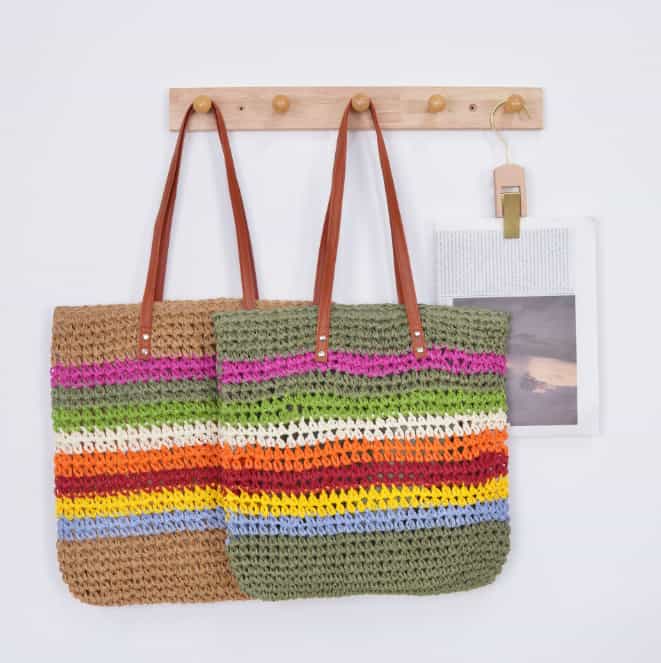
- Gradient dyeing: gradual transition from one color to another
- Color-block weaving: different colors woven on the same bag
- Twisted two-tone: two colors twisted together into one strand
- Multi-color combination: multiple colors within one order (e.g., 100 pieces each of 3 colors)
Key Points for Multi-Color Orders:
- Each color requires separate dyeing—schedule batches efficiently
- Multi-color weaving requires more precise pattern and color placement plans
- Recommended to make 1-2 multi-color sample bags to confirm the color combination
- Lead time for multi-color orders is typically 3-5 days longer than single-color orders
MOQ Rules for Multi-Color Orders:
- Single color: 100 pieces MOQ
- 2-3 colors: 50 pieces per color
- 4+ colors: 30 pieces per color (subject to negotiation)
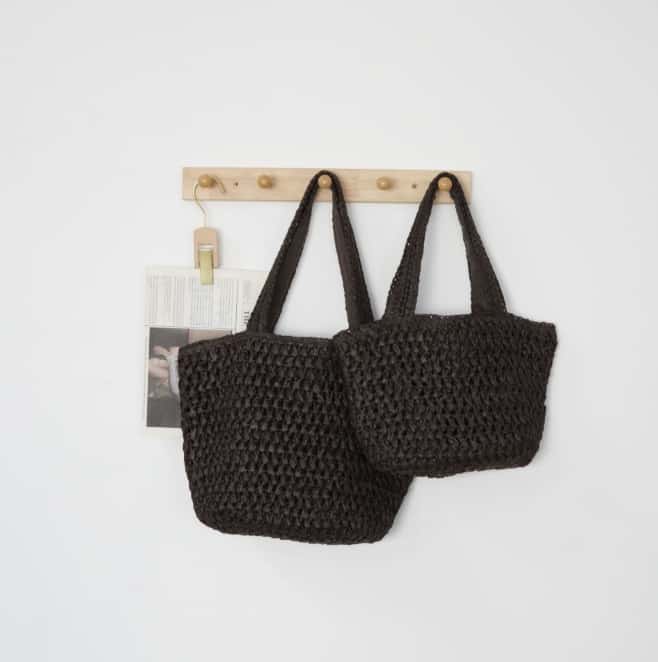
Dyeing Quality and Colorfastness Standards
Export Testing Requirements
The key to export quality for dyed raffia bags lies in colorfastness and chemical safety:
Mandatory Testing Items:
- Banned azo dyes (carcinogenic aromatic amines)
- Soluble heavy metals (lead, cadmium, chromium, nickel, etc.)
- Formaldehyde content
- pH value (must be controlled between 4.5-7.5)
- Dry rubbing colorfastness
- Wet rubbing colorfastness
Additional Testing for Key Markets:
- EU orders: Add SVHC screening and PAHs (polycyclic aromatic hydrocarbons) screening
- US orders: Add Phthalates testing
Common Dyeing Issues and Solutions
| Issue | Possible Cause | Solution |
|---|---|---|
| Color difference (within batch) | Bath temperature/time fluctuation | Computer-controlled temperature; standardized procedures |
| Color difference (between batches) | Raw material batch variation | Use the same batch of raffia for the entire order |
| Fiber brittleness after dyeing | Excessive temperature/chemical damage | Reduce setting temperature to ≤65°C |
| Uneven color/mottling | Insufficient pre-treatment | Improve pre-treatment washing process |
| Wet rubbing color loss | Insufficient fixing | Use eco-friendly fixing agents; multi-stage washing |
Colorfastness Comparison: Natural vs. Synthetic Raffia
| Colorfastness Test | Natural Raffia | PP Synthetic Raffia | Lyocell/Viscose Synthetic Raffia |
|---|---|---|---|
| Lightfastness | Grade 3-4 | Grade 4-5 | Grade 4-5 |
| Dry Rubbing Fastness | Grade 4 | Grade 4-5 | Grade 4-5 |
| Wet Rubbing Fastness | Grade 3-4 | Grade 4-5 | Grade 4-5 |
| Perspiration Fastness | Grade 3-4 | Grade 4-5 | Grade 4-5 |
Industry Interpretation of Colorfastness Grades
Colorfastness grades (1-5) are the core indicators of dyeing quality. Here is a practical guide to each grade:
| Grade | Meaning | Real-World Performance | Best Applications |
|---|---|---|---|
| 1-2 | Very poor | Obvious color loss with light rubbing | Unsuitable for any finished product |
| 3 | Average | Slight color loss with moderate rubbing | Low-end decorative items only |
| 3-4 | Good | No color loss in normal use; slight fading with moderate washing | Acceptable standard for natural raffia |
| 4 | Excellent | No color loss in normal use; minimal fading after multiple washes | Most export order requirements |
| 4-5 | Superior | Slight color loss with strong rubbing; stable after frequent washing | High-end brands, luxury standards |
Minimum Requirements for Export Markets:
- Dry rubbing colorfastness ≥ Grade 4
- Wet rubbing colorfastness ≥ Grade 3-4
- Perspiration colorfastness ≥ Grade 4
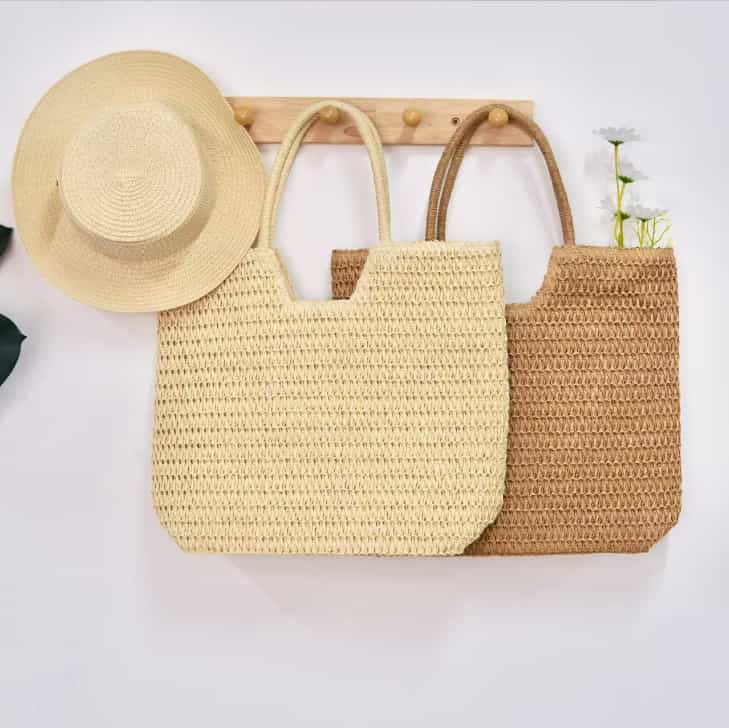
Customization Capabilities and MOQ Explained
What 100 Pieces MOQ Really Means
For many brand clients, “100 pieces MOQ” means a low entry barrier for testing new products. The design logic behind this MOQ:
- Cost sharing for dyeing: Each dyeing batch requires color matching, sampling, and trial runs with high fixed costs. 100 pieces is the minimum economic batch size to effectively spread per-piece dyeing costs.
- Low-risk trial: Ideal for brands to test new colors and styles in the market.
- Flexible production: Supports mixed color ordering (different colors allocated proportionally within one order).
Customizable Dimensions
| Dimension | Options | Notes |
| Color | Pantone matching, sample color, exclusive brand color | Supports gradient dyeing, color-blocking, two-tone weaving |
| Weave Texture | Tight plain weave, twill, chunky weave, herringbone | Can achieve matte or dimensional texture |
| Bag Shape | Square, round, bucket, trapezoid | Supports mini, standard, and oversized sizes |
| Dimensions | Custom length, width, height | Customizable handle drop and curve |
| Functionality | Inner pocket, zipper, magnetic snap, water-resistant treatment | Supports leather trim, metal hardware |
| Branding | Logo embroidery, labels, nameplates | Custom packaging options available |
Cost Analysis by Order Volume
Understanding how order volume affects per-piece cost helps clients make optimal sourcing decisions:
| Order Volume | Dyeing Cost (% of total) | Weaving Cost (% of total) | Total Per-Piece Cost | Best Applications |
|---|---|---|---|---|
| 100-300 pcs | 25-35% | 50-60% | High | New product testing, limited editions, pop-up stores |
| 300-500 pcs | 20-25% | 55-60% | Medium | Seasonal collections, small brands |
| 500-1000 pcs | 15-20% | 60-65% | Lower | Regular replenishment, mid-size brands |
| 1000+ pcs | 10-15% | 65-70% | Low | Large brands, retail chains |
Cost Optimization Tips:
- Combine same-color orders across different styles to reduce dyeing costs
- Order early (off-season) for better scheduling and pricing
- Choose standard colors (black, white, beige) rather than custom colors to save costs
Flexible Customization Options for Small and Medium Brands
For small/medium brands or emerging designers with limited budgets, these flexible customization options are worth considering:
Option 1: Standard Colors + Branding
- Choose standard colors (black, white, beige, brown, gray) for the bag body
- Personalize with logo embroidery, labels, hang tags, etc.
- 100 pieces MOQ with controllable per-piece cost
Option 2: Small-Batch Multi-Color Combination
- Same bag style, 3-5 colors at 50-100 pieces each
- Meets multi-color needs while sharing sampling costs
- Ideal for testing different color performance in the market
Option 3: Limited Edition Colors
- Launch 1-2 exclusive limited colors per season
- Creates scarcity and elevates brand positioning
- Ideal for social media-driven DTC brands
Application Scenarios for Dyed Raffia Bags
Brand Custom Color Collections
Brand-exclusive dyed raffia bags are powerful branding tools. A distinctive brand color raffia bag stands out on shelves and strengthens brand recognition. Many high-end fashion brands have partnered with professional dyeing workshops to make raffia bags seasonal highlights.
Seasonal Color Collections
One advantage of dyed raffia bags is the ability to quickly respond to fashion trends. Professional dyeing workshops can develop and deliver custom colors within an average of 10 days, enabling brands to keep pace with each season’s trends.
Consumer Color Preference Analysis by Market
Understanding color preferences of end consumers in different markets helps make more precise color decisions when sourcing:
| Market Region | Popular Color Families | Best-Selling Colors | Preferred Style |
|---|---|---|---|
| US/Europe | Earth tones, muted colors | Beige, oatmeal, light brown, olive green | Natural, understated, premium |
| Asia-Pacific | Soft pastels | Cherry blossom pink, lavender, mint green | Sweet, fresh, soothing |
| Middle East | Rich, metallic colors | Burgundy, dark green, gold, coral | Luxurious, bold, vibrant |
| Young consumers (18-30) | Bright, neon colors | Bright yellow, orange, electric blue | Energetic, expressive, social media-friendly |
Color Selection Tips:
- If unsure about color direction, start with the safest “beige-oatmeal-light brown” palette
- For differentiation, try niche colors like “muted green” or “smoky purple”
- Social media-friendly colors (brights) generate more organic engagement
Holiday and Limited Edition Coloring Strategies
The flexible customization of dyed raffia bags makes them ideal for holiday and limited edition collections:
Holiday Collection Color Suggestions:
- Summer (Beach Resort): Coral pink, light blue, lemon yellow, mint green
- Autumn (Harvest Warmth): Caramel, burgundy, pumpkin orange, olive green
- Winter (Festive Warmth): Deep red, forest green, gold, white
- Spring (Renewal): Cherry blossom pink, bud green, lavender, light beige
Limited Edition Color Strategy:
- Launch 2-3 exclusive limited colors to create scarcity
- Pair with storytelling (e.g., “Madagascar Sunset Collection”)
- Coordinate with social media KOL campaigns for buzz
Supply Chain and Logistics for Dyed Raffia Bags
From Factory to Global: Shipping and Delivery
International logistics for dyed raffia bags require special attention to the following:
Shipping Method Selection:
- Sea Freight (Recommended): Best cost—ideal for large orders (500+ pieces)
- Recommended use of 20ft or 40ft containers to protect bags from compression
- Place desiccants inside containers to prevent moisture during ocean transit
- Air Freight: Suitable for medium or urgent orders (300-500 pieces)
- Faster (5-7 days) but costs approximately 3-5 times sea freight
- International Courier: Suitable for samples or small orders (under 50 pieces)
- Fastest (3-5 days)—ideal for samples or urgent restocking
Packaging Requirements:
- Each bag in an individual dust bag to prevent scratches during transit
- Fillers inside bags to maintain three-dimensional shape
- Double-wall corrugated cartons with “Fragile” and “Keep Dry” markings
Lead Time and Peak Season Scheduling
Understanding the production peak seasons for dyed raffia bags helps with timely order placement:
| Period | Production Status | Recommended Order Timing | Notes |
|---|---|---|---|
| Jan-Feb | Off-season | Order anytime | Ample capacity, stable lead time |
| Mar-Apr | Peak season start | 4-6 weeks ahead | Orders beginning to increase |
| May-Jul | Peak season peak | 8-10 weeks ahead | Capacity tight—confirm early |
| Aug-Sep | Peak season end | 6-8 weeks ahead | Replenishment orders concentrated |
| Oct-Dec | Off-season | Order anytime | Ideal for developing next year’s new styles |
Peak Season Lead Time Reminders:
- May-July is the highest production peak—order at least 8-10 weeks in advance
- For expedited orders, communicate early and expect rush charges (approx. +20-30%)
- Recommend brands plan seasonal product lines well in advance to avoid last-minute peak-season orders
Supplier Evaluation and Long-Term Partnership
Choosing the right dyed raffia bag supplier is key to ensuring quality and delivery:
Five Supplier Evaluation Dimensions:
- Dyeing expertise: Does the supplier have an independent sampling lab? Do they master multiple dyeing techniques?
- Quality control system: Do they have colorfastness testing equipment? Do they follow AQL sampling standards?
- Capacity and lead time: What is monthly capacity? Can they guarantee lead time during peak season?
- Eco-compliance: Do they hold OEKO-TEX, REACH, or other certifications?
- Communication and flexibility: Do they support small trial orders? Do they offer sampling services?
Long-Term Partnership Suggestions:
- Establish annual framework agreements to lock in capacity and pricing
- Share market feedback regularly to co-optimize products
- Build a color library to record custom color samples and formulas
- Hold quarterly quality review meetings for continuous improvement
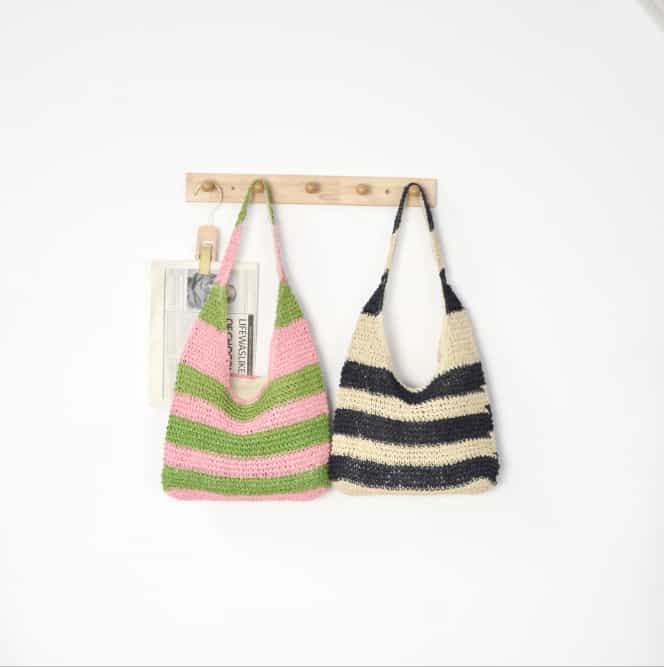
Quality Assurance and After-Sales Service for Dyed Raffia Bags
Quality Assurance System
Quality assurance for dyed raffia bags extends beyond the product itself—it covers every stage from raw material procurement to final delivery. A complete quality assurance system should include:
Raw Material Quality Control:
- Traceable raffia sources (origin, batch, harvest time)
- Basic testing upon arrival: moisture content, toughness, color difference
- Same batch of raw materials for the same order to ensure dyeing consistency
Dyeing Process Quality Control:
- Standardized dye recipe management; complete process parameters recorded per batch
- Computer-controlled temperature systems for precise dyeing curves
- pH monitoring throughout the dye bath to prevent fiber damage
- Colorfastness sampling after each dyeing batch
Finished Product Quality Control:
- 100% full inspection: color difference, weave density, dimensions, appearance
- Colorfastness sampling: random testing for rubbing, light, and perspiration fastness per batch
- Final inspection before packaging: ensure all products meet sealed sample standards
Quality Guarantees:
- Color difference commitment: ΔE ≤ 1.5 within the same batch
- Colorfastness commitment: dry rubbing ≥ Grade 4, wet rubbing ≥ Grade 3-4
- Eco-compliance commitment: meets REACH, OEKO-TEX, and other international standards
- Free rework or replenishment for any quality issues
After-Sales Service and Customer Support
After-Sales Service System:
- Quality issue response: respond within 24 hours, provide solutions within 48 hours
- Replenishment service: priority production for quality-related replenishment
- Technical support: professional consultation on dyeing processes and care methods
- Color library management: record color samples and formulas for each order for quick reorder reproduction
Value-Added Services for Long-Term Partners:
- Regular market color trend reports
- Free design consultation for new product development
- Volume discounts and priority scheduling for bulk orders
- Free storage and management of exclusive brand color samples
Summary
Dyed raffia bag manufacturers provide brand clients with a complete path from color concept to finished product—through professional dyeing technology, flexible customization capabilities, and a 100-piece MOQ entry point.
Key Considerations When Choosing a Dyed Raffia Bag Manufacturer:
- Eco-compliance capability: Can they meet REACH, OEKO-TEX, and other export regulations?
- Dyeing expertise: Do they have independent sampling capabilities and a colorfastness control system?
- MOQ flexibility: Can you start with 100 pieces?
- Quality control system: Is there full-process inspection from raw materials to finished products?
- Response speed: Do sampling and bulk lead times meet market pace?
One-Sentence Summary: Dyed raffia bags—supported by professional dyeing technology and starting at 100 pieces MOQ—help brands tell unique stories through color.
Looking to source dyed raffia bags?
Contact us for custom color quotations or sample solutions—ideal for brand clients, boutique stores, and sustainable fashion brands.