In foreign trade, few things are more frustrating than receiving quality complaints from a client after the goods have already arrived. For natural material products like raffia bags, the risks are even higher—natural fibers are sensitive to moisture, and issues like high water content, poor color fastness, or low fiber toughness can trigger large-scale quality problems.
Pre-Shipment Inspection (PSI) is a comprehensive quality check conducted before goods are loaded for shipment. It serves as a “security gate,” ensuring only qualified products are loaded into containers.
This guide covers essential tests, inspection standards, and practical procedures to help buyers and sourcing professionals build a complete quality control system for raffia bags.
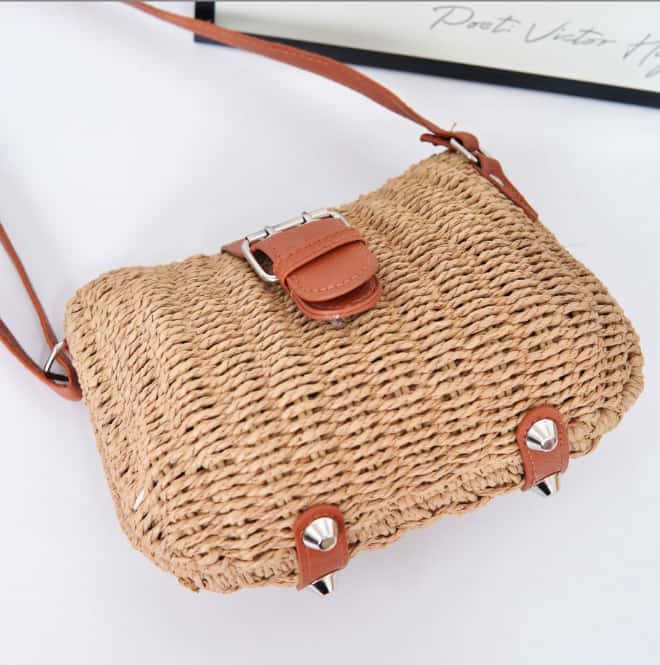
The Five Core Dimensions of Raffia Bag Pre-Shipment Inspection
Quality inspection for raffia bags goes far beyond “how the bag looks.” It covers five areas: material, craftsmanship, functionality, packaging, and compliance.
Material Inspection: Quality Control from the Source
Quality begins with the raw material. Even the best weaving can’t fix problems with the raffia fiber itself.
Inspection Items and Standards:
| Inspection Item | Test Method | Acceptance Standard |
| Fiber Moisture Content | Measure raffia fiber moisture | 10%-12% |
| Fiber Toughness | 180° bend test | No breakage, fiber returns to shape |
| Color Fastness | Dry and wet rubbing tests | Grade ≥4, no color transfer |
| Formaldehyde Content | Chemical testing | Compliance with regulations |
| Banned Dyes | Chemical testing | No prohibited aromatic amines detected |
Why Is Moisture Content So Critical?
Raffia is a natural plant fiber and highly sensitive to moisture:
- Too dry: Fibers become brittle, break during weaving, and are prone to damage during use
- Too wet: Bags are highly susceptible to mold during sea freight, especially when passing through hot and humid equatorial regions
Practical Tip: After receiving samples from a supplier, perform a simple “feel test” for moisture. If the fibers feel unusually dry or damp, request a formal moisture content test report from the supplier.
Craftsmanship Inspection: Weave Density, Dimensions, and Structure
Craftsmanship quality directly affects product lifespan and customer satisfaction.
Key Inspection Points:
- Weave Density
- Hold the bag up to light: A good weave shows no visible gaps
- Gently stretch the weave: Quality weaving won’t easily deform
- Low-density bags collapse when loaded and may even allow small items to fall out
2.Dimensional Tolerances
- High-quality raffia bags: ±1-2cm
- Low-quality products: ±4-7cm, leading to “product doesn’t match photo” complaints
3.Lining and Stitching
- High-quality bags: 8-10 stitches per inch, even and strong
- Low-quality: 4-5 stitches per inch, linings tear easily
4.Hardware Quality
- High-quality hardware: 48-hour salt spray tested, double-plated—resistant to rust
- Low-quality: No salt spray test, thin plating—rusts quickly
How to Check:
- Measure bag length, width, height, and handle drop with a soft tape measure
- Check lining stitching—even and smooth
- Test zippers and clasps for smooth operation
Function and Durability Testing
Functionality and durability determine whether customers will repurchase.
Core Test Items:
| Test | Method | Acceptance Standard |
| Weight Load Test | Fill with standard weight (3-5kg), hang for 24 hours | No deformation, no handle breakage |
| Handle Pull Test | Lift and pull handles 100+ times | No loosening at handle attachment points |
| Drop Test | Drop the bag from 30cm height with contents inside | No damage, no seam separation |
Practical Tip: During mass production, randomly select 1-2 pieces from each batch for weight load testing. If quality seems unstable, increase inspection frequency.
Appearance Inspection: Why 100% Full Inspection Is Necessary
Unlike industrially produced standardized products, hand-woven raffia bags have natural variations. 100% full inspection is recommended.
Full Inspection Checklist:
- Surface inspection: Is the weave even? Are there visible flaws? Is color consistent?
- Odor inspection: Any chemical smell or musty odor?
- Print/pattern inspection: For bags with logos or prints—is it clear and correctly positioned?
- Accessories inspection: Dust bags, hang tags, warranty cards, etc.
Packaging Inspection: Ensuring Safe Delivery
Whether raffia bags arrive in good condition depends largely on packaging quality.
Packaging Inspection Points:
1.Inner Packaging
- Each bag should be in a dust bag to prevent scratches during transit
- Stuff with filling (air pillows, paper, cardboard forms) to maintain shape
2.Carton Packaging
- Use double-wall corrugated cartons with sufficient compression strength
- Carton should not be overfilled (crushing the woven bags) or underfilled (allowing movement and friction damage)
3.Moisture Protection
- Cartons must be placed on pallets away from the floor, wrapped with stretch film
- Desiccants can be placed inside the shipping container
- Mark “Keep Dry” on cartons
Labeling Check
- Correct shipping marks (customer name, address, order number)
- “Fragile” or “Do Not Stack” warning labels when applicable
Moisture Content Testing – The Most Overlooked Critical Indicator
Moisture testing is one of the most easily overlooked yet potentially damaging inspection items for raffia bags. Natural plant fibers are far more sensitive to moisture than most people realize.
Why Is Moisture the “Silent Quality Killer”?
- Fine at shipment: The factory warehouse is dry, and bags leave in good condition
- Changes during sea freight: Containers crossing the equator can reach 50-60°C with humidity up to 90%
- Disaster upon arrival: Mold has already developed by the time the client opens the container—entire batch is scrapped
Moisture Testing Standards and Methods:
- Acceptable range: 10%-12%
- Caution range: 12%-14% (add more desiccants)
- Danger range: >14% (high mold risk—delay shipment)
Testing Tools:
- Pin-type moisture meter: Insert probes directly into fibers—high precision
- Pinless moisture meter: Non-destructive testing, suitable for quick screening
- Oven-dry method: Laboratory accuracy but time-consuming (24+ hours)
Practical Tip: During inspection, test at least 5-10 samples for moisture. If a batch shows high moisture, require the factory to add more desiccants and allow extra drying time before re-testing.
Odor Inspection – Using Your Nose as a Testing Tool
Raffia is a natural plant fiber and should have a mild, grassy scent. Any unusual odor is a warning sign.
Normal Odors:
- Light scent of hay or palm leaves
- Faint “sun-dried” smell from natural drying
Abnormal Odors and Their Causes:
| Odor Type | Possible Cause | Risk Level |
| Musty/moldy | Damp storage, moisture in fibers | Critical—entire batch at risk |
| Chemical/plastic | Poor-quality dyes or adhesives | Critical—may violate environmental standards |
| Industrial/synthetic | Packaging material off-gassing or synthetic content | Major—affects customer experience |
| Sour/acidic | Fiber fermentation, poor washing after dyeing | Major—may lead to fading or brittleness |
Testing Methods:
- “Bagging method”: Seal the bag in a plastic bag for 2-4 hours, then open and sniff
- Direct sniff test on the bag’s inner and outer surfaces
- Check the dust bag for odors
Practical Tip: Always include an “odor inspection” section in your inspection report. If you detect musty or chemical odors, stop the shipment and investigate the root cause immediately—do not approve shipment without a resolution.
Inspection Standards and Sampling Plans
Common Inspection Standards
Raffia bags, classified as “plaiting materials products,” can be inspected against the following standards:
- GB/T 2828.1 (Sampling Procedures for Inspection by Attributes): Industry standard defining sampling plans and acceptance criteria
- Factory Routine Inspection: Required before shipment—covering appearance, dimensions, odor, load-bearing performance
- Type Inspection: Full scope inspection for new products, process changes, or after production stoppage >6 months
Sampling Plan Reference
Based on GB/T 2828.1, using General Inspection Level II, AQL=6.5:
| Lot Size | Sample Size | Acceptance (Ac) | Rejection (Re) |
| 26-50 pcs | 8 | 1 | 2 |
| 51-90 pcs | 13 | 2 | 3 |
| 91-150 pcs | 20 | 3 | 4 |
| 151-280 pcs | 32 | 5 | 5 |
| 281-500 pcs | 50 | 7 | 8 |
| 501-1,200 pcs | 80 | 10 | 11 |
| 1,201-3,200 pcs | 125 | 14 | 15 |
| ≥3,201 pcs | 200 | 21 | 22 |
Note: Lots of 26 pieces or fewer should be 100% inspected.
What Is AQL?
AQL (Acceptable Quality Limit) is the maximum acceptable defect rate. AQL=6.5 means up to 6.5 defective products per 100 pieces are acceptable. For handcrafted raffia bags, AQL=6.5 is industry standard.
Quality Level Classification
| Defect Level | Examples | Action Required |
| Critical | Mold, breakage, severe color bleeding, rusted hardware | Full lot rejected or 100% rework |
| Major | Dimension deviation, loose weave, lining seam separation | Rework or downgrade |
| Minor | Minor fuzz, untrimmed threads | Record—can be accepted or negotiated |
Practical Sampling – How to Avoid “Sampling Traps”
The sampling method directly affects inspection accuracy. Here are common “traps” and how to avoid them:
Trap 1: Factory Preselects Samples
- What happens: Factory prepares samples in advance, claiming they’re “randomly selected”
- How to avoid: The inspector should go to the warehouse or production line to randomly select samples—never accept pre-prepared samples
Trap 2: Only Sampling from the Top Layer
- What happens: Only cartons on the top or outermost rows are checked
- How to avoid: Select samples from different positions (bottom, middle, sides, center)
Trap 3: Sorting Before Sampling
- What happens: Factory sorts goods into “good” and “bad” and only shows the inspector the “good” batch
- How to avoid: Sample from the entire production lot. If sorting has already occurred, document it in the report
Correct Sampling Steps:
- Confirm and record total lot size
- Use a random number table or simple random sampling to select sample positions
- Pull samples from different areas of the warehouse and different stack layers
- If severe defects are found, expand the sample size immediately
Working with Third-Party Inspection Agencies – A Collaboration Guide
When clients require third-party inspection, or when working with a new factory, choosing and managing inspection agencies effectively is crucial.
How to Choose a Third-Party Inspection Agency?
| Evaluation Dimension | What to Check | Acceptance Standard |
| Certifications | ISO 9001, CNAS, AITF, etc. | At least one recognized certification |
| Industry Experience | Experience with raffia bags or woven products | 2+ years of relevant product experience |
| Inspection Standards | Familiarity with GB/T 2828.1, AQL, etc. | Can provide standardized inspection report template |
| Response Time | From booking to report delivery | Complete inspection + report within 72 hours |
Pre-Inspection Communication Checklist:
- Confirm inspection date and time
- Provide order details and sealed samples
- Confirm inspection standards and AQL level
- Confirm report format and content
- Confirm fees and payment terms
Factory Quality Management Systems
The Four Stages of Factory Quality Control
A responsible raffia bag factory should have quality control throughout the production process:
Stage 1: Incoming Material Inspection
- Check raffia fiber moisture content, toughness, color fastness
- Check hardware, lining fabric, and other auxiliary materials
Stage 2: In-Process Inspection
- Regular sampling during production to detect and correct issues early
- Check weave density against standards
Stage 3: Finished Product Inspection
- 100% visual inspection—every bag checked individually
- Function tests (weight load, handle pull, drop tests)
- Dimensional measurement and sample comparison
Stage 4: Pre-Shipment Inspection
- Random sampling with AQL-based decision
- Packaging compliance check
How to Identify High-Quality vs. Low-Quality Factories
The following key differences help buyers quickly assess a factory’s quality capability during a factory visit:
| Comparison | High-Quality Factory | Low-Quality Workshop |
| Dimensional Tolerance | ±1-2cm with strict template control | ±4-7cm with high manual variation |
| Material Moisture Control | 10%-12%, mold prevention | Uncontrolled—high mold risk in transit |
| Lining Stitch Density | 8-10 stitches per inch | 4-5 stitches per inch |
| Color Fastness | Grade 4-5, abrasion-resistant | Grade 2-3, prone to fading |
| Hardware Rust Resistance | 48-hour salt spray tested | No testing—rusts easily |
| Final Inspection | 100% full inspection | 10%-20% random sampling |
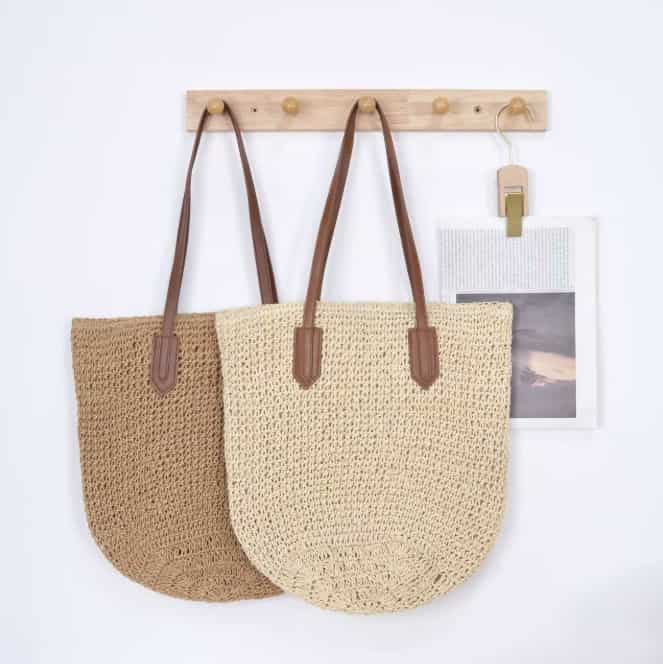
Pre-Shipment Inspection: Step-by-Step Process
Preparation Before Inspection
- Confirm order details: Verify product specifications, quantity, colors, and packaging requirements
- Prepare inspection tools: Tape measure, Pantone color card, camera, record sheets
- Schedule inspection: Best timed when production is 80%+ complete and before packaging
- Book third-party inspection: If required by the client, arrange in advance
On-Site Inspection Steps
| Step | Action | Details | Documentation |
| 1 | Verify Quantity and Style | Confirm bulk quantity matches the order Confirm style, color, and dimensions match the sealed sample | Record quantity and style details in inspection log |
| 2 | Random Sampling | Select samples randomly from the entire lot per AQL standards Pull from different positions (bottom, middle, sides, center) | Record sample size and sampling positions |
| 3 | Appearance Inspection | 100% visual inspection of all sampled items Check weave density, surface flaws, color consistency Check for odors (musty/chemical smells) Check printing/logos for clarity and position | Record the number and types of defects with photos |
| 4 | Functional Testing | Weight load test: fill with 3-5kg, hang for 24 hours Handle pull test: lift and pull handles 100+ times Drop test: drop from 30cm height with contents inside Test hardware smoothness (zippers, clasps, buckles) | Record test results and any failures |
| 5 | Packaging Inspection | Check dust bags and filling material Verify carton quality (double-wall corrugated) Check moisture protection (pallets, stretch film, desiccants) Verify shipping marks and labels (customer name, address, order number) Check for warning labels (“Fragile,” “Keep Dry”) | Record packaging condition with photos |
| 6 | Issue Inspection Report | Compile all findings with photos Classify defects: Critical / Major / Minor Declare overall decision: Pass or Fail If failed: specify rework requirements and re-inspection timeline | Generate final inspection report with all supporting documents |
Post-Inspection Actions
| Outcome | Action Required |
| Pass | Sign release note and arrange shipment |
| Fail – Critical Defects | Full lot rejected or 100% rework required |
| Fail – Major Defects | Rework required, then re-inspect before shipment |
| Fail – Minor Defects | Record and negotiate with client for acceptance |
Standard Inspection Report Format and Key Sections
A professional inspection report should include the following core sections:
Report Header:
- Order number, client name, supplier name
- Inspection date and location
- Product name, style number, quantity
Product Information:
- Specifications (dimensions, color, material)
- Sealed sample reference number
- Packaging specifications
Sampling Information:
- Lot size and sample size
- Sampling method and positions
- AQL standard and acceptance/rejection decision
Inspection Results:
| Check Item | Standard | Result | Defect Count |
| Appearance | Match sealed sample | Pass/Fail | 0/5/10 |
| Dimensions | ±2cm | Pass/Fail | 0/1/3 |
| Load Test | 3kg/24h no deformation | Pass/Fail | — |
| Packaging | Compliant | Pass/Fail | 0/1/2 |
Overall Decision:
- Pass / Fail
- If failed: specify rework requirements and re-inspection date
Photo Attachments:
- Photos of acceptable products
- Photos of defective products (label defect types)
- Packaging photos
- Stacking/pallet photos
Emergency Inspection Solutions for Urgent Shipments
When the shipping deadline is tight and the normal inspection process doesn’t fit the timeline, emergency solutions are needed:
Option 1: Video Inspection (for sample orders or small quantities)
- Conduct remote inspection via WeChat video or ZOOM
- Inspector guides factory staff to check products online
- Request high-resolution photos and video clips of tests
- Risk: Cannot 100% confirm all product details
Option 2: Expedited Inspection (for medium-large urgent orders)
- Book “express lane” with inspection agency (report within 24 hours)
- Arrange overtime to complete all checks on the same day
- Additional cost: approximately 1.5-2 times the standard rate
Option 3: Customs Broker Inspection (for trusted, established suppliers)
- Authorize local customs broker or freight forwarder to inspect
- Focus on quantity and packaging; quick appearance spot-check
- Higher risk—only suitable for highly reliable suppliers
Emergency Inspection Precautions:
- Note “Emergency Inspection” and any limitations in the inspection report
- Obtain client approval for any inspection method changes in advance
- Keep complete photo and video records
Common Defects in Raffia Bags and How to Identify Them
During pre-shipment inspection, knowing what to look for is half the battle. Below are the most common defects found in raffia bags, categorized by severity, along with identification tips.
Category 1: Material Defects
| Defect | How to Identify | Root Cause |
| Dry/brittle fibers | Bend a single fiber 180°—if it snaps or shows white crease marks | Over-drying during processing or storage in low-humidity conditions |
| Mold/mildew | Visible black, green, or white spots on fibers; musty odor | Storage in damp conditions; moisture content >14% before packaging |
| Color inconsistency | Visible color variation between different parts of the same bag or between different bags | Poor dye bath control; different fiber batches not blended properly |
| Fiber splitting/fraying | Fibers appear split or fuzzy at the surface | Poor quality raw materials; over-processing during stripping |
Inspection Tip: When checking materials, bend individual fibers from different parts of the bag. Also, take the bag into natural daylight—color inconsistencies are much easier to spot in natural light than under factory fluorescent lighting.
Category 2: Weaving and Craftsmanship Defects
| Defect | How to Identify | Root Cause |
| Uneven weave | Visible gaps or overly dense areas; inconsistent texture across the bag surface | Inconsistent tension during hand-weaving; machine calibration issues |
| Loose weave | Bags deform easily when lightly pressed; fibers shift out of position when gently pulled | Weave density too low; poor tension control |
| Crooked weave pattern | Straight lines or geometric patterns appear skewed or misaligned | Poor pattern setup; inattentive weaving |
| Unfinished edges | Rough or fraying edges where weaving starts/ends; loose threads visible | Lack of proper edge finishing during production |
Inspection Tip: Run your hand slowly across the bag surface. Your fingertips will detect uneven weave density and loose threads that your eyes might miss.
Category 3: Hardware and Accessory Defects
| Defect | How to Identify | Root Cause |
| Rust/oxidation spots | Visible brown/orange spots on metal buckles, clasps, or studs | Poor plating quality; no salt spray testing; exposure to moisture |
| Hardware discoloration | Metal parts appear faded or tarnished | Low-quality plating; reaction with dyes or chemicals used on the bag |
| Loose hardware attachment | Hardware rattles or wiggles when touched | Weak stitching or rivet installation; insufficient attachment strength |
| Incorrect hardware placement | Buckles, clasps, or studs positioned offset from the design specification | Production error; lack of template or positioning marks |
Inspection Tip: Test all hardware by using it as intended—open and close clasps 5-10 times, pull on attached handles, and check for any looseness or resistance.
Category 4: Lining and Interior Defects
| Defect | How to Identify | Root Cause |
| Loose lining | Lining fabric bunches or pulls away from the bag interior | Insufficient stitching tension; lining cut too large |
| Poor stitching | Visible gaps in stitching; uneven stitch length; loose thread ends | Machine tension issues; operator inexperience |
| Lining fabric defects | Fabric tears, runs, or discoloration inside the bag | Poor quality lining material; fabric damaged during production |
| Incomplete sealing | Open seams where lining should be fully closed | Missing final closing stitch; rushed production |
Inspection Tip: Turn the bag inside out (if possible) or use your hand to feel the entire interior surface. Pay particular attention to corners and seam intersections where stitching is most likely to fail.
Category 5: Dimensional and Structural Defects
| Defect | How to Identify | Root Cause |
| Handle drop deviation | Handles hang at noticeably different heights or are shorter/longer than specified | Template error; inconsistent handle attachment |
| Uneven bag shape | Bag does not sit flat when placed on a surface; one side appears higher or more rounded | Inconsistent weaving tension; warped base or bottom panel |
| Base sagging | Bag bottom bows or dips downward when loaded | Insufficient base reinforcement; low density weave at bottom |
| Overall dimension error | Length, width, or height exceeds acceptable tolerance (±2cm) | Incorrect template; final shape not checked against sealed sample |
Inspection Tip: Place the bag on a flat surface and step back 1-2 meters—the overall shape and symmetry are often more obvious from a distance than up close.
Practical Tips for Foreign Trade Professionals
Pre-Inspection Communication Checklist
When arranging inspection with the factory, confirm the following:
- Has bulk production reached the required completion rate? (typically ≥80%)
- Is the sealed sample available at the factory for comparison?
- Will factory QC staff be available during inspection?
- What is the review and approval process after the inspection report is issued?
Key Elements of an Inspection Report
A complete inspection report should include:
- Order number and inspection date
- Sample size and final decision
- Detailed descriptions and photos of all defects
- Test results (load, handle pull, drop, etc.)
- Overall decision and corrective action recommendations
Building Long-Term Quality Partnerships with Factories
One-time inspections only guarantee “this batch.” Building a long-term quality partnership with a factory reduces risk from the ground up:
Strategy 1: Pre-Order Quality Agreement
- Sign a quality agreement with the factory before placing the order
- Clarify inspection standards, acceptance procedures, and liability allocation
- Clearly state: quality-related returns, compensation, and air freight costs are the factory’s responsibility
Strategy 2: Regular Quality Review Meetings
- Hold quarterly quality review meetings
- Review inspection data and customer complaints from the past 3 months
- Jointly develop improvement plans
Strategy 3: Quality Data Sharing
- Share inspection data regularly (monthly quality reports)
- Help factories understand recurring issues
- Set joint quality improvement goals
Strategy 4: Incentives and Penalties
- 3 consecutive batches pass → reward or reduce inspection frequency
- 2 consecutive batches fail → tighten inspection standards or pause cooperation

Summary
Pre-shipment inspection for raffia bags is the “last line of defense” before your order ships. From fiber moisture content to weave density, from load testing to packaging moisture protection, every inspection point affects whether your goods arrive safely and win customer satisfaction.
Key Takeaways:
- Material Inspection: Moisture content 10%-12%, color fastness ≥Grade 4
- Craftsmanship: Dimension tolerance ±1-2cm, lining 8-10 stitches per inch
- Function Tests: Weight load test, handle pull test, drop test
- Appearance: 100% full inspection recommended, especially for hand-woven products
- Packaging: Dust bag + filling + double-wall carton + pallet + moisture protection
- Sampling Standard: GB/T 2828.1, General Inspection Level II, AQL=6.5
- Moisture Monitoring: 10%-12% acceptable, >14% high mold risk
- Odor Inspection: Natural plant scent is normal; musty or chemical smells are red flags
One Sentence Summary: Pre-shipment inspection is not an “option”—it’s a “must.” It protects not just your goods, but your brand and client relationships.
Need more information on raffia bag quality standards or inspection services?
Contact us for professional inspection consultation and quality control solutions.