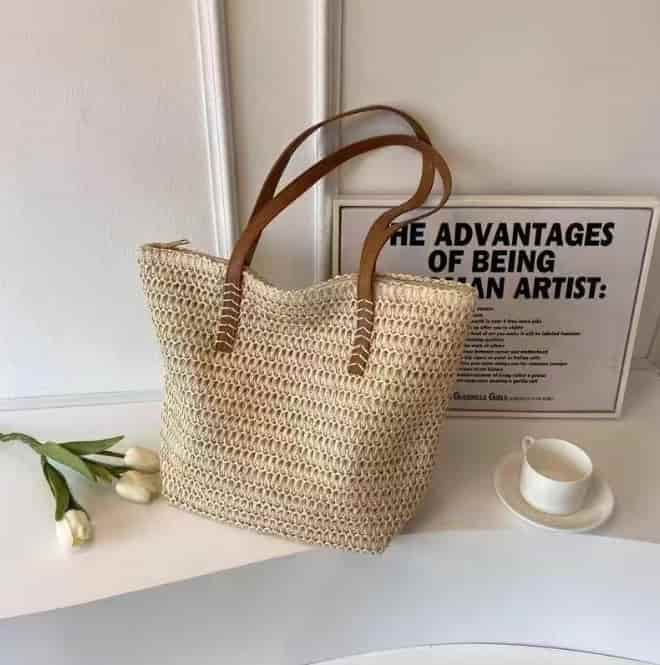
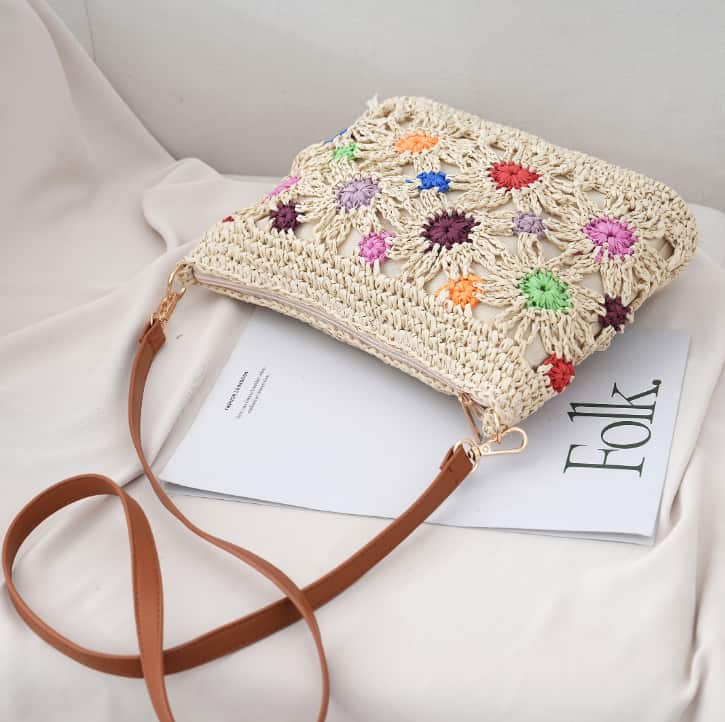
If you’re selling or buying raffia bags, you’ve probably noticed there’s a huge price difference. Some are 15.Someare80. Some look almost the same in photos.
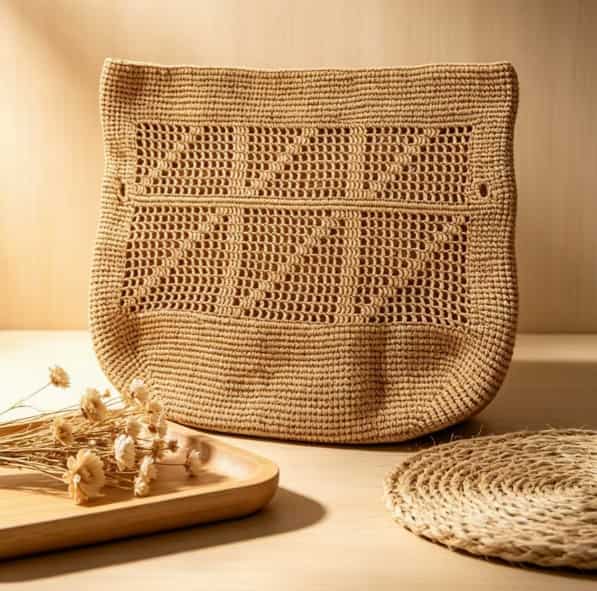
So what’s the real difference?
Most of it comes down to one thing: handmade vs machine-made. And if it’s handmade, how much work actually went into it.
Let me break it down for you – no fluff, no sad backstory, just what you need to know.
What Is Raffia, Exactly?
Raffia is a fiber from a type of palm tree. The big producers are Madagascar and a few African countries like Ghana and Cameroon.
The fiber is long, kind of shiny, and surprisingly strong for something that comes from a leaf. It’s also 100% natural. That means it will eventually break down, unlike plastic or polyester.
One thing to know – real raffia has a slight plant smell. Not strong. Just natural. If a bag smells like chemicals, that’s a red flag.
How to tell genuine raffia apart from plastic fake straw
- Touch test: Real raffia feels soft and flexible; plastic straw stays rigid, stiff and slippery to touch.
- Light test: Hold the bag up to sunlight. Natural raffia has tiny uneven texture gaps, while plastic looks perfectly uniform and glossy.
- Moisture trait: Genuine raffia absorbs light water and dries fast; plastic repels all moisture completely.
- Texture change: Natural raffia will soften more with use; plastic fake straw never gets softer and may crack over time.
Real Raffia vs Plastic Straw Quick Comparison Table
| Identification Point | Authentic Raffia Fiber | Plastic Polypropylene Straw |
|---|---|---|
| Raw source | Palm tree leaf, renewable plant | Fossil fuel plastic, non-renewable |
| Scent feature | Faint mild earthy plant aroma | Sharp chemical plastic odor |
| Eco trait | Fully biodegradable in soil | Creates permanent microplastic waste |
| Wearing feel | Lightweight, breathable, flexible | Heavy, airtight, stiff against skin |
Why natural raffia appeals to your store’s target shoppers
- Eco-conscious buyers prioritize zero-plastic accessories Today’s customers actively avoid plastic goods and seek fully compostable daily accessories that match their sustainable lifestyle.
- Resort and boho shoppers love its organic texture The subtle natural sheen and soft hand feel perfectly match linen, swimwear and casual vacation outfits for cohesive styling.
- Unique craft value supports higher pricing Pure plant fiber material lets you market your bags as premium handmade goods, with room for higher markup than generic plastic alternatives.
The Making Process: Step by Step
If you’ve never seen how these bags are made, you might think someone just sits down and starts weaving. That’s not how it works.
Step 1 – Harvesting and Drying
You cut the leaves from the palm tree. Then you dry them. Usually under the sun. This takes time. If it rains, it takes longer.
No machine can speed this up. You just wait.
Step 2 – Twisting
Here’s something most people don’t realize. Before you can weave anything, you have to twist each strand of raffia into a cord.
How many strands? For a medium tote, about 1,000. Each strand takes around a minute to twist. That’s already 15+ hours just to get the material ready.
And the twisting is done by hand – usually by rolling the fiber against the leg. It’s repetitive, it’s slow, and there’s no shortcut.
Step 3 – Dyeing
Some bags use natural dyes – indigo, clay, leaves. Some use basic color dyes. Either is fine.
But here’s the thing about handmade dyeing: colors won’t be perfectly even. That’s normal. If a bag looks too perfect – like every inch is exactly the same shade – it might be factory-made or chemically dyed.
Step 4 – Weaving
Finally, the actual weaving.
This depends on the style. Some bags are crocheted. Some are woven on a simple loom. Some are knotted by hand.
A skilled artisan might only finish a few inches per hour. Complex patterns take even longer. And if the bag has leather handles or trim, that’s usually a different person.
So a single bag might pass through 2 or 3 different people before it’s done.
How Long Does One Bag Take?
What Determines Production Time for a Raffia Bag?
The time it takes to make a raffia bag varies widely depending on several factors. Here’s what determines production speed.
Factors that affect production time:
- Weave complexity – Simple weaves take hours; intricate patterns can take days
- Bag size – Larger bags require more material and weaving time
- Artisan skill level – Experienced artisans work faster while maintaining quality
- Weave density – Tight weaves take longer than loose weaves
- Customization – Custom colors, patterns, or shapes add time
- Dyeing requirements – Custom dyeing adds 2–5 days to production
- Quantity – Larger orders take longer to complete
- Supplier capacity – How many artisans are available to work on your order
Estimated production time by bag type:
| Bag Type | Simple Design | Intricate Design | Crochet / Patterned |
|---|---|---|---|
| Tote | 2–4 hours | 6–10 hours | 10–20 hours |
| Crossbody | 2–4 hours | 5–8 hours | 8–15 hours |
| Bucket bag | 3–5 hours | 6–10 hours | 10–20 hours |
| Clutch | 1–3 hours | 4–6 hours | 6–10 hours |
| Crochet bag | 8–15 hours | 15–25 hours | 20–40+ hours |
The bottom line: Production time depends on complexity, skill, and quantity. Simple designs are faster and more affordable. Intricate patterns take longer but command higher prices. Plan your timeline accordingly.
How to Plan Your Order Timeline Around Production Time
Understanding production time helps you plan your orders and avoid delays.
Sample timeline for a typical order:
| Stage | Timeframe | Notes |
|---|---|---|
| Sample production | 7–15 days | Intricate designs take longer |
| Sample revisions | 3–7 days | Based on your feedback |
| Bulk production | 25–45 days | Depends on quantity and complexity |
| QC and packing | 3–5 days | Final inspection before shipping |
| Shipping | 7–30 days | Varies by destination |
| Total | 45–75 days | Plan accordingly |
How to avoid delays:
- Order samples at least 3–4 months before you need stock
- Build buffer time into your schedule (add 2–3 weeks)
- Approve samples quickly – delays in approval push everything back
- Communicate clearly with your supplier about your timeline
- Consider air freight if you’re running late (costs more but saves time)
The bottom line: Production time is longer than you think. Plan ahead, build buffer time, and communicate clearly with your supplier. A well-planned timeline ensures you have stock when customers are ready to buy.
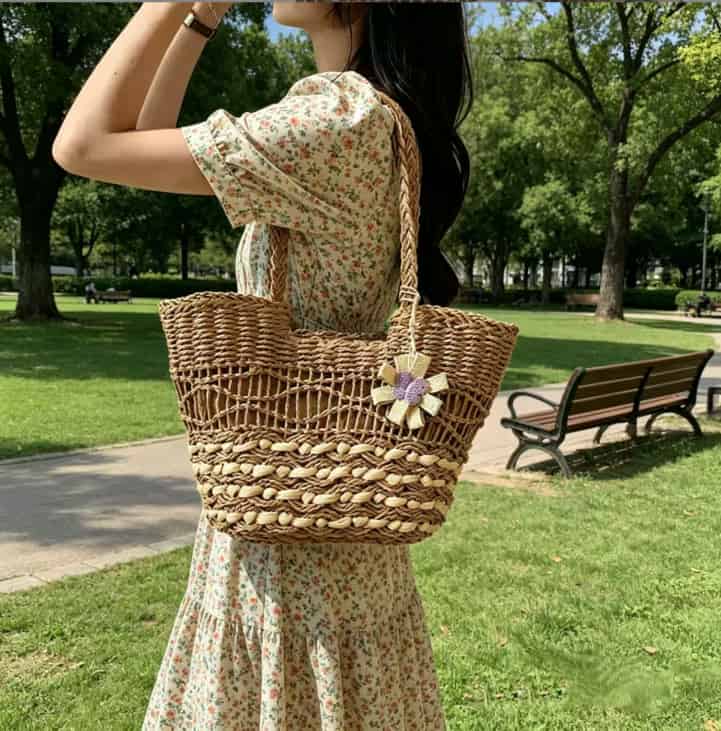
Real vs Fake – How to Tell
This is useful if you’re buying for yourself or for your store.
| Real Handwoven Raffia | Fake (Polypropylene / Plastic) |
| Fibers vary slightly in thickness | Fibers are perfectly uniform |
| Soft but sturdy | Stiff or scratchy |
| Slight natural plant smell | Smells like plastic or nothing |
| Colors might have small uneven spots | Colors are perfectly flat |
| Each bag looks a little different | All bags look exactly the same |
If a “raffia bag” is $10 and looks perfect, it’s not real raffia. It’s plastic pretending to be raffia. Fine for a cheap beach bag, but don’t pay handmade prices for it.
How to Spot a Fake Raffia Bag – Key Indicators
Not everything labeled “raffia” is real. Here’s how to tell genuine raffia from synthetic imitations.
| What to Check | Real Raffia | Fake Raffia |
|---|---|---|
| Texture | Soft, slightly rough, natural feel | Smooth, uniform, sometimes shiny |
| Color | Slight variations, natural tones | Too uniform, perfect color consistency |
| Smell | Earthy, herbal scent | Chemical or plasticky smell |
| Burn test | Burns like paper, smells like leaves | Melts, smells like plastic |
| Price | Not cheap — $6+ wholesale | Unbelievably low price |
Common fake raffia materials:
- Polypropylene – Cheap synthetic that mimics raffia texture
- Nylon blend – Shiny, smooth, often used for cheap bags
- Polyester threads – Mixed with real raffia to cut costs
The bottom line: If it looks too perfect, feels too smooth, or costs too little, it’s probably not real raffia.
Why Authenticity Matters for Your Brand
Selling authentic raffia bags protects your reputation and builds customer trust.
What authenticity gives you:
| Benefit | Why It Matters |
|---|---|
| Customer trust | Customers return to brands they trust |
| Higher perceived value | Authentic raffia commands premium pricing |
| Sustainability story | Real raffia is biodegradable and plastic-free |
| Brand reputation | Honesty builds long-term loyalty |
| Repeat business | Satisfied customers come back for more |
The cost of selling fakes:
| Consequence | Impact |
|---|---|
| Lost trust | Customers won’t buy from you again |
| Bad reviews | Negative word-of-mouth spreads fast |
| Returns and refunds | Costs you time and money |
| Brand damage | Harder to recover from reputation damage |
The bottom line: Authenticity matters. Your customers trust you to sell genuine products. Don’t risk your reputation on fake raffia – it’s not worth it. Honesty and transparency are the foundations of a successful brand.
Does Handmade Mean Better Quality?
Most of the time, yes. But not always.
A well-made handmade bag will last years if you take care of it. But a poorly made one will fall apart quickly – loose threads, weak handles, bad stitching.
So don’t assume every handmade bag is good quality. Look at the details:
- Are the edges clean?
- Is the weaving tight or loose?
- Do the handles feel secure?
Same as anything else – some artisans are better than others.
Handmade vs. Machine-Made – What’s Actually Better?
Not always. Handmade doesn’t automatically mean better quality — and machine-made doesn’t automatically mean worse.
| Factor | Handmade | Machine-Made |
|---|---|---|
| Consistency | Varies from bag to bag | Identical every time |
| Durability | Can be excellent — or poor | Generally consistent |
| Unique character | Yes — each bag is different | No — all copies |
| Artisan story | Yes — connects to the maker | No — factory product |
| Quality control | Depends on the artisan | Systematic QC process |
| Price | Higher | Lower |
When handmade is better:
- Premium or luxury positioning
- Customers value uniqueness and authenticity
- The artisan story matters
When machine-made makes sense:
- High volume orders
- Consistent quality is more important than uniqueness
- Entry-level or mass-market pricing
The bottom line: Handmade is not automatically better. But handmade done well is better — because it combines quality, authenticity, and a story that machine-made can’t replicate.
How to Tell If Handmade Means Good Quality
Handmade doesn’t automatically mean good quality. Here’s how to check.
What to check in a handmade bag:
| Check Point | What to Look For | What to Avoid |
|---|---|---|
| Weave tension | Even, consistent across the bag | Loose spots, visible gaps |
| Edge finishing | Clean, finished edges | Fraying, rough edges |
| Handle attachment | Woven-in or double-stitched | Single stitch, glued, or loosely attached |
| Lining | Cleanly sewn, no sagging | Wrinkled, loose, or poorly attached |
| Hardware | Sturdy, well-attached | Flimsy, loose, or rusted |
The bottom line: Handmade quality depends on the skill of the maker, not just the fact that it’s handmade. Look for signs of careful work — consistent weave, clean edges, reinforced handles, and quality finishing. That’s what separates a good handmade bag from a poorly made one.
How to Take Care of Raffia Bags
This is stuff I tell my customers so they don’t come back complaining.
- Avoid rain. A little splash is fine. Don’t take it out in a storm.
- Keep away from perfume and lotion. Oils will stain the fiber.
- Don’t leave it in direct sun for months. Colors will fade.
- Store in a dry place. A cloth bag is best. Not a plastic bag.
No washing machine. Obviously. Just wipe with a dry cloth.
Do that, and a good bag will last 3-5 summers easily.
How to Clean and Store Raffia Bags
Taking care of raffia bags is simpler than most people think. Here’s how to keep them looking good.
How to clean raffia bags:
| Stain Type | How to Clean |
|---|---|
| Dust or dirt | Gently brush with a soft cloth or brush |
| Small stains | Wipe with a slightly damp cloth — let it air dry completely |
| Oil or grease | Dab with cornstarch, leave overnight, brush off |
| Mold or mildew | Wipe with a cloth dipped in vinegar water (1:1), air dry in sun |
How to store raffia bags:
| Storage Tip | Why It Matters |
|---|---|
| Keep in a cool, dry place | Prevents mold and mildew |
| Avoid direct sunlight | Prevents fading and drying out |
| Store flat or with support | Prevents creasing and losing shape |
| Use a fabric dust bag | Protects from dust without trapping moisture |
| Don’t overstuff | Prevents stretch and deformation |
What to avoid:
- Don’t soak – Raffia absorbs water and can lose its shape
- Don’t use harsh chemicals – Bleach or strong cleaners damage fibers
- Don’t put in washing machine – It will ruin the weave
- Don’t store in plastic – Traps moisture, leads to mold
The bottom line: Raffia is low-maintenance. A little care goes a long way — and it will last for years.
Are You Shortening Your Raffia Bag’s Life?
Most customers ruin their raffia bags without realizing it. Here’s what they do wrong — and how to avoid it.
| Mistake | What Happens | How to Avoid |
|---|---|---|
| Overloading | Weave stretches, handles pull away | Carry only what’s practical |
| Getting it wet | Fibers absorb water, lose shape | Keep away from rain, dry immediately |
| Storing in a hot car | Fibers dry out and become brittle | Store in cool, dry place |
| Shoving in a suitcase | Bag gets crushed, loses shape | Use a dust bag and pack carefully |
| Ignoring mold | Stains become permanent | Clean immediately, dry thoroughly |
How to fix common issues:
| Issue | Fix |
|---|---|
| Mild stretching | Lightly mist with water, reshape, air dry |
| Loose handle | If stitched, reinforce with matching thread |
| Frayed edge | Trim loose fibers carefully (don’t pull them) |
| Musty smell | Air dry in sun for a few hours |
The bottom line: Most raffia bag problems are avoidable. A few simple habits — don’t overfill, keep dry, store correctly — will keep the bag looking good for years.
Where Are These Bags Made?
Raffia bags are crafted in several key regions, each offering different strengths in terms of quality, cost, and craftsmanship.
Manufacturing hubs at a glance:
- Madagascar – The original source of high-quality raffia. Known for premium, handcrafted bags with strong artisan traditions.
- China – The scaling powerhouse. Offers competitive pricing, fast turnaround, and full customization.
- Vietnam – The cost-effective alternative. Lower unit costs with growing quality standards.
- India – The artisanal player. Affordable handcrafted styles with unique designs.
What each region does best:
| Region | Strengths | Weaknesses |
|---|---|---|
| Madagascar | Premium quality, authentic artisan story | Higher cost, longer lead times, limited scale |
| China | Scale, speed, customization, competitive pricing | Less “authentic” story, mixed quality control |
| Vietnam | Lower cost, artisan craftsmanship, ethical production | Smaller scale, limited customization |
| India | Affordable artisan styles, unique designs | Inconsistent quality, limited export experience |
The bottom line: Each region has its strengths. Choose based on your priorities – quality and story (Madagascar), scale and speed (China), cost (Vietnam), or unique artisan designs (India).
How to Verify Where Your Raffia Bags Are Made
Knowing where your bags are made is important for quality and storytelling. Here’s how to verify the origin.
How to verify manufacturing origin:
- Ask for documentation – Request certificates of origin or supplier declarations
- Request workshop photos – See the actual production location
- Do a video call – Walk through the factory with the supplier
- Check shipping documents – Origin is often listed on export paperwork
- Visit the factory – If possible, visit in person to confirm
Red flags in origin claims:
| Red Flag | What It Means |
|---|---|
| Vague about location | Might not know or might be hiding the real source |
| No workshop photos | Could be a trading company, not a factory |
| Claims “Madagascar” but prices are too low | Probably sourcing from another region |
| Can’t provide documentation | May not actually know the origin |
The bottom line: Knowing where your raffia bags are made helps you tell a better story and ensures quality. Always verify origin claims with documentation, photos, or video calls.
What Should You Expect to Pay?
Just to give you a rough idea for wholesale or retail:
Small pouch or clutch – $10–25
Medium tote (beach bag size) – $30–60
Large or detailed bag (leather trim, pattern) – $70–130+
If someone is selling a large tote for $15, it’s either fake or the artisans are being paid almost nothing. Both are bad.
How to Budget for Raffia Bag Orders
Planning your budget for raffia bag orders helps you avoid surprises. Here’s what to consider.
What to include in your budget:
| Cost Category | What to Plan For | Typical Range |
|---|---|---|
| Samples | Initial sample orders and revisions | $30–150 per design |
| Bulk order | The main production cost | $3–20+ per bag |
| Shipping | Freight from factory to your warehouse | 10–30% of order value |
| Customs and duties | Import taxes and fees | 5–15% of landed cost |
| Packaging | Branded packaging, polybags, cartons | $0.30–2.00 per bag |
Sample budgeting example:
| Item | Cost |
|---|---|
| 200 raffia totes at $8 each | $1,600 |
| Shipping (FOB Shenzhen) | $200 |
| Customs and duties (10%) | $180 |
| Packaging (polybags + tags) | $100 |
| Total budget | $2,080 |
| Cost per bag (landed) | $10.40 |
The bottom line: Budget for samples, shipping, duties, and packaging – not just the unit price. Your total landed cost is what matters.
Why Pricing Varies Between Suppliers – What You’re Actually Paying For
Two suppliers can quote different prices for the same-looking bag. Here’s what accounts for the difference.
What causes price differences:
- Material quality – Higher-grade raffia costs more than lower-grade or synthetic blends
- Labor cost – Handwoven by skilled artisans costs more than machine-assisted
- Finishing details – Leather handles, cotton lining, and quality hardware add cost
- Location – Madagascar is more expensive than China or India
- Order volume – Larger orders get better pricing
- Certifications – OEKO-TEX, OK Compost, and other certifications add cost
- Supplier overhead – Larger factories have different cost structures
What price tells you:
| Price Range | What It Means |
|---|---|
| Under $4 | Likely synthetic or poor quality – avoid |
| $4–7 | Basic quality, machine-assisted or basic handwoven |
| $7–12 | Good quality, natural raffia, decent finishing |
| $12–18 | Premium quality, handwoven, good finishing |
| $18+ | Luxury quality, premium materials, certifications |
The bottom line: Price differences reflect real differences in materials, labor, and finishing. A $10 bag is often better value than a $4 bag that falls apart after a few uses. Invest in quality – your customers will notice the difference.
Bottom Line
Look, you don’t need a long emotional story to buy a handmade raffia bag. Just know what you’re paying for.
You’re paying for:
A natural fiber that’s not plastic
Hours of twisting, dyeing, and weaving by hand
Something that actually lasts if you take care of it
That’s it.
So next time you see a cheap “raffia” bag for $12, you know exactly what it is. And if you decide to pay more for the real thing, at least you know where the money goes.
If you want, I can also write a short version for your product page or a quick guide for your B2B customers. Just tell me.