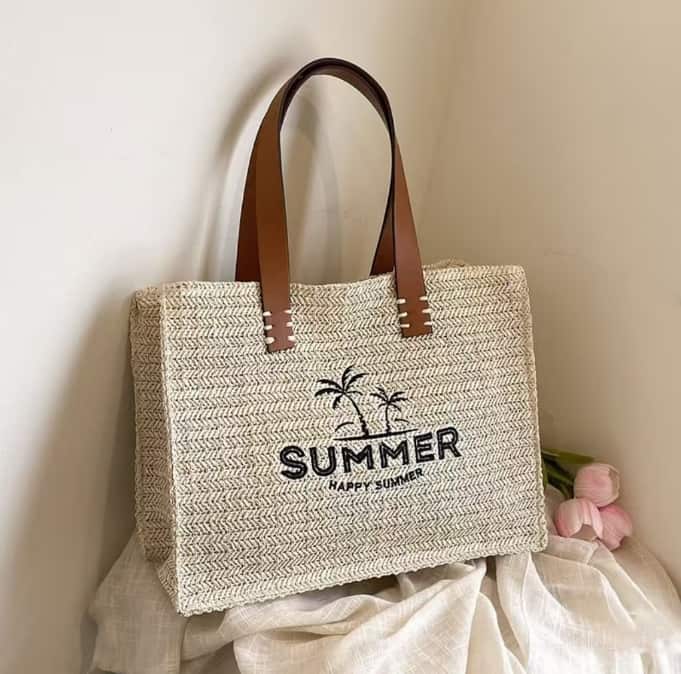
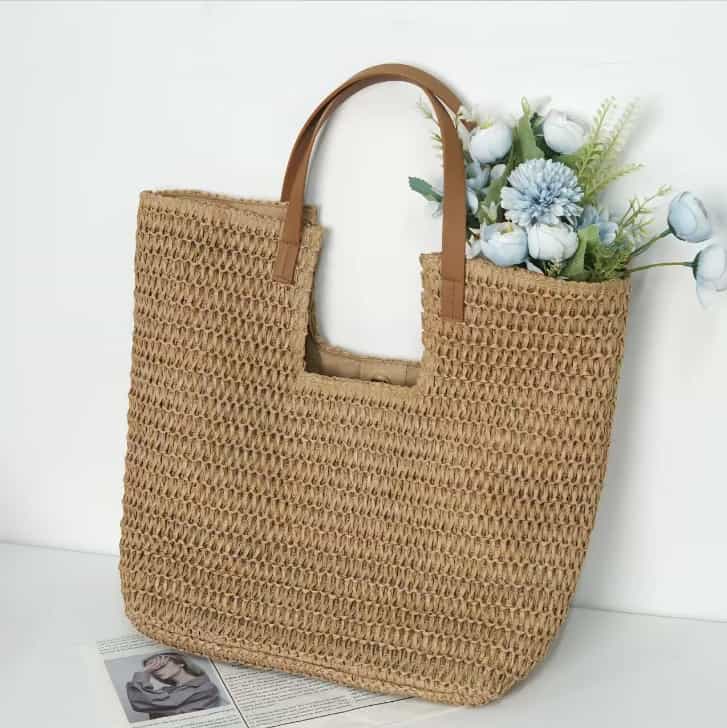
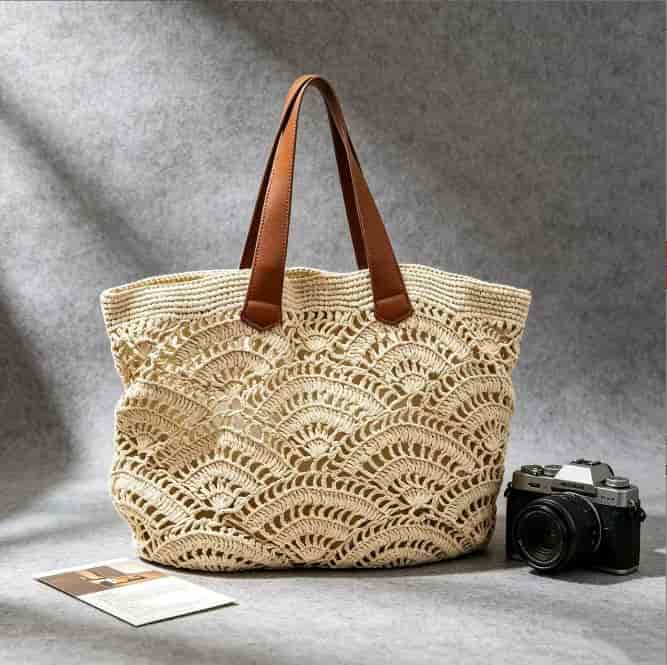
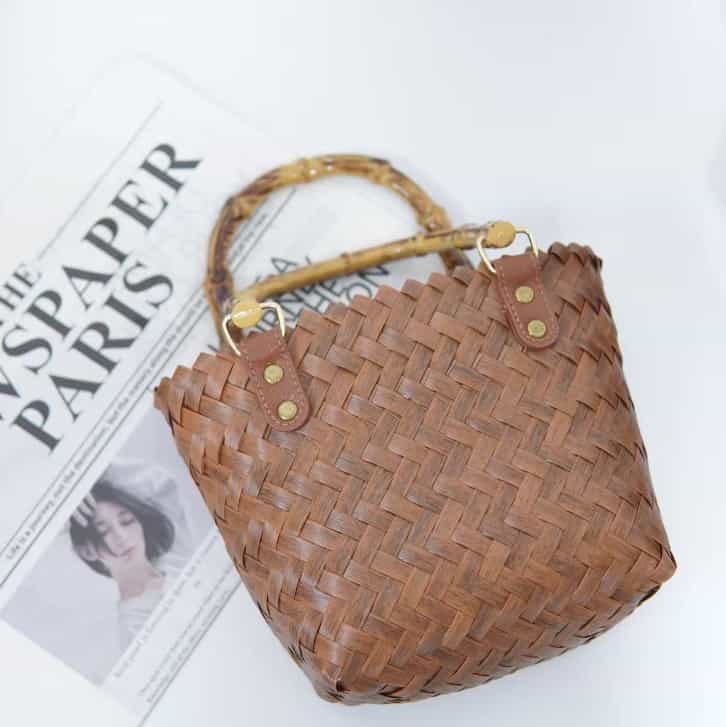
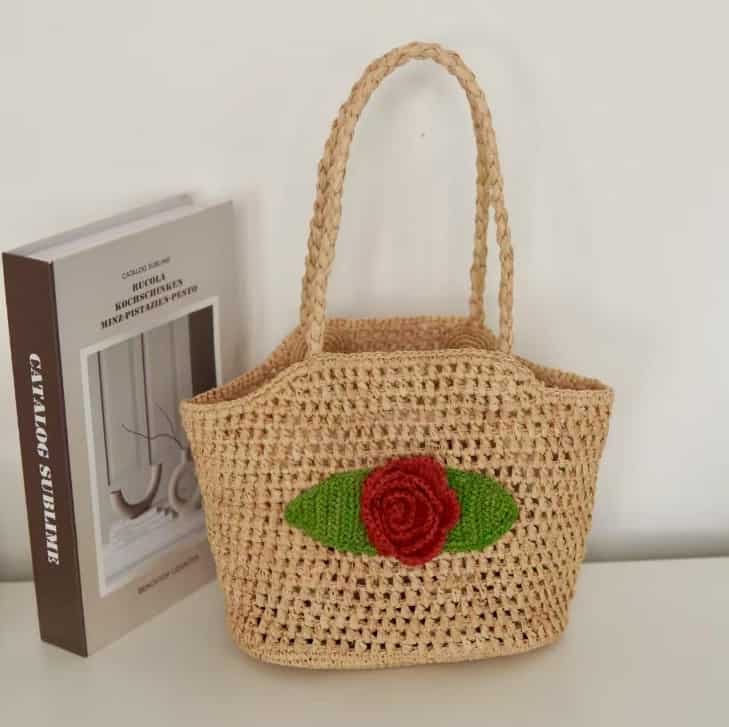
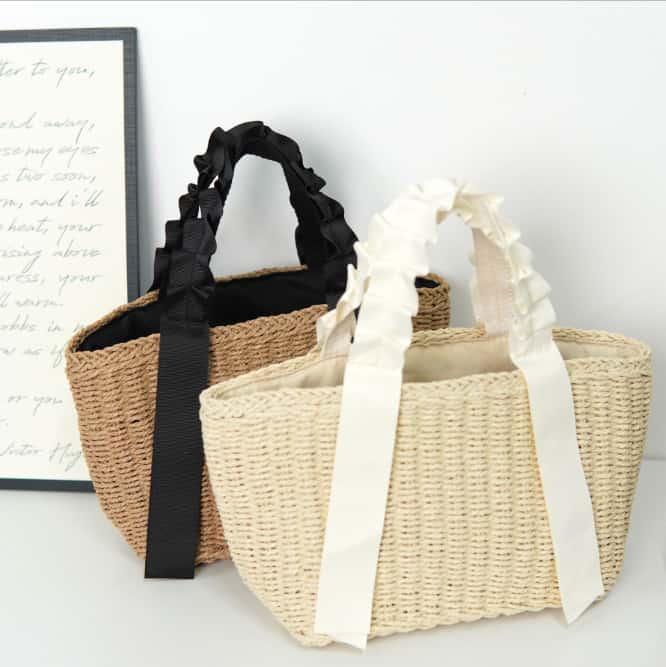
Let’s be real check Raffia Bags — nobody wants to get a shipment of raffia bags only to find out half of them are falling apart after a month.
The truth is, even a good-looking handwoven raffia bag can have weak spots. And if you don’t know where to look, you’ll end up with unhappy customers and a pile of returns.
Here are the 4 most common weak spots — and exactly what to check before you place that raffia bag wholesale order.
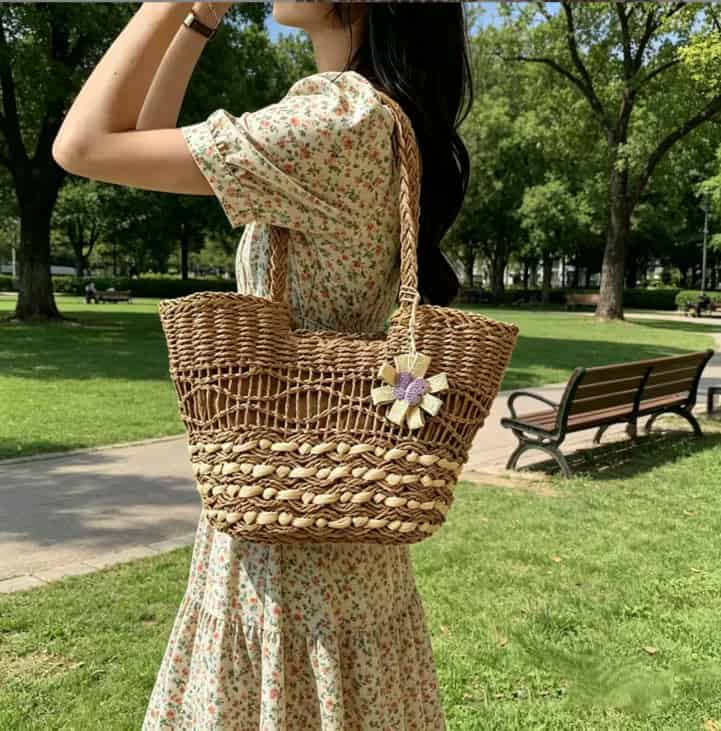
The Handles – Where Most Bags Fail First
This is the 1 complaint I hear from buyers. Hands down.
Handles take the most stress. People load up their raffia tote bag with a laptop, water bottle, wallet, keys — and then they grab it by one handle and swing it around. If the handles aren’t attached well, they rip right off.
What to check:
- Attachment point: Are the handles woven into the bag? Or just stitched on top? Woven-in is way stronger. No contest.
- Reinforcement: Look for extra stitching or a small leather piece where the handle meets the bag. That’s a sign someone actually thought about durability.
- Material: Braided raffia handles look nice but stretch over time. Fine for light stuff. But for a raffia tote bag that people actually carry things in? Leather or reinforced cotton lasts longer.
Red flag: If the handles feel flimsy or are only attached with a single line of stitching, run. Don’t walk.
How to Prevent Handle Failure in Bulk Orders
Stopping handle failure starts before production begins. Here’s how to prevent it.
Prevention strategies:
| Strategy | How It Works | Why It Matters |
|---|---|---|
| Set clear specs | Define handle attachment method, stitch count, and material in your purchase order | Suppliers know exactly what you expect |
| Require load testing | Ask for load test results on random samples | Verifies handles can handle real use |
| Inspect during production | Check handle attachment during in-line inspection | Catches issues before they multiply |
| Use a QC checklist | Include handle checks in your final inspection | Ensures handles are checked before shipping |
| Choose a reliable supplier | Work with suppliers who understand quality | They’ll reinforce handles without being asked |
What to include in your QC checklist:
| Handle Check Point | What to Look For |
|---|---|
| Attachment | Woven-in or double-stitched |
| Stitch count | 2–3 rows or box-X pattern |
| Material | Leather, PU, or reinforced cotton |
| Placement | Centered, straight, even |
| Secure feeling | No wiggle, no movement |
The bottom line: Handle failure is preventable. Set clear specs, inspect during production, and work with a supplier who knows how to reinforce handles. The extra effort upfront saves you from returns and complaints later.
What Handle Materials Are Best for Durability
The material you choose for handles affects the bag’s longevity and feel. Here’s a comparison.
Handle material comparison:
| Material | Durability | Feel | Best For | Cost |
|---|---|---|---|---|
| Leather | Very high | Premium, soft | Premium bags, heavy use | High |
| PU leather | High | Smooth, affordable | Mid-range bags | Medium |
| Reinforced cotton webbing | High | Practical, comfortable | Everyday totes | Low–Medium |
| Braided raffia | Medium | Natural, artisanal | Light bags, casual use | Low |
| Single-strap cotton | Low | Thin, flimsy | Budget bags | Very low |
What to choose by bag type:
| Bag Type | Recommended Handle Material | Why |
|---|---|---|
| Daily tote (heavy use) | Leather or reinforced cotton | Stronger, more durable |
| Beach bag (light use) | Braided raffia or cotton | Natural look, light weight |
| Premium bag | Leather | Premium feel, high durability |
| Entry-level bag | PU or braided raffia | Affordable, decent quality |
The bottom line: Handle material directly affects durability. Choose leather or reinforced cotton for heavy-use bags. Braided raffia works for light bags. Don’t use cheap materials for handles – it’s the most common point of failure.
The Bottom – It Takes All the Weight
Nobody thinks about the bottom until it blows out.
A natural raffia bag looks great, but the bottom gets dragged on floors, shoved into overhead bins, and set down on wet pavement. If the weaving is loose or thin there, it won’t last.
What to check:
- Weave density: Hold the bag up to light. Can you see big gaps at the bottom? That’s a problem.
- Reinforcement: Some good handmade raffia bag makers add an extra layer or a stiff insert at the bottom. Ask if they do.
- Corners: The corners take the most wear. Make sure they’re tightly woven, not loose or already fraying.
Quick test: Push up from inside the bottom with your hand. Does it feel solid? Or like it’s about to give way?
How to Prevent Bottom Damage in Bulk Orders
Bottom failure is preventable. Here’s what to specify in your order.
Prevention strategies:
| Strategy | How It Works | Why It Matters |
|---|---|---|
| Require bottom reinforcement | Specify double layer or stiff insert in your purchase order | Prevents sagging and blowouts |
| Set weave density standards | Define minimum stitch count for the bottom area | Ensures tight, durable weave |
| Inspect corners during QC | Check corners for tight weaving and fraying | Catches issues before shipping |
| Test with weight | Load test random samples before shipping | Verifies bottom strength |
| Choose a quality supplier | Work with suppliers who reinforce bottoms as standard | They know what lasts |
What to include in your bottom quality specs:
| Spec | What to Specify |
|---|---|
| Bottom reinforcement | Double layer raffia, stiff insert, or leather patch |
| Weave density | Minimum stitch count for bottom area (6–8 SPI) |
| Corners | Tight weave, no fraying |
| Testing | Load test required on random samples |
The bottom line: Bottom failure is one of the most common complaints. Prevent it by specifying reinforcement, inspecting corners, and testing samples. A small investment in quality saves you from returns and unhappy customers.
How to Specify Bottom Reinforcement in Your Order
Specify bottom reinforcement in your purchase order to prevent failure.
What to specify:
| Specification | What to Write | Why It Matters |
|---|---|---|
| Reinforcement type | “Double layer raffia” or “Stiff insert” | Defines what you expect |
| Weave density | “6–8 SPI minimum on bottom” | Ensures tight, durable weave |
| Corner reinforcement | “Tight weave, no fraying on corners” | Prevents wear at corners |
| Testing | “Load test required on random samples” | Verifies durability |
How to communicate:
- Write it in your purchase order
- Provide a photo of what “good” looks like
- Ask them to confirm they can meet the spec
- Review a sample before bulk production
The bottom line: Bottom failure is preventable. Specify reinforcement in your purchase order, check samples, and inspect corners during QC. A small investment in reinforcement saves you from returns and unhappy customers. If you don’t specify it, don’t expect it.
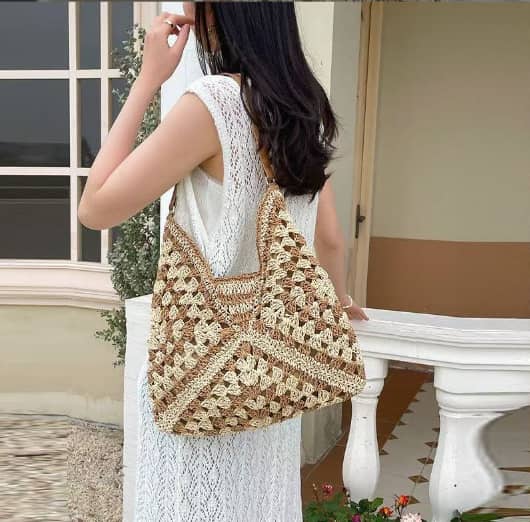
The Lining – Hidden, But Important
Not every raffia bag has a lining. And that’s fine for beach bags or market totes.
But if a bag does have a lining, cheap linings cause problems. They rip. They don’t fit right. Or they’re attached so poorly that the lining comes out before the bag wears out.
What to check:
- Material: Cotton lining breathes better and feels nicer. Polyester is cheaper but can get sweaty in hot weather.
- Attachment: Is the lining sewn in securely at the top AND bottom? Loose linings bunch up and annoy your customers.
- Fit: The lining should be slightly smaller than the bag itself. If it’s too big, it sags and looks cheap.
Red flag: Ask your raffia bags manufacturer for a photo of the inside of a finished bag. If the lining looks wrinkled or crooked, that’s a bad sign.
How to Prevent Lining Issues in Bulk Orders
Lining problems are preventable. Here’s what to specify in your order.
Prevention strategies:
| Strategy | How It Works | Why It Matters |
|---|---|---|
| Specify cotton lining | Choose cotton over polyester | Feels better, matches the natural story |
| Require top and bottom attachment | Lining must be sewn in at both ends | Prevents bunching and sagging |
| Set fit standards | Lining must be 5–10% smaller than the bag | Ensures a snug fit |
| Inspect seam finishing | Check for clean, finished edges | Prevents fraying and unraveling |
| Review a finished bag | Ask for a photo of the inside before shipping | Catches issues early |
What to include in your lining quality specs:
| Spec | What to Specify |
|---|---|
| Material | 100% cotton (premium) or high-quality polyester (budget) |
| Attachment | Sewn in at top and bottom |
| Fit | 5–10% smaller than the bag interior |
| Seam finishing | Clean edges, no fraying |
| Color | Neutral tone or match the bag’s exterior |
The bottom line: Lining issues are common but avoidable. Specify material, attachment, and fit in your purchase order. A good lining makes the bag feel premium. A bad lining ruins the experience. It’s worth getting right.
How to Check Lining Attachment and Fit
A well-attached lining is essential for durability and customer satisfaction. Here’s how to check it.
What to check on lining attachment:
| Check | How to Do It | What to Look For |
|---|---|---|
| Top attachment | Check if the lining is sewn to the top edge | Securely attached, no gaps |
| Bottom attachment | Check if the lining is tacked down at the bottom | Stays in place – doesn’t ride up |
| Side attachment | Check if the lining follows the bag’s shape | No pulling or wrinkling |
| Sag test | Put your hand inside and move it around | Lining stays in place – no bunching |
| Pull test | Gently pull the lining away from the bag | Stays attached – doesn’t separate |
What good lining fit looks like:
| Fit Indicator | What It Looks Like | Why It’s Good |
|---|---|---|
| 5–10% smaller | Lining is slightly smaller than the bag | Stays taut, no sagging |
| No wrinkles | Smooth, even surface | Professional finish |
| Clean seams | No raw edges or fraying | Durable, long-lasting |
| Sewn in at top and bottom | Attached at both ends | Stays in place, no bunching |
The bottom line: A well-attached lining stays in place, doesn’t bunch, and looks professional. Check both top and bottom attachment. Poor lining attachment leads to customer complaints
The Zipper or Closure – Small Part, Big Frustration
This one’s simple — cheap hardware breaks fast.
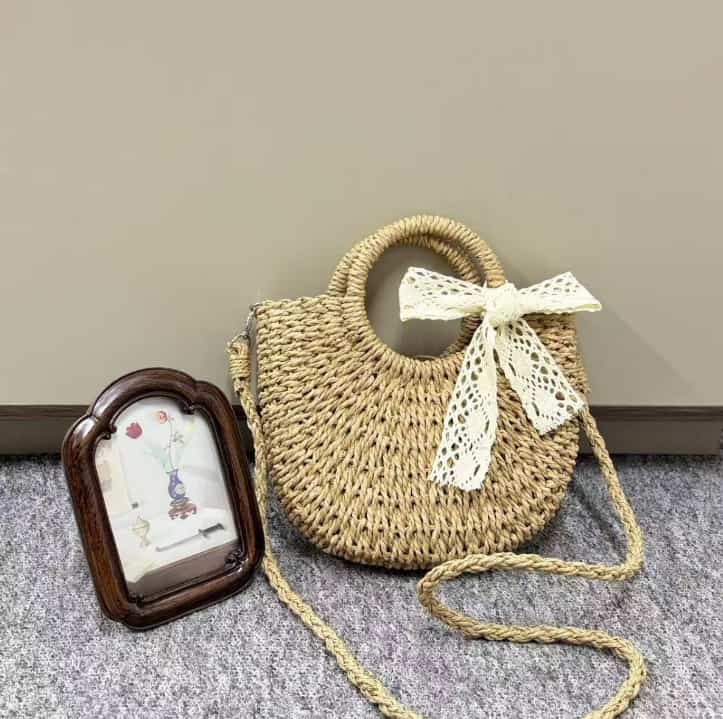
A raffia crossbody bag or raffia clutch bag often has a zipper, magnet, or clasp. And if that little piece of metal fails, the whole bag becomes annoying to use.
What to check:
- Zipper brand: YKK is the gold standard. No-name zippers? Ask to test one first.
- Smoothness: Run it back and forth a few times. Does it catch? Feel rough? That’s a bad sign.
- Magnet strength: Too weak and the bag won’t stay closed. Too strong and customers will struggle to open it.
- Attachment: Is the zipper sewn securely into the raffia? Raffia fibers can slip over time if the stitching isn’t tight.
Pro tip: If you’re ordering bulk raffia bags with zippers, ask your supplier to send you a short video of someone opening and closing the zipper 10–20 times. If it fails on video, it’ll fail with your customers.
How to Test Zipper and Closure Quality
A zipper or closure might look fine, but it needs to work consistently. Here’s how to test it.
Zipper quality tests:
| Test | How to Do It | Pass | Fail |
|---|---|---|---|
| The 20-test rule | Open and close the zipper 20 times in a row | Smooth every time | Catches, sticks, or feels rough |
| The tension test | Zip closed and pull the two sides apart | Holds firm, no separation | Teeth separate under pressure |
| The alignment test | Look at the zipper teeth when closed | Straight, even, aligned | Crooked, misaligned, gapped |
| The pull test | Pull the zipper pull gently | Sturdy, comfortable | Flimsy, sharp edges, loose |
| The speed test | Zip quickly and slowly | Smooth at both speeds | Catches when fast or slow |
Closure quality tests:
| Test | How to Do It | Pass | Fail |
|---|---|---|---|
| Magnetic snap strength | Close and open with one hand | Holds shut, opens easily | Too weak or too strong |
| Clasp function | Open and close multiple times | Smooth, secure | Stiff, hard to operate |
| Attachment check | Check how it’s sewn in | Securely attached | Loose, pulling away |
The bottom line: Test every zipper and closure before approving a sample. If it fails your tests, it’ll fail your customers.
How to Test Closures for Everyday Use
Different closures need different tests. Here’s how to check each type.
How to test each closure type:
| Closure Type | How to Test | What to Look For | What to Avoid |
|---|---|---|---|
| Magnetic snap | Open and close 10 times | Holds securely, opens easily | Too weak (won’t stay closed) or too strong (hard to open) |
| Clasp | Open and close multiple times | Smooth, secure operation | Stiff, hard to operate, sharp edges |
| Drawstring | Pull and release 10 times | Smooth movement, holds tight | Catches, slips, or frays |
| Button | Fasten and unfasten 10 times | Smooth operation, secure hold | Too tight or loose, cheap feel |
| Hook and eye | Attach and detach 10 times | Secure hold, easy to use | Loose, weak, or flimsy |
What customers notice about closures:
| Customer Complaint | What It Means |
|---|---|
| “The magnet isn’t strong enough” | Bag won’t stay closed |
| “The clasp is too stiff” | Hard to open and close |
| “The zipper keeps catching” | Poor quality, will fail soon |
| “The button came off” | Poorly attached hardware |
The bottom line: Closures need to work consistently and securely. Test each type thoroughly on a sample. If a closure feels flimsy or hard to use, it will annoy your customers. Test closures before you commit to bulk. A closure that fails in testing will fail in real life.
Bonus – What About the Weave Itself?
The weave is the main thing. But honestly, if the 4 weak spots above are solid, the weave usually is too.
Still, here’s a quick check:
- Consistency: The weave should be tight and even. Loose spots or big holes = weak points.
- Fraying: A little fuzz is normal. Lots of loose threads sticking out? Not normal.
- Color evenness: If the natural raffia bag has dye, check that the color is the same across the whole bag. Uneven dye means rushed production.
How to Check Weave Quality
The weave is what holds the bag together. Here’s how to check if it’s built to last.
Weave quality tests:
| Test | How to Do It | Pass | Fail |
|---|---|---|---|
| The light test | Hold the bag up to a light source | Even weave, no gaps or holes | Gaps visible, uneven density |
| The feel test | Run your hand across the surface | Smooth, consistent texture | Rough spots, loose fibers |
| The stretch test | Gently pull the bag from both sides | Minimal stretch, returns to shape | Excessive stretch, doesn’t return |
| The pinch test | Pinch the weave between your fingers | Firm, tight feel | Compresses easily, feels loose |
| The consistency test | Check different areas of the bag | Same tightness throughout | Some areas tight, some loose |
What a Good Weave Should Look Like
A good weave is the foundation of a durable raffia bag. Here’s what to look for.
Characteristics of a quality weave:
| Quality Indicator | What It Looks Like | Why It Matters |
|---|---|---|
| Even tension | Consistent tightness across the entire bag | Prevents weak spots and stretching |
| No gaps | Tight weave — no visible holes | Keeps small items from falling through |
| Smooth surface | No rough or loose threads | Feels premium, looks professional |
| Reinforced stress points | Tighter weave at handles and bottom | Extra strength where it’s needed |
| Natural variations | Slight irregularities (not flaws) | Proves it’s handmade, not machine-made |
What to look for in different areas:
| Area | What Good Looks Like | What Bad Looks Like |
|---|---|---|
| Body | Even, tight weave throughout | Loose spots, visible gaps |
| Bottom | Dense weave, reinforced | Thin, stretchy, see-through |
| Corners | Tight weave, no fraying | Loose, fraying edges |
| Edges | Clean, finished edges | Fraying, rough edges |
The bottom line: A good weave is even, tight, and consistent. It shouldn’t have gaps, loose spots, or fraying edges. Check these before you buy — a bad weave means a bag that won’t last.
How to Avoid These Weak Spots When Sourcing
You don’t need to be an expert. Just do these 3 things before you place a handmade raffia bag wholesale order:
- Order a sample – Always. Pay the 30–30–50. Check all 4 weak spots yourself.
- Ask for close-up photos – Handles, bottom, inside lining, zipper. If the supplier won’t send them, move on.
- Talk to past buyers – A quick “how have these held up?” can save you thousands.
At Rafico Accessories, we check every one of these weak spots before a bag leaves our workshop. Because we’d rather catch a problem here than have you deal with returns later.
How to Vet a Supplier Before Ordering
Preventing weak spots starts before you place an order. Here’s how to vet a supplier properly.
Supplier vetting checklist:
| What to Check | How to Check | Red Flag |
|---|---|---|
| Sample quality | Order a sample and test all weak spots | Refuses to send a sample |
| Production knowledge | Ask about weave, handles, and QC process | Vague answers, no details |
| Workshop photos | Request photos or video of production floor | Only shows showroom, no factory |
| References | Ask for past client contacts | Won’t share references |
| Reviews | Check B2B platform ratings and reviews | Low ratings, no reviews |
| Communication | Response time and clarity | Slow, vague, or unprofessional |
What to ask before ordering:
| Question | Why It Matters |
|---|---|
| “Can you send a sample before I order?” | Verifies quality |
| “How do you check quality during production?” | Ensures QC process |
| “Can you show me your workshop?” | Confirms they’re a factory |
| “What’s your lead time for samples and bulk?” | Sets expectations |
| “What’s your MOQ and payment terms?” | Clarifies terms upfront |
The bottom line: Vetting a supplier before ordering prevents quality issues and weak spots. Ask the right questions, check samples, and verify their production capabilities. A good supplier will answer your questions and show you proof.
What to Confirm in Your Purchase Order
A detailed purchase order prevents misunderstandings and ensures quality. Here’s what to include.
What to include in your purchase order:
| Specification | What to Write | Why It Matters |
|---|---|---|
| Weave density | “6–8 stitches per inch, tight and even” | Prevents loose weave |
| Handle attachment | “Double-stitched or woven-in handles” | Prevents handle failure |
| Bottom reinforcement | “Double layer raffia or stiff insert” | Prevents bottom sagging |
| Lining | “Cotton lining, attached at top and bottom” | Prevents bunching |
| Zipper brand | “YKK zipper required” | Ensures quality hardware |
| Color reference | “Pantone number or physical sample” | Prevents color mismatch |
| Quality standards | “AQL 2.5 inspection required” | Sets QC expectations |
How to communicate specifications:
- Write them clearly in your purchase order
- Provide photos of what “good” looks like
- Ask for confirmation before production starts
- Keep a signed sample as reference
The bottom line: A detailed purchase order prevents quality issues. Write clear specs, provide visual references, and get supplier confirmation. If it’s not in writing, don’t assume it will be done. Clear specifications are the best way to prevent weak spots.
Wrapping it up
If you know where to look, you can spot a bad raffia bag before you buy hundreds.
Check the handles, the bottom, the lining, and the zipper. Those are the 4 most common weak spots.
Do that, order a sample, and work with a raffia bags manufacturer that actually cares about quality. You’ll save yourself a lot of headaches.
Ready to source handmade raffia bags that last?
Contact Rafico Accessories for a custom raffia bag quote or wholesale pricing. We’ll help you avoid the weak spots.