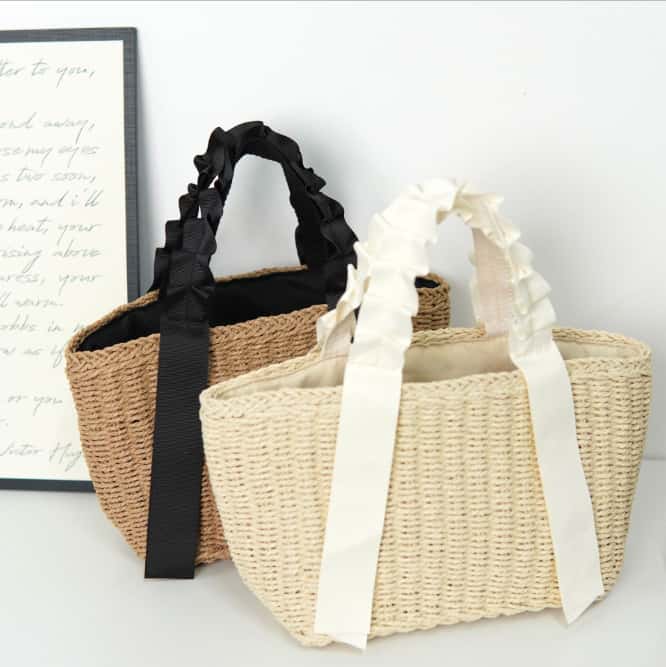
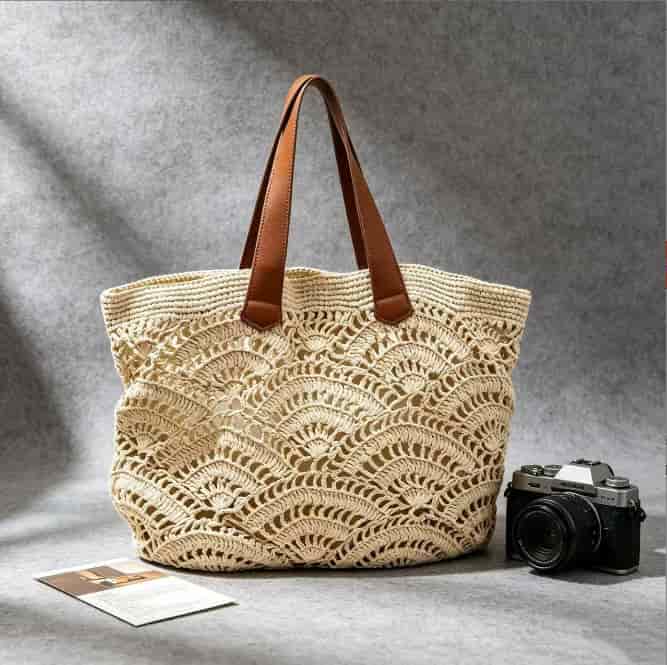
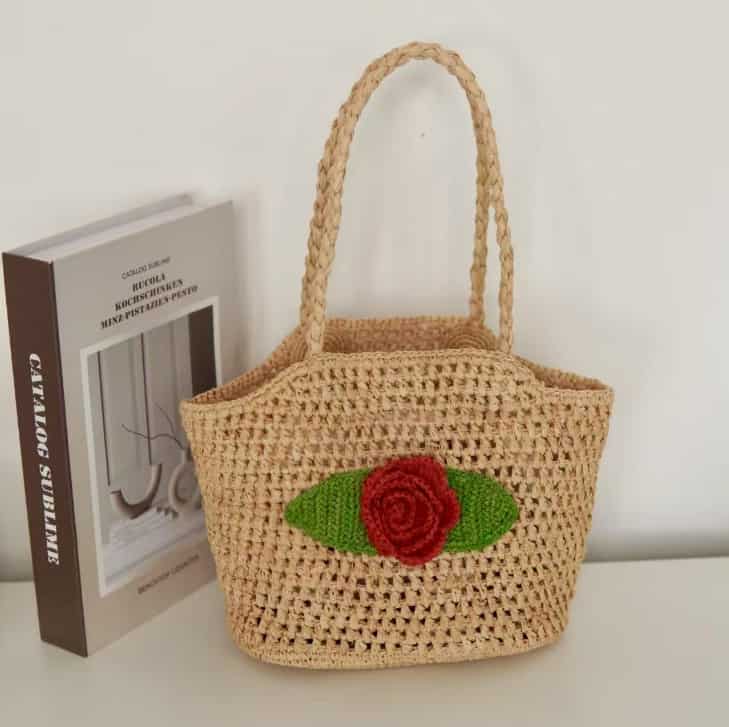
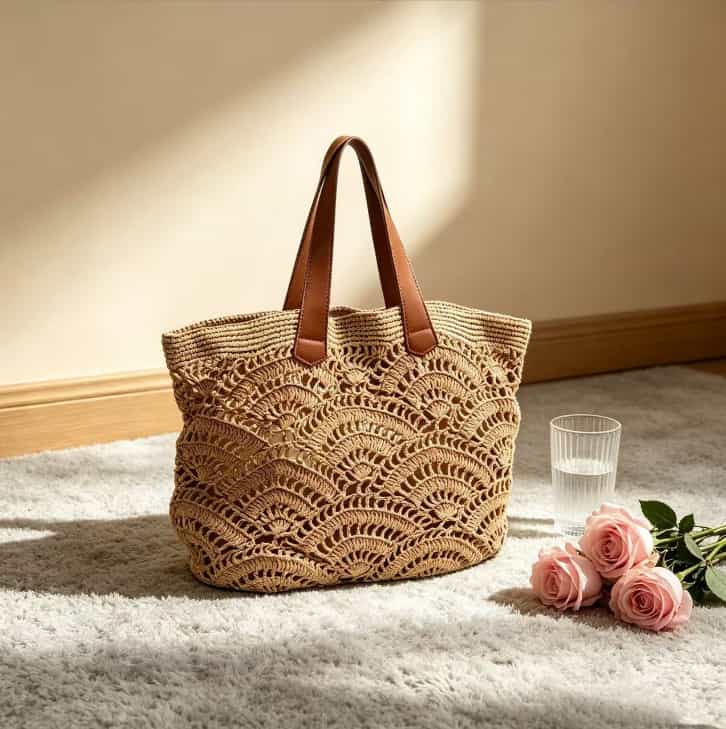
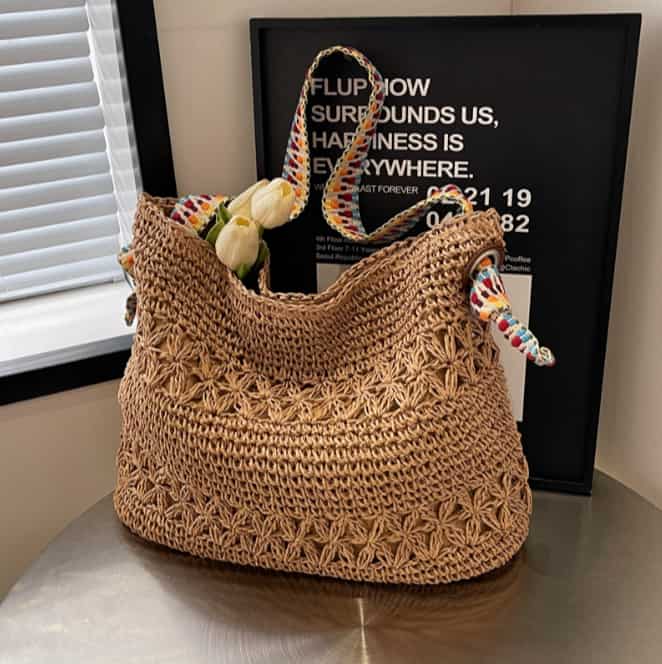
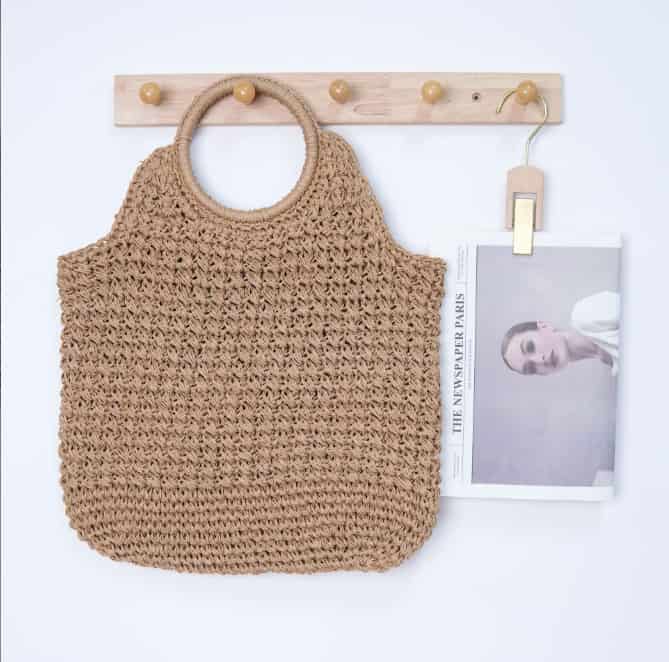
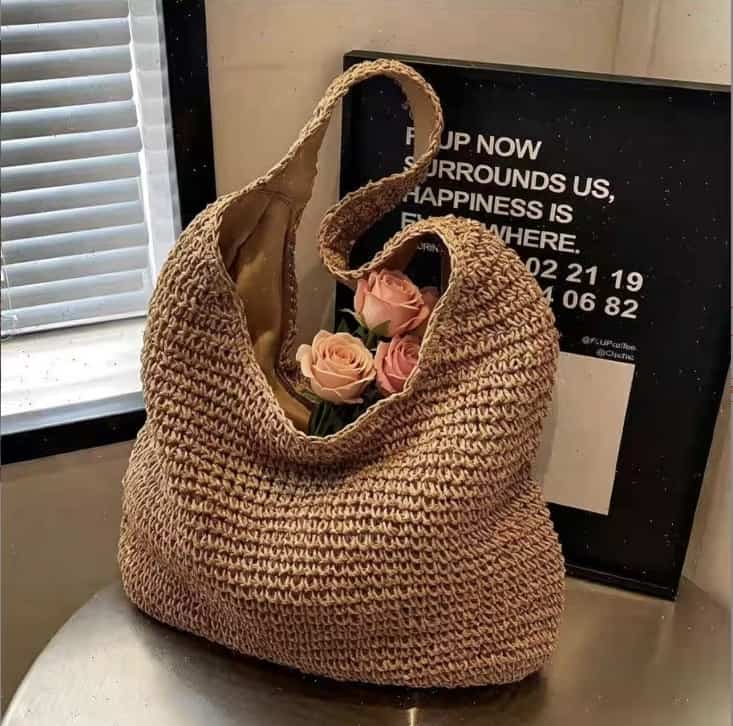
Every spring, buyers ask me the same question: “What’s going to sell this summer?” For 2026, my answer is raffia bags. Not the flimsy beach baskets from ten years ago – I’m talking about custom OEM raffia bags that let you put your own brand, colors, and vibe on a product that already has the wind at its back.
In this guide, I’ll walk you through exactly how to nail your custom OEM raffia bag project for Summer 2026. No fluff. Just what works.
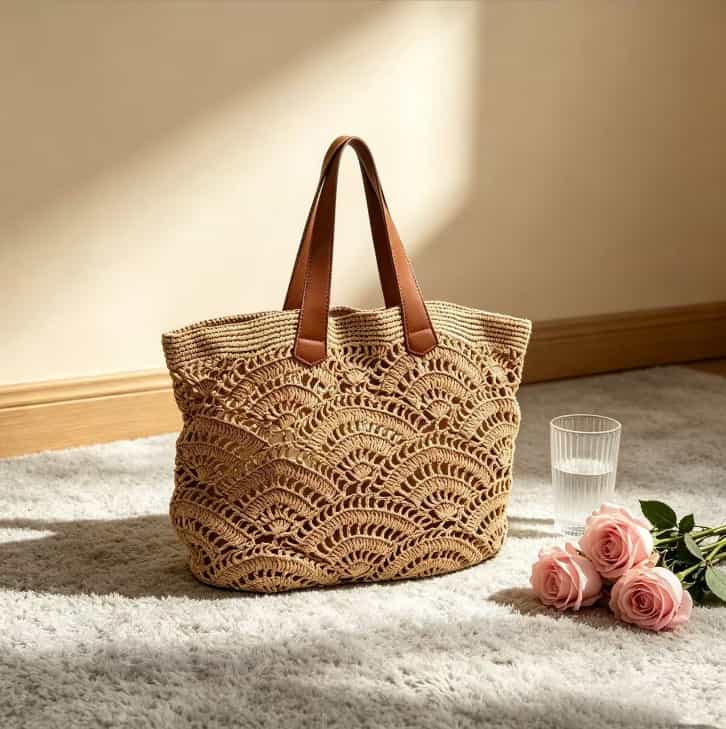
What “Custom OEM” Really Means for Your Raffia Bag Business
Don’t Overcomplicate It – OEM Just Means You Own the Design
Let me clear up a common confusion.
OEM stands for Original Equipment Manufacturing. In plain English: you give me a design, a sketch, a sample, or even just a clear description – and my factory makes it for you. You put your label on it. You control the branding. I handle the production.
You don’t need to build a factory. You don’t need to train weavers. You don’t need to source raw raffia from Madagascar yourself. All that heavy lifting stays with the manufacturer. You focus on sales, marketing, and building your brand.
Here’s Everything You Can Customize
You might think custom means just adding a logo. No – with raffia bags, the customization runs much deeper. Based on my experience, here are the levers you can pull:
| What You Can Change | Options I’ve Actually Shipped |
| Size & silhouette | Mini crossbody, medium shoulder, oversized tote, bucket, hobo, clutch |
| Weave style | Tight uniform weave, loose open weave, crochet, braided, checkerboard |
| Color | Natural undyed, dip-dyed pastels, bold solids, two-tone ombre |
| Handle type | Short top handles (leather or wrapped raffia), long shoulder strap (adjustable or fixed), detachable crossbody |
| Closure | Open top, magnetic snap, zipper, drawstring, wooden toggle, leather strap with buckle |
| Lining | Unlined (fully biodegradable), cotton, polyester, recycled PET |
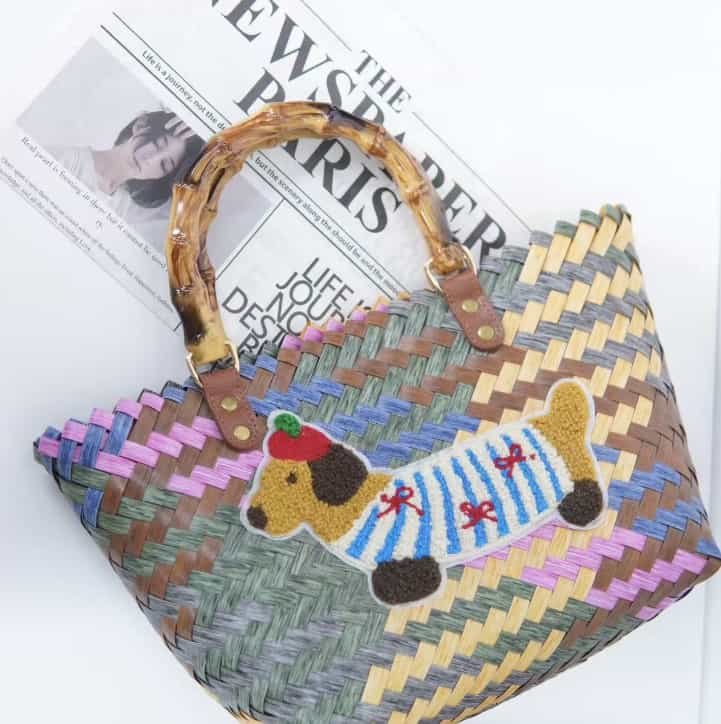
| Trim material | Genuine leather, PU leather, fabric piping, wooden beads, metal hardware |
| Branding | Woven label, leather patch, heat stamp, hang tag, custom dust bag, custom packaging |
The key is matching the customization level to your target price and order quantity.
What extra brand customizations complete your private label?
Beyond the bag body adjustments above, we support full brand finishing details to make your goods totally exclusive:
- Custom woven fabric tags, embossed leather logos, heat-stamped brand marks on hardware
- Branded dust bags, printed paper gift boxes, custom size/ care instruction cards
- Exclusive seasonal decorative add-ons: lace bows, tassels, shell pendants, custom embroidery All brand accessories can be printed or embossed with your brand name, slogan or logo without extra complicated processes.
What business benefits does full OEM customization bring to your store?
- Eliminate direct market competition Fully tailored silhouettes, unique color matching and exclusive branding stop your products from looking identical to generic wholesale raffia bags sold by dozens of other retailers.
- Match your brand’s fixed positioning perfectly Eco-focused brands can pick unlined, natural raffia + plant dye options; luxury boutique lines can upgrade genuine leather trims and tight premium weaving.
- Raise your product markup space Fully custom private-label items carry higher perceived value. Shoppers are willing to pay more for exclusive designs they cannot find on fast fashion mass market sites.
- Adapt to your target customer’s exact demands Adjust bag size, strap length and weight to fit your audience: mini crossbodies for evening shoppers, oversized lightweight totes for beach & travel customers.
How does the full OEM sample & bulk order workflow run?
| Work Step | Our Service Standard | Timeline Reference |
|---|---|---|
| Design communication | Confirm sketches, custom specs, logo files & color swatches | 1–3 working days |
| Sample development | Hand-weave prototype matching all your custom adjustments | 10–12 working days |
| Sample revision support | Free minor tweak adjustments on the first prototype | 3–5 working days per revision |
| Bulk mass production | Strictly follow approved sample for consistent sizing, weave and color | 25–35 working days based on order volume |
| Pre-shipment inspection | Full quality check of custom trims, logos and lightweight weight standard | 2–4 working days before shipping |
The Step-by-Step Process I Use for Custom Raffia Bag Orders
Let me walk you through exactly how an order happens from first email to final delivery. I’ve done this dozens of times, so this is the real workflow, not a sales pitch.
Step 1: You Send Me Your Brief – Be Specific
The more detail you give me upfront, the fewer surprises later.
I need to know:
- What’s your target retail price?
- Who is the end customer?
- Do you have a reference photo or a sketch?
- What quantity are you thinking?
- When do you need the bags?
Pro tip: Create a simple mood board. Pull 3–5 images from Pinterest or Instagram. Circle the features you like – the handle shape, the weave density, the closure type. This saves weeks of back-and-forth.
Step 2: We Select Materials and Lock Down Specs
After I understand your vision, I’ll propose specific materials.
For raffia, the main choice is origin. Madagascar raffia is the gold standard – consistent, soft, and strong. But it costs more. Southeast Asian raffia or paper raffia works well for lower-price points.
We’ll also decide:
- Natural or dyed?
- Lined or unlined?
- Hardware: brass, nickel, antique gold, or wood?
- Handles: fixed or detachable? Leather or wrapped raffia?
I’ll send you a technical specification sheet. Don’t worry if it looks technical – I’ll explain every line. Just confirm or correct each point.
Step 3: Sample Development – This Is Non-Negotiable
Never, ever skip sampling. I’ve seen buyers try to save money by going straight to bulk. It always ends badly.
Here’s what happens:
- I make 1–3 sample bags based on your brief. This takes 2–4 weeks because weavers work by hand.
- I ship the samples to you
- You check them. Hold them. Put your phone inside. Hang them on your shoulder. Take photos.
- You send me feedback: “Make the handles 2 cm longer,” “Use a darker lining,” “The weave is too loose on the bottom.”
Sometimes we go through 2–3 sample rounds. That’s fine. It’s much cheaper to fix problems at the sample stage than after 5,000 bags are finished.
Cost note: Samples are not free. But most suppliers (including me) deduct the sample cost from your bulk order if you proceed. So it’s really a deposit toward your first production.
Step 4: You Approve the Final Sample – Then We Produce
Once you say “yes, this is the one,” I lock the design. We sign a production confirmation that states:
- Final specs and materials
- Quantity
- Unit price
- Total amount
- Payment terms
- Delivery date
Then you pay the deposit. I buy raw raffia, assign weavers, and start bulk production.
Lead time: For 500–1,000 pieces, plan on 30–45 days. For 2,000+ pieces, 45–60 days. Raffia weaving is slower than machine sewing, but that’s also what gives it the handmade charm.
Step 5: In-Process Quality Checks – I Don’t Wait Until the End
I build quality checks throughout production, not just at the finish line.
Here’s what I check:
- Raw raffia arrival – Is the fiber clean? Consistent width? No mold or brittleness?
- Weaving stage – Even tension? No skipped stitches? Handles attached securely?
- Lining & assembly – Straight seams, no loose threads, zippers work smoothly.
- Final inspection – Random sampling from finished batch. I check dimensions, weight, color, and hardware.
You can also hire a third party inspector like SGS or Bureau Veritas. I fully support that. In fact, I prefer it – because then we both trust the result.
Step 6: Packing and Shipping – Let’s Get Your Bags to Market
You choose the packing:
- Bulk carton – Low cost, bags are folded or nested. Good for large orders where you repack locally.
- Individual polybag – Protects each bag. Common for mid tier wholesale.
- Retail-ready – Each bag in a dust bag with a hang tag and care card. You can just put them on the shelf.
Shipping options:
- Ocean freight – 25–35 days from Asia to Europe or US. Best for large orders when you’re not in a rush.
- Air freight – 5–7 days. Costs more but saves 3–4 weeks. Good for urgent restocks or late-season orders.
Once shipped, I send you the bill of lading or air waybill. You pay the balance (70%), and I release the documents. Customs clearance is on your end, but I provide all HS codes and packing lists to make it smooth.
How to Choose a Good OEM Supplier – Without Getting Burned
I’ve seen buyers pick the wrong factory and regret it. Here’s how to avoid that.
Check these 5 things:
- Material traceability – Ask where their raffia comes from. If they say “from our warehouse” with no country, that’s a red flag.
- MOQ flexibility – Ask for 200 pieces. If they say no or quote crazy high, they’re not for small brands.
- Sample policy – Do they offer samples? Will they deduct sample cost from bulk order? Honest suppliers say yes.
- Communication – Send 3–4 questions. Do they answer clearly within 24–48 hours? If not, move on.
- Social compliance – BSCI or SMETA audits matter if you want to sell to big retailers later.
Red flags to walk away from:
- “No samples, just trust us.”
- “We can do any price you want.” (They’ll cut quality.)
- “All raffia from Madagascar” but no proof.
- Slow replies before you pay. (It gets worse after.)
What hidden post-order risks come with unqualified OEM factories?
- Unstable batch consistency Cheap suppliers alter fiber thickness, weaving tightness or hardware between production runs, leading to mismatched goods for your store.
- Hidden extra charges after order confirmation They may add unexpected fees for custom logos, eco dyeing, packaging or documentation that were not mentioned in initial quotes.
- Slow after-sales support for defective products Once goods ship out, low-quality factories delay replies and refuse rework or compensation for flawed bags.
- Missed delivery deadlines Factories with weak capacity often delay mass production, causing you to miss summer retail selling windows.
Qualified VS Unqualified OEM Supplier Full Comparison Table
| Inspection Standard | Reliable Raffia OEM Factory | Risky Unqualified Supplier |
|---|---|---|
| Raw material proof | Provide origin certificates & fiber test reports | Vague warehouse-only replies with no source evidence |
| Sample settlement rule | Charge sample fee, deduct full amount from bulk payment | Refuse samples or refuse sample cost deduction |
| Small batch support | Accept flexible low MOQ for startup brands | Enforce rigid large minimum order quantity only |
| Document & audit support | Provide BSCI/SMETA compliance files on request | No official factory audit certifications |
| Order transparency | Share production photos & shipping schedule updates | No real-time progress tracking during manufacturing |
How to Protect Your Custom Designs
Your custom designs are your brand’s intellectual property. Here’s how to protect them.
Ways to protect your designs:
| Method | How It Works | Best For |
|---|---|---|
| Design registration | Register your design with your local IP office | Unique, original designs that define your brand |
| Non-disclosure agreement (NDA) | Legal agreement preventing supplier from sharing your design | All custom projects |
| Watermark your sample photos | Prevents designs from being copied from images | Online presentations and portfolios |
| Limit design sharing | Only share full specs with suppliers you trust | Protecting core designs |
| Use a confidentiality clause | Include in your purchase order contract | All custom projects |
What to include in an NDA with your supplier:
| Clause | Why It Matters |
|---|---|
| Confidentiality | Supplier can’t share your design with others |
| Non-use | Supplier can’t use your design for other clients |
| Non-solicitation | Supplier can’t approach your customers |
| Duration | Protection lasts for a defined period |
| Jurisdiction | Which country’s law applies |
The bottom line: Your custom designs are valuable. Protect them with NDAs, watermarks, and registration where appropriate. A good supplier will respect your IP — a bad one will take your designs to other buyers. Protect yourself before you share.
How to Identify If Your Supplier Will Respect Your IP
Before you share your designs, assess whether your supplier is trustworthy. Here’s what to look for.
Signs a supplier will respect your IP:
- They ask about your brand – they care about your business, not just your order
- They have clear policies – they can explain their confidentiality practices
- They’ve worked with other brands – they understand the importance of IP protection
- They’re willing to sign an NDA – no hesitation or pushback
- They communicate professionally – clear, open, and transparent
Signs a supplier might steal your designs:
- Too eager for your design details – asking for full specs before any discussion
- Avoids signing NDAs – “We don’t need contracts”
- Vague about past clients – won’t share references or brands they work with
- Cheap pricing – may be cutting corners to win your business
- No clear policies – can’t explain how they protect client designs
How to test a supplier before sharing full designs:
- Start with a simple style – share a basic design first, not your hero piece
- Ask for references – speak to past clients about their experience
- Check their online presence – see if they market designs that look like other brands’ products
- Start small – place a small order before sharing your full collection
The bottom line: Trust is earned, not given. Before you share your full collection, test your supplier with smaller orders and simple designs. If they pass, you can trust them with more.
What to Do If Your Design Is Copied
Even with protection, theft can happen. Here’s how to respond.
Steps to take if your design is copied:
- Document everything – take screenshots, save links, collect evidence
- Contact the supplier directly – they might not know or might resolve it quickly
- Send a formal cease and desist notice – official notice that you’re serious
- Consult a lawyer – professional legal advice protects your rights
- Consider a complaint to the platform – if they copied it from a B2B platform, report it
- Decide on action – pursue legal action or move on
Prevention strategies:
- Register your design – legal protection in your country
- Date-stamp your work – provides proof of when you created the design
- Keep communication records – emails and messages can serve as evidence
- Use NDAs consistently – creates a legal barrier
- Work with trusted suppliers only – prevention is better than cure
The bottom line: If your design is copied, act quickly. Document everything, contact the supplier, and seek legal advice if needed. Prevention — NDAs, trusted suppliers, and limited sharing — is always better than dealing with theft after it happens.
When and How to Increase Your Order Quantities
Scaling your production volume is a big step. Here’s how to know when it’s the right time and how to do it smoothly.
When to increase your order quantity:
| Indicator | What It Means | What to Do |
|---|---|---|
| Consistent sell-through | Your test orders sell out repeatedly | Increase volume by 50–100% |
| Request for larger orders | Retailers or customers want more | Scale your reorder quantity |
| Reduced stock alerts | You’re constantly running out | Increase baseline stock levels |
| Seasonal demand | Peak season drives higher sales | Plan for seasonal volume increases |
| Long-term supplier relationship | Trust is built, quality is consistent | Commit to larger annual volume |
How to scale volume without increasing risk:
| Strategy | How It Works | Why It Works |
|---|---|---|
| Incremental increases | Add 50–100 pieces per order, not 500 at once | Grows production capacity gradually |
| Split orders | Order half upfront, half later | Reduces risk if demand changes |
| Pre-negotiate pricing | Lock in rates before you need them | Secures better pricing for growth |
| Plan 2 seasons ahead | Order early to avoid capacity issues | Prevents delays when demand grows |
| Test new colors in small batches | Add new colors alongside proven sellers | Expands product line with minimal risk |
The bottom line: Scaling volume is a process, not a one-time decision. Track sell-through, test demand, and increase volume gradually. A steady growth approach is safer than a sudden jump that could leave you with excess inventory.
How to Manage Cash Flow When Scaling Production
Growing your order size means more money tied up in inventory. Here’s how to manage it.
Cash flow challenges when scaling:
| Challenge | Why It Happens | How to Manage It |
|---|---|---|
| Larger deposits | Higher order value means higher upfront costs | Negotiate deposit percentage (try 20–30%) |
| Longer payment cycles | More inventory takes longer to sell | Stage orders or stagger delivery |
| Shipping costs | Bulk shipping is expensive | Factor shipping into pricing, negotiate rates |
| Storage costs | More inventory needs more warehouse space | Plan storage needs in advance |
| Slow-selling styles | Some styles take longer to move | Reorder only proven sellers |
Cash flow strategies for scaling:
- Use your deposit – Negotiate 20% deposit instead of 30%
- Balance payments – Stagger delivery across 2–3 months
- Sell pre-orders – Collect payment before you order
- Negotiate better payment terms – As volume increases, ask for better terms
- Monitor inventory turnover – Know how fast you sell before you reorder
The bottom line: Scaling production is good for your business, but it requires careful cash flow management. Plan ahead, negotiate payment terms, and don’t tie up all your capital in one order. Smart scaling keeps you growing without breaking your cash flow.
How to Negotiate Better Payment Terms as You Grow
As your order volume increases, you have more leverage to negotiate better terms with your supplier.
What to negotiate as you scale:
| Term | Why It Matters | What to Ask For |
|---|---|---|
| Deposit percentage | Reduces your upfront cash outlay | Move from 30% to 20% |
| Payment timing | Gives you more time to sell before paying | Extend from 30 to 45 or 60 days |
| Volume discounts | Lowers your per-unit cost | Ask for tiered pricing at 500, 1000, 2000 pieces |
| Sample fee waivers | Saves money on future samples | Request sample fees waived on repeat orders |
| Shipping terms | Reduces your logistics costs | Negotiate FOB or better shipping rates |
How to approach the negotiation:
- Show your growth – Share your sales data or sell-through rates
- Be professional – Frame it as a partnership discussion, not a demand
- Offer long-term commitment – “If you can offer better terms, we’ll commit to X orders per year”
- Be reasonable – Don’t push too hard; maintain a good relationship
- Put it in writing – Get the new terms confirmed in your purchase order
The bottom line: As your order volume grows, you have leverage. Use it to negotiate better payment terms, volume discounts, and shipping rates. A fair negotiation benefits both you and your supplier — and strengthens the partnership.
Wrap It Up
Look, here’s the bottom line. Raffia bags have moved from beach-only to everyday essential, and luxury brands have already stamped their approval. If you offer custom OEM raffia bags for Summer 2026, you’re stepping into a hot market with real demand.
My advice? Don’t overcomplicate it. Start with a clear brief, insist on physical samples, and lock your design before bulk production. Choose a supplier who’s transparent about materials and fair with MOQs. And please – tell the story behind the bag. “Handwoven from sustainably harvested palm” sells way better than just “straw tote.” You’ve got the roadmap. Now go make it happen.