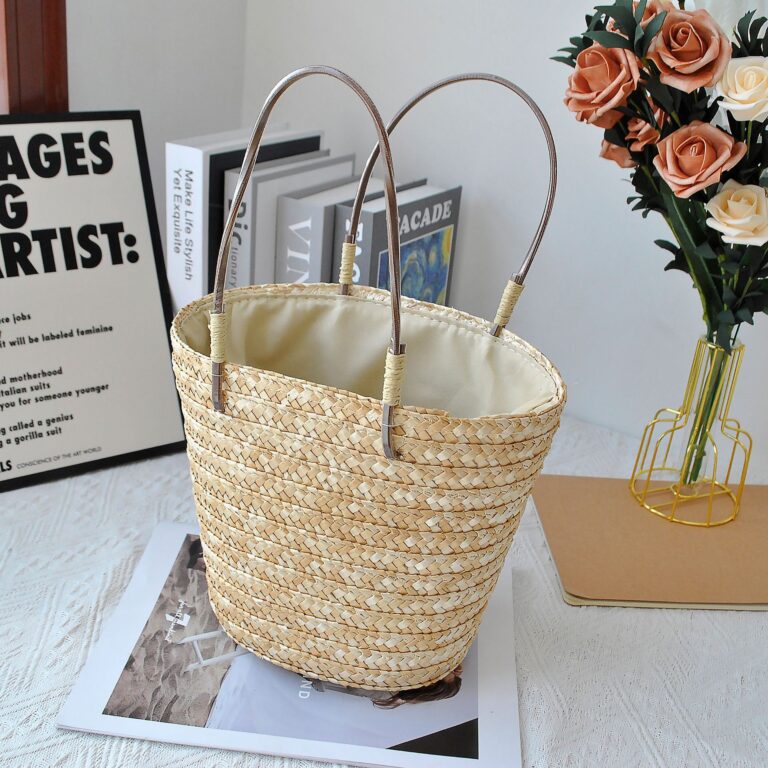
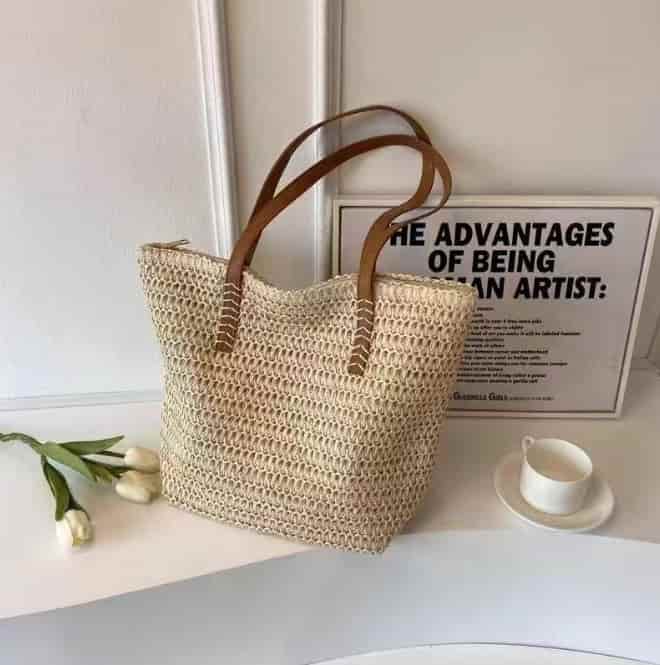
Let’s be real — if you’re buying raffia bags for your store, you want a good deal. But you also don’t want bags that fall apart after a few weeks.
The good news? You can cut the cost of raffia bags without forcing your supplier to use bad materials or skip quality checks. It’s about being smart, not cheap.
Here are 5 ways that actually work.
Way 1 – Order Bigger Quantities
This one’s old but it works.
The more bulk raffia bags you order, the lower the price per bag. Why? Because setup, cutting, and packing take about the same time whether you make 100 bags or 1,000.
What you can do:
- Combine different styles in one order (totes + crossbodies + clutches)
- Ask for tiered pricing: 100 pcs, 300 pcs, 500 pcs, 1000 pcs
- Plan your stock so you order less often but more each time
A raffia bag wholesale supplier will almost always give you a better rate for one big order than for five small ones.
Why volume discounts work and how to maximize them
Ordering bigger quantities lowers your per-unit cost, but not all volume discounts are created equal.
How to maximize volume discounts:
| Strategy | How It Works | Impact |
|---|---|---|
| Combine styles in one order | Order totes, crossbodies, and clutches together | Reduces setup costs per style |
| Ask for tiered pricing | Request quotes at 100, 300, 500, 1000 pieces | Shows you the savings curve |
| Plan ahead | Order once for the season, not multiple small orders | Saves on shipping and logistics |
| Share containers | Combine with other buyers | Lowers shipping cost per unit |
| Negotiate annual volume | Commit to a yearly total, not one order | Gets you better long-term pricing |
Typical volume discount curve:
| Quantity | Per-Unit Cost | Savings vs. 100 Units |
|---|---|---|
| 100 pieces | $10.00 | — |
| 300 pieces | $8.00 | 20% |
| 500 pieces | $6.50 | 35% |
| 1,000 pieces | $5.50 | 45% |
The bottom line: The more you order, the less you pay per bag. Combining styles and planning ahead maximizes your savings.
When Ordering Bigger Quantities Doesn’t Make Sense
Ordering bigger isn’t always the right choice. Here’s when to stick with smaller orders.
When small orders make more sense:
| Situation | Why Small Orders Are Better | What to Do |
|---|---|---|
| Testing a new style | You don’t know if it will sell | Order 50–100 pieces to test demand |
| Limited storage space | You can’t store large quantities | Order what you can store |
| Seasonal products | You don’t want leftover stock after the season | Order enough for the season, no more |
| Limited budget | You can’t afford a large upfront investment | Order smaller quantities within your budget |
| Cash flow concerns | You don’t want to tie up cash in inventory | Order what you can afford |
How to decide on order size:
| Factor | What to Consider |
|---|---|
| Sales forecast | How many do you expect to sell? |
| Storage capacity | How much space do you have? |
| Budget | How much cash can you commit? |
| Season length | How long do you have to sell? |
| Supplier MOQ | What’s the minimum order? |
The bottom line: Bigger orders save money per unit, but they also tie up cash and space. Only order bigger if you’re confident you can sell the inventory. Test small, then scale. There’s no point saving $2 per bag if you’re stuck with unsold inventory. Order what you can sell, not what gives you the best per-unit price.
Way 2 – Keep the Design Simple
Look, every extra color, weird shape, or mixed material adds time and risk. The more complicated the design, the harder it is to make fast — and the more likely something goes wrong.
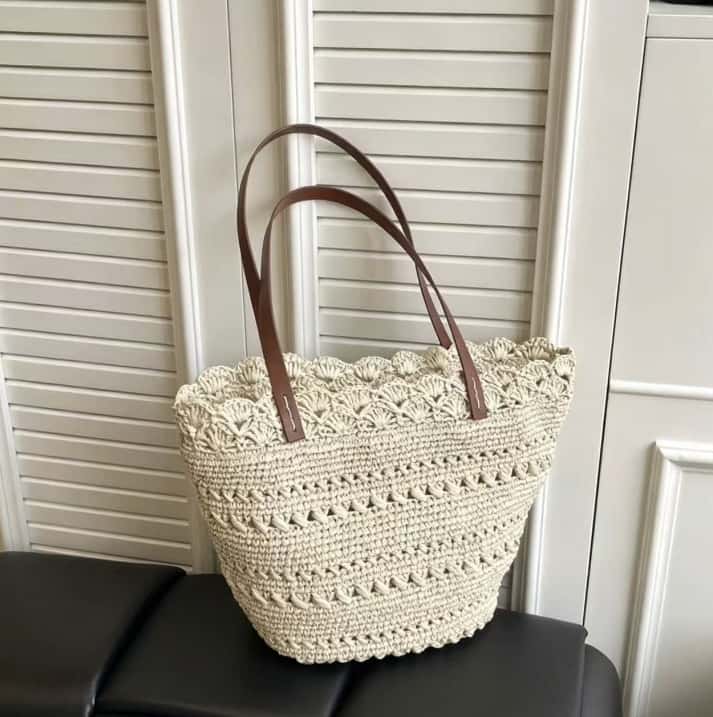
What actually works:
- Stick to 1–2 colors. That’s it.
- Use standard sizes — like 20x30cm or 30x40cm. Nothing custom unless you really need it.
- If you’re ordering under 2,000 pieces, use heat embossing or digital printing. Skip the expensive screen setup fees.
A quick tip: Make the base bags in bulk, then add your labels, hangtags, or inner pouches after they arrive in your country. That way you’re not paying factory markup for every little extra.
What to simplify – and what to keep
Not every simplification saves money. Here’s what to cut — and what to keep.
What to simplify (saves money):
| Design Element | Why Simplify | How Much It Saves |
|---|---|---|
| Number of colors | Each color adds dyeing time and material waste | 5–10% |
| Leather handles | Leather is expensive; raffia braid or cotton webbing is cheaper | 10–15% |
| Cotton lining | Lining adds material and labor cost | 5–10% |
| Intricate weave patterns | Complex patterns take longer to weave | 10–20% |
| Multiple sizes | Each size requires separate patterns and setup | 5–10% |
What to keep (doesn’t cost much):
| Design Element | Why Keep It | Cost Impact |
|---|---|---|
| Reinforced handles | Prevents returns and complaints | Minimal |
| Tight weave | Determines durability and perceived quality | Minimal |
| Quality stitching | Prevents unraveling and returns | Minimal |
The bottom line: Cut what customers don’t notice. Keep what affects durability and quality. Simple design doesn’t mean cheap design — it means smart design.
How to simplify without looking cheap
Simplification shouldn’t make your bags look low-quality. Here’s how to keep them looking premium.
Keep it premium – even when simplified:
| Strategy | How It Works | Why It Works |
|---|---|---|
| Choose natural raffia | Use 100% natural raffia, not synthetics | Feels premium, looks authentic |
| Use a tight weave | Even simple weave looks premium if tight | Signals quality craftsmanship |
| Add a logo tag | A small woven label elevates the bag | Adds a professional touch |
| Use quality hardware | Good zippers and clasps matter | Customers notice hardware quality |
| Offer neutral colors | Beige, sand, and natural tones look premium | Appeals to the widest audience |
What to avoid when simplifying:
| Mistake | Why It’s a Problem |
|---|---|
| Loose weave | Looks cheap, feels flimsy |
| Cheap hardware | Rusts or breaks quickly |
| No branding | Feels generic, lacks identity |
| Poor finishing | Frayed edges look low-quality |
| Synthetic raffia | Feels fake, doesn’t biodegrade |
The bottom line: Simplification and premium quality are not opposites. A simple, well-made bag with natural raffia, tight weave, and quality hardware looks more premium than a complex bag made with cheap materials. Choose quality over complexity
How much does this save?
Honestly, simplifying a design by 10% can cut the manufacturing cost by 15–20%. Just give your supplier a clear tech pack upfront so they don’t have to guess — saves you both a headache.
Way 3 – Buy Direct from a Manufacturer, Not a Middleman
How to check if you’re dealing with a middleman
Not every supplier is a direct factory. Here’s how to tell who you’re actually dealing with.
Signs you’re dealing with a middleman (trading company):
| Sign | What It Looks Like |
|---|---|
| Vague about production | Can’t answer detailed questions about weaving or drying |
| No workshop photos | Only show product photos, never the factory floor |
| Generic descriptions | Copy-paste product descriptions from other suppliers |
| Higher pricing | 20–30% above market average |
| Multiple categories | Sell everything from bags to electronics |
Signs you’re dealing with a direct factory:
| Sign | What It Looks Like |
|---|---|
| Detailed knowledge | Knows about weave density, drying time, fiber quality |
| Workshop photos/video | Can show you the production floor |
| Specialized | Focuses on raffia or natural fiber bags |
| Competitive pricing | Prices in line with market average |
| Samples available | Can make a sample quickly |
How to verify:
| Step | Action |
|---|---|
| 1 | Ask for workshop photos – real production floor, not a showroom |
| 2 | Ask detailed production questions – can they answer without checking? |
| 3 | Check their company profile – “Manufacturer” vs. “Trading Company” |
| 4 | Request a sample – can they make one quickly? |
| 5 | Compare pricing – is it 20–30% above market? |
The bottom line: Direct factories cost 20–30% less than trading companies. Verify before you order – and save the middleman markup.
How to Find Direct Factories Without a Middleman
Finding direct factories takes a bit more effort, but the savings are worth it. Here’s how to find them.
Where to find direct factories:
| Channel | How It Works | Best For |
|---|---|---|
| B2B platforms (Alibaba, Global Sources) | Filter by “Manufacturer” or “Factory” | Wide selection, easy comparison |
| Trade shows (Canton Fair, Magic) | Meet factory reps face-to-face | In-person verification |
| Industry clusters | Shandong, Guangdong, Fujian provinces | Specialized raffia factories |
| Sourcing agents | Local agents who know direct factories | Hands-off, local expertise |
| Direct outreach | Search for factories online and contact them directly | Full control |
How to verify a direct factory:
| Step | What to Do | Why It Matters |
|---|---|---|
| 1 | Check their B2B platform profile | “Manufacturer” vs. “Trading Company” |
| 2 | Ask for workshop photos or video call | Confirms they’re a factory |
| 3 | Ask detailed production questions | They should know every detail |
| 4 | Request a sample | Verifies quality and production capability |
| 5 | Check their pricing | Should be 20–30% lower than traders |
The bottom line: Direct factories are worth finding. They offer better pricing, faster problem-solving, and more control over quality. Use B2B platforms, trade shows, and sourcing agents to find them – and always verify before you commit. The savings add up quickly.
Way 4 – Reduce Defects & Pack Smarter
Here’s what works:
A lot of the hidden cost isn’t in the bag itself — it’s in what gets thrown away or how much you pay for shipping.
Quality control strategies that save money:
| Strategy | How It Works | Impact |
|---|---|---|
| Pre-production sample sign-off | Approve a sample before bulk production starts | Catches issues before they multiply |
| In-line inspection | Check quality during production — weave tension, stitching | Fixes problems early, reduces waste |
| Final random inspection | AQL 2.5 standard random check at the end | Catches remaining defects before shipping |
| Digital tension control | Automates weave tension for consistency | Fewer mistakes, less material waste |
| Cutting guides | Standardizes cutting for handles and panels | Reduces off-cuts and material waste |
Packaging optimization strategies:
| Strategy | How It Works | Impact |
|---|---|---|
| Standardize folding | Fold bags the same way every time | Fits 15–20% more per container |
| Optimize carton size | Match carton size to product dimensions | Reduces empty space, lowers shipping cost |
| Bulk packing | Pack multiple bags per carton | Saves on individual packaging costs |
| Compression packing | Compress bags where possible | Reduces volume, lowers freight cost |
| Pallet optimization | Maximize pallet space | Reduces number of pallets and handling costs |
The bottom line: Quality control prevents waste. Packaging optimization lowers shipping costs. Together, they directly improve your profit margin.
How much does this save?
Defect reduction and packing optimization can save 8–15% on your total landed cost.
Defect reduction savings:
| Defect Rate | Impact on Cost | Example (500 Bags at $10) |
|---|---|---|
| 5% defect rate | 5% of bags wasted or discounted | $250 loss |
| 2% defect rate | 2% of bags wasted or discounted | $100 loss |
| Under 1% | Minimal loss | $50 loss |
| Savings | 3–5% | $150–250 saved |
Packing optimization savings:
| Strategy | Savings on Freight | Example (500 Bags) |
|---|---|---|
| Standardized folding | 15–20% more units per container | Saves on container space |
| Better carton size | 5–10% | Saves $50–100 |
| Bulk packing | 5–15% | Saves $50–150 |
| Compression packing | 10–20% | Saves $100–200 |
| Total savings | 8–12% | $100–300 |
Combined impact:
| Area | Savings | On 500 Bags at $10 |
|---|---|---|
| Defect reduction | 3–5% | $150–250 |
| Packing optimization | 8–12% on freight | $100–300 |
| Total savings | 10–15% | $250–550 |
The bottom line: Defect reduction saves you from replacement costs and returns. Packing optimization saves you on freight. Together, these strategies can cut 10–15% of your total landed cost — a significant saving on any order.
Way 5 – Use Trade Agreements to Save on Import Duties
This one’s easy to miss, but import duties can add 5–15% to your final cost. A lot of buyers just pay it without checking if they can pay less.
What to do:
- Ask your supplier for a Certificate of Origin that matches a trade agreement your country has (like RCEP, ASEAN-China, EU-Vietnam, etc.)
- Make sure you’re using the right HS Code for raffia bags — usually 4602.11 or 4602.19. Wrong code means overpaying or getting stuck at customs.
- Work with suppliers who actually know export paperwork and can tell you upfront how to save on duties.
How much does this save?
Using trade agreements can save 5–12% on import duties. Getting the HS code right saves another 2–4% in hidden fees and delays.
Duty savings breakdown:
| Duty Rate Without FTA | Duty Rate With FTA | Savings Per Unit (on $10 Bag) | On 500 Bags |
|---|---|---|---|
| 10% | 0% | $1.00 | $500 |
| 8% | 0% | $0.80 | $400 |
| 6% | 0% | $0.60 | $300 |
| 10% | 5% | $0.50 | $250 |
HS code savings:
| Issue | Cost Impact | How to Avoid |
|---|---|---|
| Wrong HS code | Overpaying duties or customs delays | Use 4602.11 or 4602.19 for raffia bags |
| Incorrect classification | Customs reclassification penalties | Confirm with your customs broker |
| Missing documentation | Delays and storage fees | Always get Certificate of Origin |
Combined savings:
| Saving Type | Savings | On 500 Bags at $10 |
|---|---|---|
| Trade agreement duty saving | 5–12% | $250–600 |
| Correct HS code | 2–4% | $100–200 |
| Total savings | 7–16% | $350–800 |
The bottom line: Using trade agreements and the correct HS code can save 7–16% on your total landed cost — $350–800 on a 500-piece order. Always check your trade agreements and get the documentation right.
How to Use Payment Terms to Improve Your Cash Flow
Payment terms affect your cash flow as much as unit price. Here’s how to structure them to benefit your business.
Payment terms to negotiate:
| Term | What to Ask For | Why It Helps |
|---|---|---|
| Deposit percentage | 20% instead of 30% | Reduces your upfront cash outlay |
| Balance timing | Pay balance after inspection or delivery | Gives you time to verify quality |
| Payment methods | Bank transfer, Letter of Credit, or payment platform | Flexibility to choose what works best |
| Partial payments | Split into 3 payments over production cycle | Eases cash flow pressure |
| Sample fees deductible | Sample cost deducted from bulk order | Saves money on future orders |
How to negotiate better payment terms:
| Strategy | How to Do It | Why It Works |
|---|---|---|
| Show your track record | “We’ve paid on time for 3 orders” | Builds trust and confidence |
| Offer something in return | “If you can offer 20% deposit, we’ll increase our next order” | Win-win |
| Be reasonable | Don’t ask for terms that would put the supplier at risk | Builds goodwill |
| Start with standard terms | 30% deposit, balance before shipping is common | Safe starting point |
| Build trust first | Good relationships lead to better terms | Trust is earned |
What to watch for:
| Warning Sign | Why It’s a Risk |
|---|---|
| 100% upfront payment | You lose leverage if quality issues arise |
| No clear payment schedule | You may face unexpected demands |
| Vague payment methods | Could be untraceable or insecure |
| No written confirmation | Disputes are harder to resolve |
The bottom line: Payment terms protect your cash flow and reduce financial risk. Start with standard terms, build trust, and negotiate better terms over time. A fair deal benefits both you and your supplier. Don’t overextend your cash flow – negotiate terms that work for you.
How to Choose the Right Payment Method for Your Order
The payment method you choose affects cost, security, and convenience. Here’s how to decide.
Common payment methods for wholesale orders:
| Payment Method | How It Works | Best For | Risk Level |
|---|---|---|---|
| Bank Transfer (T/T) | Direct transfer to supplier’s bank account | Established relationships | Medium |
| Letter of Credit (L/C) | Bank guarantees payment upon shipment | Large orders, new suppliers | Low |
| PayPal / Payment platforms | Online payment with buyer protection | Small orders, samples | Low |
| Western Union | Cash transfer, fast but less secure | Emergency payments | High |
| Escrow service | Third party holds payment until delivery | High-value orders, new suppliers | Low |
How to choose the right method:
| Situation | Recommended Method | Why |
|---|---|---|
| First-time order with new supplier | Letter of Credit or Escrow | Protects both sides |
| Established supplier relationship | Bank Transfer (T/T) | Convenient, low fees |
| Small order or sample | PayPal or Payment platform | Buyer protection, fast |
| Large order (over $10,000) | Letter of Credit | Safest option |
| Rush payment | Bank Transfer | Fastest method |
What to avoid:
| What to Avoid | Why It’s a Risk |
|---|---|
| Full payment upfront without security | No protection if quality issues arise |
| Unsecured payment methods | Can’t recover money if something goes wrong |
| Sending payment without written confirmation | Disputes are hard to resolve |
| Paying before sample approval | You lose leverage to correct quality issues |
The bottom line: Choose the right payment method for your situation. Bank transfers are convenient for established relationships. Letters of Credit and escrow services protect both sides for new or large orders. Never pay 100% upfront without protection – it’s too risky.
How to Protect Your Cash Flow with Smart Payment Scheduling
Smart payment scheduling helps you maintain cash flow while meeting supplier expectations. Here’s how to structure your payments.
How to structure payments for better cash flow:
| Payment Schedule | How It Works | Why It Helps |
|---|---|---|
| 30% deposit, 70% before shipping | Standard for first-time orders | Manageable upfront cost |
| 20% deposit, 80% after inspection | Lower upfront, quality check before final payment | Protects cash flow |
| 30% deposit, 30% at production start, 40% before shipping | Staged payments over production cycle | Eases cash flow pressure |
| 30% deposit, 70% on delivery | Best for cash flow, hardest to negotiate | Requires strong trust |
Tips for managing payment scheduling:
| Tip | How to Do It | Why It Works |
|---|---|---|
| Start with standard terms | 30% deposit, 70% before shipping | Safe starting point for new relationships |
| Build trust with prompt payments | Pay on time consistently | Suppliers become more flexible |
| Negotiate terms as you grow | As volume increases, ask for better terms | Leverage = better cash flow |
| Use credit lines for larger orders | Finance part of your order | Protects cash flow |
| Stagger orders | Order smaller batches over time | Reduces upfront cash needs |
The bottom line: Smart payment scheduling protects your cash flow. Stagger payments, build trust, and negotiate better terms as your relationship grows. A good payment schedule keeps your cash flow healthy and your supplier happy. Don’t overextend your cash flow – structure payments to match your business’s cash cycle.
Wrapping it up
Cutting the cost of raffia bags isn’t about squeezing your supplier dry. It’s about making smarter choices — bigger orders, simpler designs, direct sourcing, better quality control, and not overpaying on shipping or duties.
Do these five things, and you’ll get better pricing without losing quality.
Ready to cut your cost on handmade raffia bags?
Contact Rafico Accessories for a custom raffia bag quote or wholesale pricing. We’ll work with you, not against you.