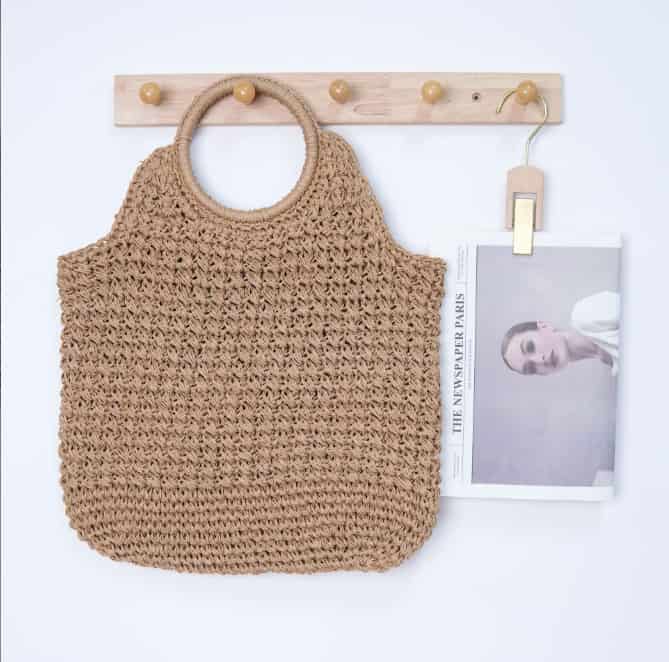
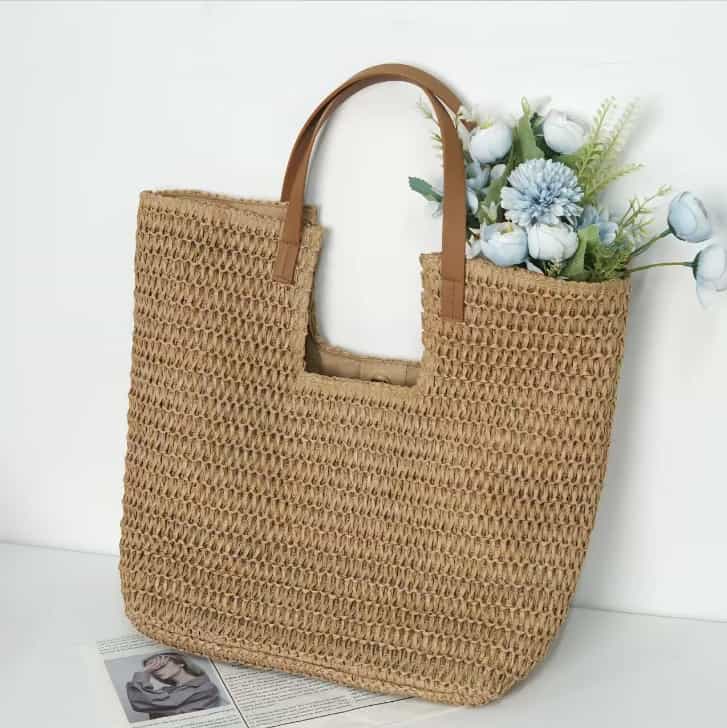
Here’s a scenario I see all the time.
A brand has a great idea for a raffia handbag. They’ve got sketches, color ideas, maybe even a mood board. But they don’t know how to turn it into an actual product that’s ready to sell.
That’s where ODM comes in.
ODM stands for Original Design Manufacturer. In plain English: you bring the idea, we bring the expertise to make it real. From the first sketch to the final shipment, an ODM raffia handbag service handles everything — material sourcing, sampling, production, quality control, and logistics.
Let me walk you through how it works, step by step.
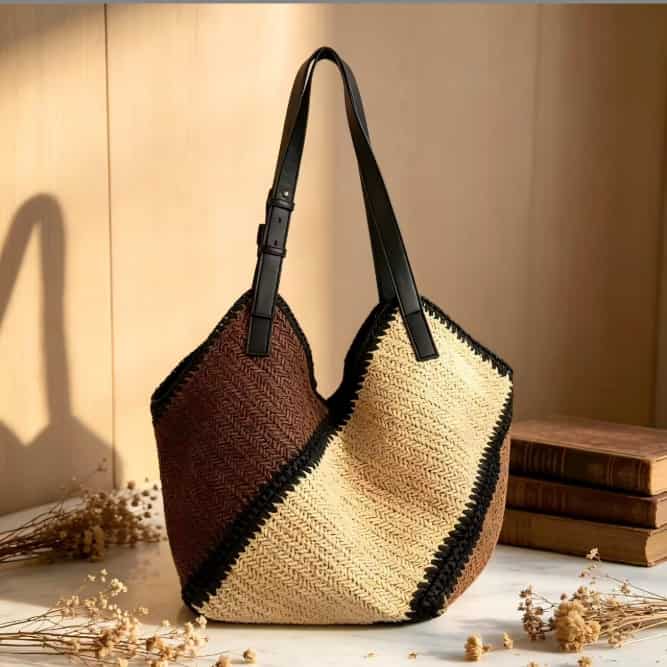
What Is ODM Raffia Handbag Service?
Let’s start with the basics.
ODM means you don’t need to be a manufacturer to launch your own raffia bag line. You provide the concept, design direction, or reference styles — and the factory handles the rest.
ODM vs. OEM – Which One Fits You?
This is the most common confusion I see. OEM vs. ODM — what’s the actual difference, and which one should you choose?
The short version:
| OEM (Original Equipment Manufacturer) | ODM (Original Design Manufacturer) | |
| What you provide | Detailed tech pack with exact measurements, materials, and construction specs | Concept, sketch, mood board, reference photos — not a full specification |
| What the factory provides | Manufacturing execution | Design + material suggestions + manufacturing |
| Who owns the design | You — you created it from scratch | Shared — you and the factory developed it together |
| Best for | Brands with in-house design teams and exact specifications | Brands with ideas but no factory know-how |
| Level of control | Full — every detail is specified by you | Collaborative — factory suggests improvements |
| Speed to market | Slower (you must finalize every detail before production starts) | Faster (factory fills in the blanks and starts sooner) |
Here’s the decision rule:
- Choose OEM if: You have a detailed tech pack, exact specifications, and you want complete control over every detail.
- Choose ODM if: You have a concept, sketches, or reference images — but you need the factory’s expertise to bring it to life.
One more thing: Some suppliers offer both. Handbraid, for example, handles both OEM and ODM orders with their in-house design team — so you can start with ODM for initial development and switch to OEM for later collections when you have more specific requirements.
The bottom line: ODM is the path of least resistance for most brands launching a raffia bag for the first time. You don’t need to be a bag expert. You just need to know what you want — and let the factory figure out how to make it.
What Does a Full ODM Service Include?
Here’s something a lot of brands don’t realize: ODM isn’t just “making a bag.” It’s a full-service package that covers the entire product development cycle.
Here’s what a good ODM raffia handbag service actually includes:
1. Design Support
- Helping translate your concept into a feasible design
- Suggesting materials, construction methods, and finish details
- Creating technical drawings or renderings for your approval
2. Material Sourcing
- Sourcing high-quality raffia from reliable suppliers
- Offering alternatives to fit your budget (paper raffia, cotton rope, etc.)
- Managing custom dyeing for unique colors
3. Sampling
- Making a physical sample based on the agreed design
- Incorporating your feedback and revisions
- Finalizing the design and construction for bulk production
4. Bulk Manufacturing
- Woven raffia production by skilled artisans
- Assembly of linings, handles, hardware, and logos
- Quality control at every stage
5. Packaging
- Custom polybags, hang tags, and cartons
- Branded packaging options
- Ensuring products arrive safely
- Logistics
- Coordinating shipping (FOB, EXW, CIF)
- Preparing export documentation
- Door-to-door delivery options available
Handbraid, for instance, highlights that their design team consults with you on “material selection, custom logo techniques, and trending accessories to define your unique style.” In short, they make it easy — you bring the vision, they do the heavy lifting.
The bottom line: A full ODM service covers everything from design to delivery. You don’t need multiple vendors. One factory handles it all.
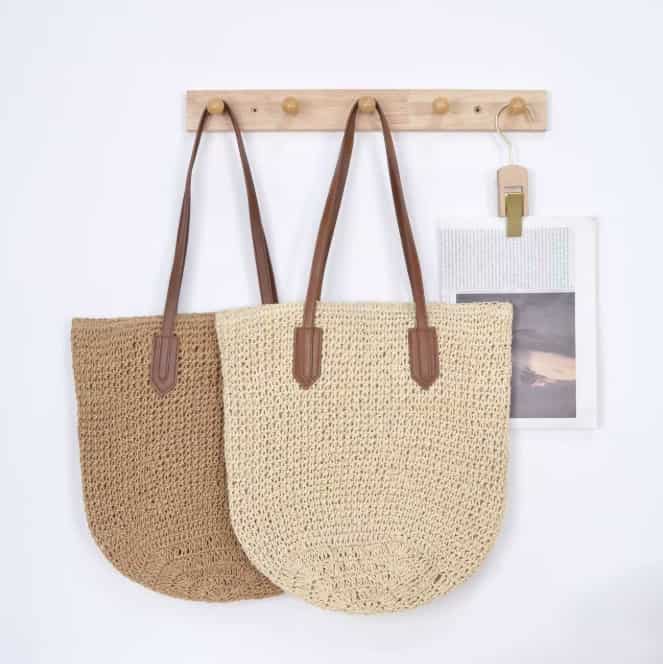
The ODM Process – From Sketch to Shipment
Most ODM raffia bag services follow a similar workflow. Here’s what you can expect.
Step 1 – Requirement Communication & Consultation
This is where it all starts.
You reach out with your idea. Maybe you have a sketch. Maybe you have a photo of a bag you like. Maybe you just have a description of what you want.
What the factory does: They ask questions to understand your vision. Material preferences (raffia, paper raffia, mixed materials), color schemes, size, handle style, lining, hardware, and logo placement.
What you should prepare:
- Reference images or sketches
- Desired size and shape
- Color preferences
- Target retail price (helps determine material choices)
- Logo artwork (if you want branding)
Some suppliers offer free samples for simple designs — up to five pieces per design. For complex designs involving raffia or custom molds, there may be a sample fee (often twice the quoted price), which is typically refunded with a bulk order.
Step 2 – Design Confirmation & Quotation
Once the factory understands what you want, they provide a tailored solution.
What you get:
- A design proposal that balances aesthetics with production feasibility
- Transparent pricing with a breakdown
- Flexible MOQ options (often starting from 100–300 pieces for ODM services)
What to discuss:
- Custom logo techniques (embroidery, metal plates, PU embossing)
- Hardware options (zippers, clasps, magnetic snaps)
- Material alternatives if your first choice affects cost
Pro tip: If you’re working with a tight budget, ask for alternatives. For example, PU leather handles instead of genuine leather can cut costs significantly without sacrificing the overall look.
Step 3 – Sample Production
This is where your idea becomes a physical object.
The factory makes a sample based on the agreed design. You receive it, inspect it, and provide feedback.
What to check on a sample:
Weave density — tight and even, no loose spots
- Material feel — does the raffia feel smooth and flexible?
- Handle attachment — woven-in or double-stitched
- Lining — cleanly sewn, no sagging
- Logo placement — accurate and cleanly executed
- Color — matches your reference
The typical timeline: For simple designs, samples may be free and take 7–15 days. For complex designs (raffia, custom molds), sample fees apply and timelines may be longer.
Step 4 – Bulk Manufacturing & Quality Control
Once the sample is approved, production begins.
What happens in this stage:
- Artisans begin weaving — a process that can take hours to days per bag for handcrafted styles
- Each bag undergoes quality inspection — from checking thread ends to ensuring structural integrity
- 100% inspection is common for ODM orders (not just random sampling)
Who makes the bags: Most ODM raffia bag factories employ skilled artisans. Handbraid, for example, has over 500 experienced artisans dedicated to OEM and ODM orders. AAKS, a Ghana-based brand known for its handwoven raffia bags, works with female artisans in Bolgatanga — each bag takes 4–5 days to create, from sourcing to dyeing to weaving.
Lead times: Typical ODM raffia bag production takes 45–60 days after sample approval, depending on order volume.
Step 5 – Logistics & Global Delivery
After final inspection, your order is packed and shipped.
What’s included:
- Secure packaging (polybags, cartons)
- Shipping coordination (FOB, EXW, or CIF)
- Documentation (commercial invoice, packing list, bill of lading)
Pro tip: Some factories offer door-to-door shipping, including direct delivery to Amazon warehouses. If you’re selling online, this can simplify your logistics significantly.
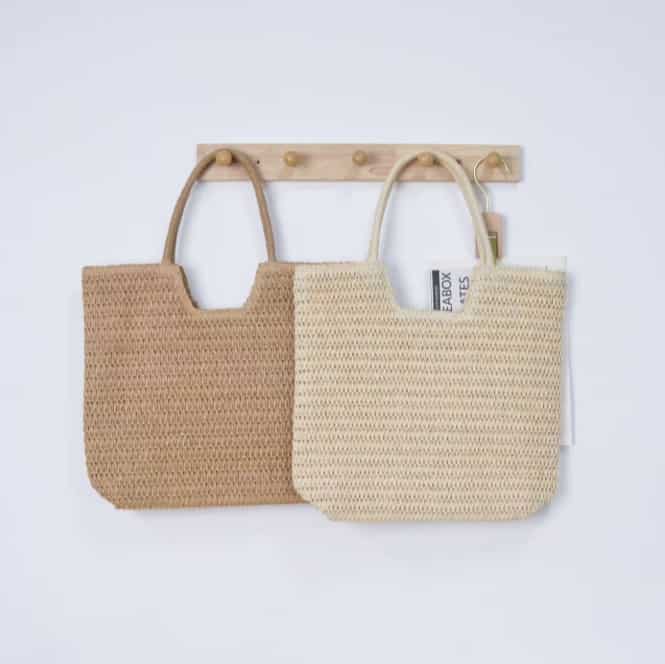
What Can You Customize with ODM Raffia Handbag Service?
The short answer: almost everything.
| Customization Element | What’s Possible |
| Material | Raffia, paper raffia, cotton rope, seagrass, corn husk, recycled PP |
| Color | Custom dyeing, Pantone matching, natural vegetable dyes |
| Shape | Tote, bucket, clutch, crossbody, shoulder, mini — any silhouette |
| Size | Any dimensions — from mini pouches to oversized totes |
| Handles | Leather, PU, braided raffia, cotton webbing, chains |
| Lining | Cotton, polyester, linen (optional) |
| Hardware | Zippers, magnetic snaps, clasps, metal plates — custom finishes available |
| Logo | Embroidery, printing, embossing, woven labels, metal plates |
| Accessories | Fringe, tassels, beads, shells, decorative elements |
| Packaging | Custom polybags, hang tags, boxes with your branding |
The key point: You don’t need to accept “off the shelf.” ODM exists to create products that fit your brand identity, not the other way around.
Customization Options – From Overall Shape to Final Details
Lead-in: ODM customization goes far beyond color – every detail can become part of your brand language.
Customization options fall into four levels:
| Level | Options | Cost Impact | Brand Impact |
|---|---|---|---|
| Silhouette & Shape | Tote, bucket, crescent, baguette, clutch; size and proportions | Moderate | High – shape is the first thing customers notice |
| Materials & Color | Raffia grade (Madagascar/Kenya/blend), custom dyeing, lining fabric, handle material | High | High – material quality sets brand perception |
| Structure & Function | Inner pockets, closure type (zipper/magnetic/drawstring), base reinforcement, strap design | Moderate | Medium – influences daily usability and repeat purchases |
| Branding & Packaging | Logo tags, hang tags, dust bags, care cards, outer box stickers | Low | High – unboxing moment shapes first brand impression |
Key takeaway: Customization isn’t about changing everything. If budget is limited, prioritize silhouette (shape) and branding (packaging) – use standard factory specs for functional details to keep costs down and quality stable.
Where to Invest for Maximum Brand Impact
Lead-in: Not all customization delivers the same return – which investments create lasting brand impressions?
Three directions offer the best returns:
- Handle differentiation – Handles are touched daily. Upgrade from standard raffia to leather or mixed materials. Extra cost: +$2–6/unit, perceived value lift: $15–30+.
- Branded lining – Most raffia bags have plain linings. Add your logo print or brand color inside. Low cost, high frequency of brand exposure. Extra cost: +$1–3/unit, perceived value lift: $10–15.
- Custom dye (brand color) – Use your signature color as the main raffia shade. Builds “see the color, think of your brand” recognition. Extra cost: $50–150 per color + $1–3/unit, perceived value lift: $20–30.
Key takeaway: Pick at least two of these three. Total added cost: $5–12/unit – brand recognition gained is far greater.
What’s a Typical ODM Raffia Bag Timeline?
Here’s a realistic view of the ODM process from start to finish.
| Stage | Timeframe | Key Activities |
| Consultation & Design | 3–7 days | Communicate requirements, confirm design direction |
| Quotation & Agreement | 2–5 days | Receive price, confirm MOQ, sign contract |
| Sample Production | 7–15 days | Make sample, review, provide feedback |
| Sample Revision (if needed) | 5–10 days | Adjust design and remake sample |
| Bulk Production | 30–45 days | Weaving, assembly, quality control |
| QC & Final Inspection | 3–5 days | Final checks before packaging |
| Shipping | 7–30 days | Varies by destination and shipping method |
Total timeline: 45–75 days from initial contact to delivery.
What can speed things up:
- Having clear design references ready
- Approving samples quickly
- Choosing standard materials (vs. custom-dyed or rare materials)
What can slow things down:
- Multiple sample revisions
- Custom dyeing or custom mold development
- High order volumes (MOQs over 2,000 pieces)
Full ODM Timeline – Week-by-Week Breakdown
Lead-in: 6–12 weeks sounds short – but every phase carries delay risks. Know each step’s duration to manage expectations.
| Phase | Duration | Key Tasks | Common Delays | How to Avoid |
|---|---|---|---|---|
| Consultation & Quotation | 3–7 days | Define design, confirm specs, get pricing | Vague requirements, back-and-forth revisions | Prepare complete reference images and spec list upfront |
| Design & Sampling | 10–20 days | Create design renderings, produce 1–3 samples | Design issues discovered during sampling; tight sample slots | Review designs before sampling; book factory schedule early |
| Sample Approval & Revisions | 3–5 days | Review samples, provide feedback or approve | Delayed feedback; vague revision instructions | Review within 24 hours; give specific measurable feedback |
| Bulk Production | 20–40 days | Material sourcing, weaving, assembly, QC, packaging | Raw material delays; rework from QC failures | Confirm material stock and production plan before starting; track progress actively |
| Logistics & Shipping | 7–30 days | Booking, customs, loading, transit, clearance, delivery | Shipping delays; incomplete or incorrect customs documents | Prepare all documents early; build in 3–5 days of buffer |
| Total | 6–12 weeks |
Key takeaway: Build in 20% buffer (1–2 weeks). If a factory promises 30% faster than industry standards, they’re likely cutting corners on QC or design validation. It’s better to be asked “are you ready?” than to hear “we need two more weeks.”
Three Hidden Traps in ODM Projects and How to Spot Them Early
Lead-in: ODM looks effortless, but every stage has hidden pitfalls – know where they are so you can steer clear.
| Trap Type | Warning Signs | Potential Consequences | How to Prevent |
|---|---|---|---|
| Unclear design ownership | Contract doesn’t specify who owns the design rights | Factory sells your best-selling design to other buyers, or you can’t stop copycats | Include in contract: “All design rights (including drawings, samples, and molds) belong to the brand.” Get a separate IP confirmation letter signed. |
| Sample vs. bulk quality gap | Sample is perfect; bulk materials, finish, or sizing are noticeably downgraded | Bulk order doesn’t match sample – can’t launch as planned | Include a “bulk quality must match sample” clause. Seal and store a reference sample before production starts. |
| Delivery delays | Factory blames “raw material delays” or “short staffing” | Miss seasonal sales windows; marketing spend wasted; retail buyers cancel orders | Include clear penalty clauses for late delivery. Proactively track progress at key checkpoints (material sourcing, production start, packaging completion). |
Key takeaway: ODM’s convenience relies on choosing the right partner. A responsible, transparent factory matters more than a tight contract. But never treat the contract as optional – it’s your last line of defense.
How to Evaluate an ODM Partner’s Overall Capability
Lead-in: A great sample doesn’t mean a great factory – evaluate partners across four dimensions.
Assess potential factories on these four areas:
- Technical capability – Can they handle raffia with leather or metal hardware? Do they have proper sampling equipment? Request past ODM project samples and ask how they solved material joining challenges.
- Management capability – Do they have clear production processes and a QC system? Ask: Who’s your dedicated contact? How often do you update on progress? Can you provide QC reports?
- Communication capability – Do they reply within 24–48 hours? Do they proactively flag design issues before sampling? Factories that go silent during sampling won’t be easier to reach during bulk production.
- Financial health – Do they rely on few large clients? Do they pay suppliers in cash or on credit? Financial stress often leads to corner-cutting or delays – asking about payment terms reveals more than asking “Are you stable?”
Key takeaway: Score each dimension (1–10). Below 24/40? Keep searching – or at least do a video call or visit before committing.
Pricing and Profit Margins for ODM Raffia Bags
Breaking Down an ODM Quote – What You’re Actually Paying For
Lead-in: An ODM quote isn’t one number – it’s made up of five different cost components. Understand each one, and you’ll know where you can save – and where you can’t.
| Cost Component | What’s Included | Estimated % of Total | Negotiation Room |
|---|---|---|---|
| R&D & Design | Designer hours, pattern-making, sample materials, revision costs | 5–15% | Moderate – complex designs cost more, but you can control this by defining clear requirements and minimizing revision rounds |
| Raw Materials | Raffia fiber, lining fabric, hardware, packaging materials | 30–50% | Moderate – material grade sets the cost range, but factory purchasing volume affects unit price. Ask about their material order volume to gauge their bargaining power |
| Manufacturing | Weaving, cutting, stitching, assembly, packaging (labor + overhead) | 25–40% | Limited – this is a hard cost, but you can reduce labor time by simplifying style complexity |
| Quality Control | QC staff hours, inspection processes, rework costs | 3–8% | Very limited – never compromise on QC. Cutting this equals gambling with quality |
| Management & Profit | Project management, order coordination, factory profit margin | 10–20% | Moderate – first orders usually have built-in buffer. Annual volume commitments can often secure 2–5% concessions |
Key takeaway: Ask for a cost breakdown from the factory (not down to the cent, but at least across these five categories). If they refuse, that’s a red flag. Transparent quoting is the foundation of trust – not a favor to the buyer.
Building Your Brand with ODM – Where Does Your Profit Actually Come From?
Lead-in: ODM saves you design and production costs – but profit comes from how you use the time and resources it frees up.
Your profit margin comes from four main sources:
- Saved design investment – In-house design costs $1,000–$5,000 per style. ODM turns this into a per-unit cost ($2–5/unit), letting you test more styles for less. The savings go straight into marketing and sales.
- No idle capacity risk – With your own factory, fixed costs exist regardless of order volume. ODM shifts this risk to the factory – your costs scale with your orders.
- Faster market entry – Building supply chains takes 6–12 months. ODM compresses this to 4–8 weeks from design to shipment. Launch earlier – capture full-price sales instead of end-of-season discounts.
- Focus on what matters – Outsourced production frees you to focus on brand positioning, content, customer experience, and channel growth – the activities that build long-term brand value.
Key takeaway: ODM isn’t about making your product cheaper – it’s about spending your money and energy where they deliver the highest returns. Ask yourself: “What will I do with the extra time?” If your answer is “more marketing” or “better customer experience,” ODM is the right choice.
Wrapping it Up
ODM raffia handbag service is the bridge between a brand’s vision and a market-ready product. From sketch to shipment, the process covers everything — design consultation, sampling, bulk production, quality control, and logistics.
Whether you’re a boutique owner launching a small collection or a brand scaling up your sustainable accessory line, ODM gives you access to manufacturing expertise without the overhead of owning a factory.
Ready to turn your raffia handbag idea into reality?
Contact Rafico Accessories for a custom raffia bag quote or ODM consultation. We’ll help you from sketch to shipment.