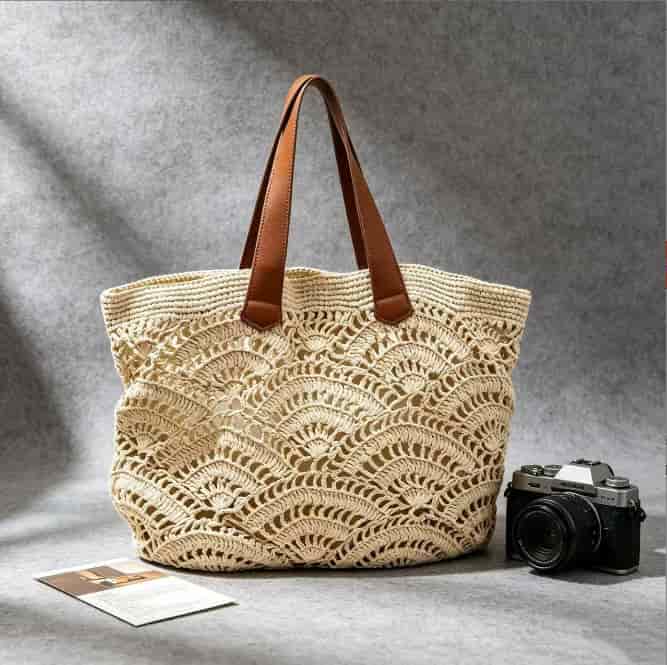
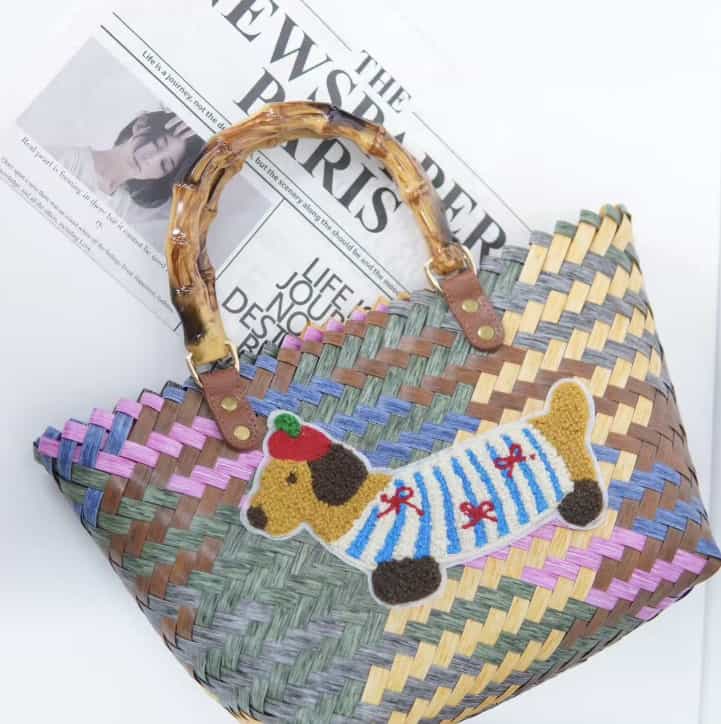
Raffia bags are everywhere in 2026 — on city streets, in offices, at weddings, and on luxury runways. Retailers are buying them, and consumers are searching for them.
But is raffia actually green? Or just another marketing label?
I’ve been sourcing raffia bags for years, and it’s not hype. Raffia is genuinely sustainable. But it’s also practical — it comes in the sizes, colors, and price points buyers actually want.
Here’s why raffia is the green choice for 2026 handbag wholesale.
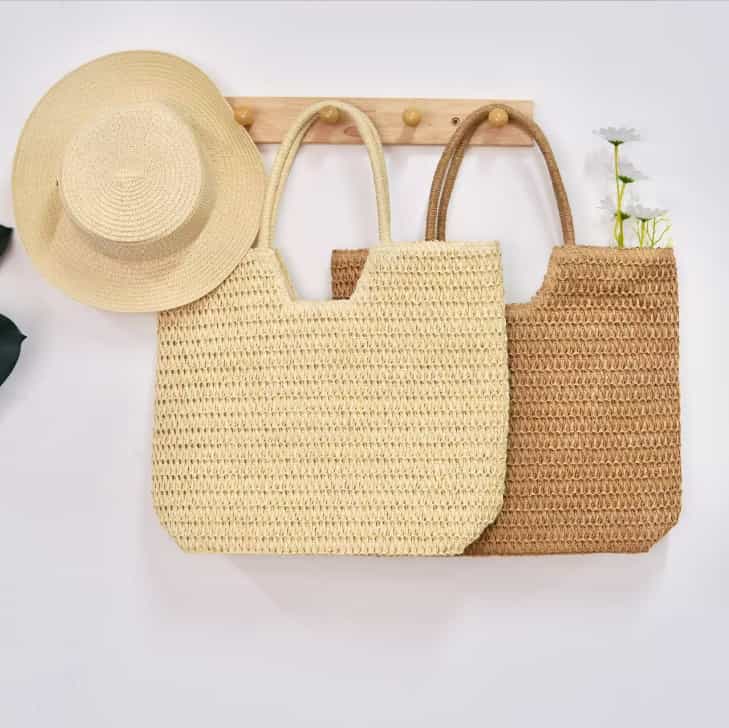
What Do Shoppers Actually Search for in 2026?
Handbag Size – What’s Selling in 2026
Size matters more than a lot of buyers think.
Here’s the breakdown of what’s moving in the market right now:
| Size Category | Typical Dimensions | Best For | Popularity |
| Large Tote | 40x30cm+ | Beach, travel, groceries | High |
| Medium Tote / Shoulder | 25–35cm | Work, everyday, commuting | Very High |
| Crossbody / Bucket | 20–25cm | Casual, hands-free | Growing |
| Small Clutch / Mini | Under 20cm | Weddings, evening | Steady |
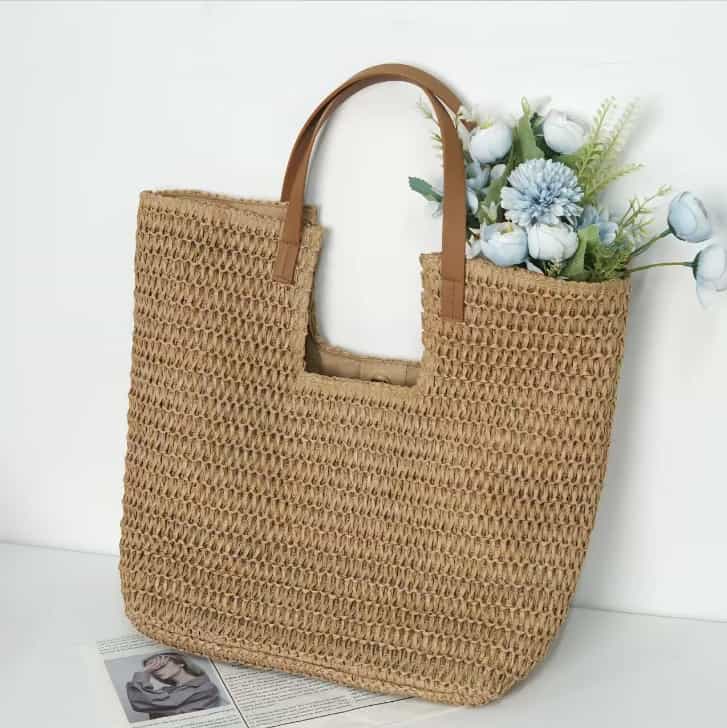
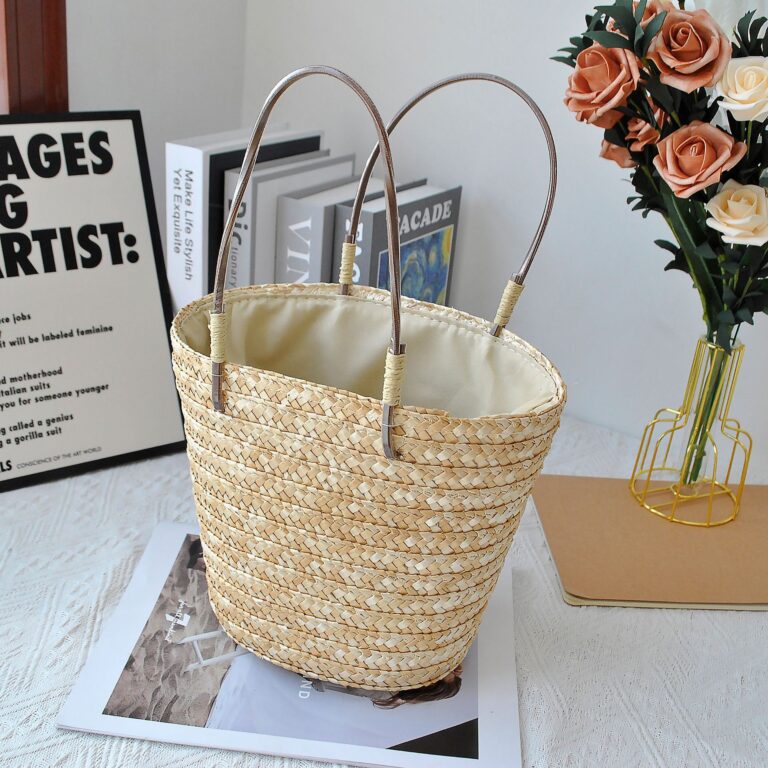
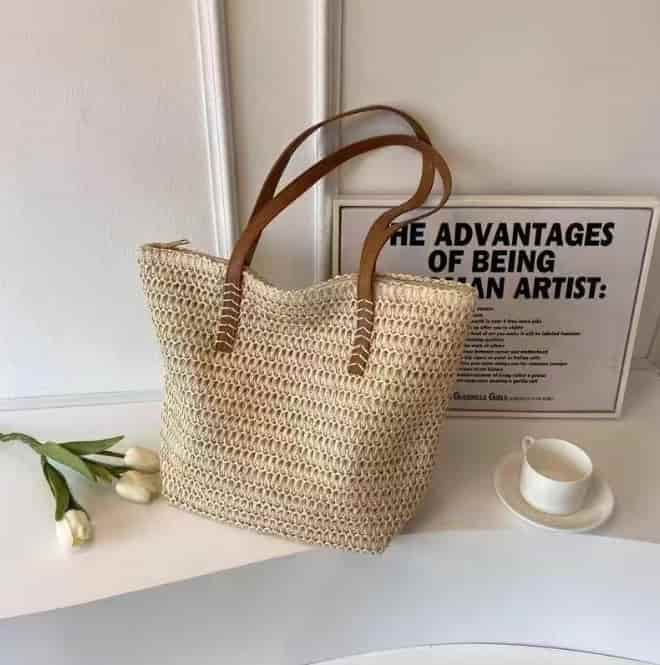
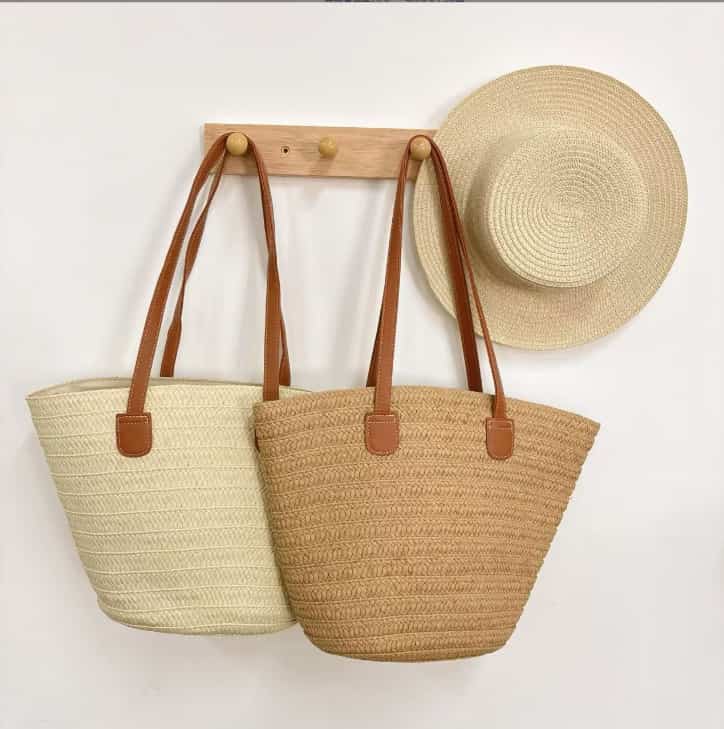
Structured raffia totes with leather trim are the go-to for shoppers who want a bag that works beyond vacation. The medium tote — around 30–35cm wide and 20–25cm tall — is the safest bet for wholesale buyers.
What to order: A medium structured tote with leather handles and cotton lining tends to be the top seller across multiple price points.
Handbag Price – What Your Customers Expect
Raffia bags span a huge price range. And I mean huge.
| Price Tier | Retail Price Range | What You Get | Example Brands |
| Mass Market | $40–80 | Simple tote, no lining, basic handles | Zara |
| Mid-Range | $80–250 | Structured, lined, leather trim | Contemporary brands |
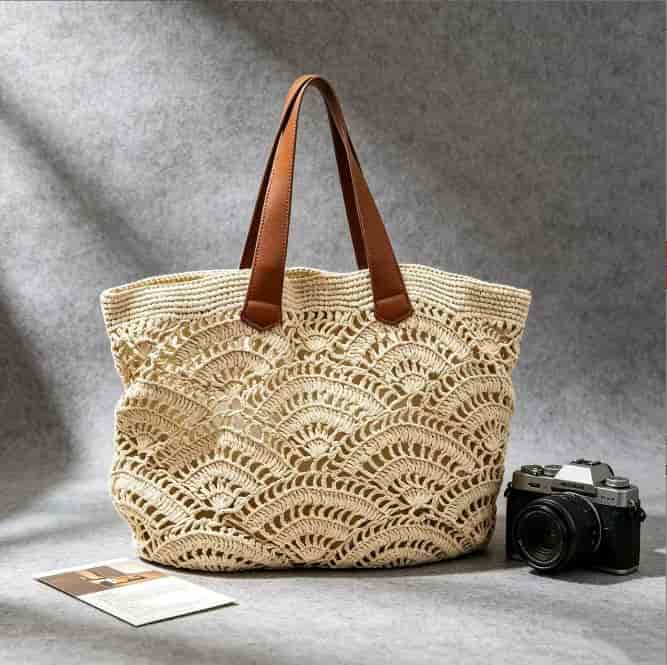
| Premium | $250–600+ | Crochet, artisan-made, luxury finishes | Loewe ($1,990), Stella McCartney |
Zara sells a raffia handbag for €59.95 — simple, entry-level. Loewe sells a raffia fold shopper for $1,990 — handcrafted in Spain with intricate detailing.
The middle is where the volume is. Most wholesale buyers find the sweet spot around $80–150 retail. That range gives you room for quality construction (tight weave, good handles, decent lining) without pricing out the average shopper.
What to order: If you’re new to the category, start with mid-range pricing. You’ll get better margins and fewer quality complaints.
Handbag Color – What’s Trending in 2026
Here’s where it gets interesting.
Natural raffia is beautiful on its own — warm beige, sand, honey tones. But more and more brands are offering color because raffia takes dye exceptionally well.
| Color Category | Examples | Best For |
| Natural / Neutral | Beige, sand, honey, ecru | Classic, timeless, wide appeal |
| Summer Brights | Coral, turquoise, yellow | Vacation, resort, younger shoppers |
| Dark / Rich | Black, brown, navy | Work, city, year-round wear |
A medium-size brown raffia cinch bag with suede crossbody strap has been popular in the premium segment. Natural teak, dyed variations, and richer tones are also trending for 2026.
What to order: Natural is the safe bet — it sells year after year. But adding one or two color options (like black or a summer bright) can expand your customer base without overcomplicating your inventory.
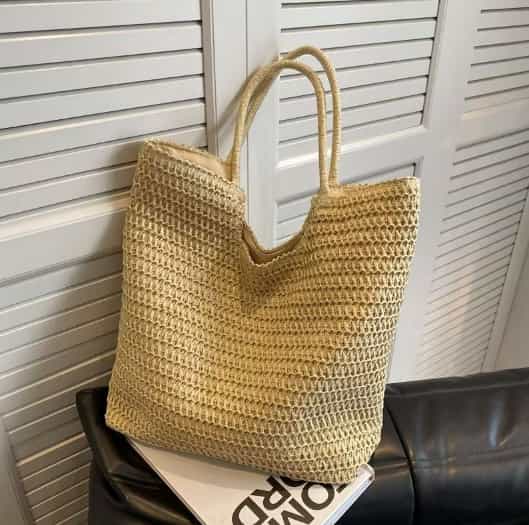
How to Tell If a Raffia Bag Is Really Eco-Friendly
Let’s be honest — a lot of brands slap “eco-friendly” on products that aren’t actually that green. And raffia is no exception.
Just because a bag is made from a natural fiber doesn’t automatically mean it’s sustainable. There are shady practices in this industry too — cheap dyes, unethical labor, mixed materials that ruin the whole “biodegradable” claim.
So how do you actually tell if a raffia bag is really eco-friendly? Here’s what to look for.
Check What’s Actually in the Bag — It’s Not Always 100% Raffia
This is the 1 thing buyers overlook.
A bag can look like raffia but contain synthetic fibers mixed in. Polyester, nylon, or even plastic threads are sometimes woven in to cut costs or add “strength.”
The problem: If it’s mixed with synthetics, it’s no longer biodegradable. You’re basically selling a plastic bag with a raffia costume.
What to check:
- Ask your supplier for the exact fiber composition
- Look for terms like “100% raffia” or “100% natural palm fiber”
- Be suspicious of vague labels like “natural fiber blend”
Pro tip: If you’re buying for a brand that cares about sustainability, get it in writing. A certificate of composition or a lab test report is worth more than a salesperson’s promise.
Ask About the Dye — Natural vs. Chemical
Natural raffia is a warm beige or honey color. If the bag is bright, the dye matters.
Some suppliers use cheap chemical dyes that are toxic — they pollute local water sources and can cause skin irritation. And here’s the thing: those dyes often aren’t color-fast. They bleed onto clothes and fade fast.
What to check:
- Ask: What kind of dye do you use? Natural / vegetable-based? Or synthetic?
- Ask: Are your dyes tested for heavy metals or harmful chemicals?
- Check if the supplier follows any standards
The bottom line: A truly eco-friendly raffia bag uses natural or low-impact dyes. If the supplier can’t tell you what they use, that’s a red flag.
Where Does the Raffia Actually Come From?
Not all raffia is created equal. And “natural” doesn’t always mean “sustainably harvested.”
In some regions, raffia is over-harvested. The trees aren’t given enough time to regrow their leaves, which weakens the tree and damages the ecosystem. In other places, workers aren’t paid fairly, and harvesting is done under bad conditions.
What to check:
- Ask: Where do you source your raffia? Which country? Which region?
- Ask: Are the harvesters paid fairly?
- Look for traceability. Can they tell you the farm or region?
Example: Madagascar is widely considered a premium sourcing region with strong artisan traditions. Raffia from there is usually hand-harvested and traceable. Less reputable suppliers may source from cheaper, less regulated regions.
Check the Finishing — Linings, Handles, and Hardware
This is where sustainability claims often fall apart.
A bag might be 100% natural raffia, but the lining is polyester. The handles are PVC-coated. The zipper is cheap plastic that cracks and breaks.
What to check:
- Lining: Is it cotton or a natural fiber? Or polyester? If it’s polyester, the bag isn’t fully biodegradable.
- Handles: Are they leather? If so, is it vegetable-tanned (lower environmental impact) or chrome-tanned (high chemical use)?
- Hardware: Is it metal? Zinc alloy? Recycled materials? Or cheap plastic that ends up in landfill?
The goal: Minimize non-biodegradable components. A bag that’s 100% natural — raffia + cotton lining + leather handles — is much greener than one with plastic hardware and synthetic lining.
Ask About Packaging — The Hidden Sustainability Trap
This one’s easy to forget.
Your bags might be eco-friendly, but if they’re wrapped in plastic polybags and packed in oversized cartons, you’re creating unnecessary waste.
What to ask:
- Are they using biodegradable or recycled plastic bags?
- Is there excessive packaging (tissue, tape, tags)?
- Can they minimize packaging without risking damage during shipping?
Quick Checklist – How to Verify a Raffia Bag’s Green Credentials
| What to Check | What to Look For | Red Flag |
| Material composition | “100% raffia” or “100% natural palm fiber” | “Natural fiber blend” |
| Dye type | Natural / vegetable-based dyes | Can’t tell you what dye they use |
| Sourcing | Traceable region (e.g., Madagascar) | “Sourced from Africa” — no specifics |
| Labor | Handwoven, fair wages | Machine-made, no info on workers |
| Lining | Cotton or natural fiber | Polyester lining |
| Handles | Leather (vegetable-tanned preferred) | PVC or unknown material |
| Packaging | Recyclable / biodegradable plastic | Regular polybags, excessive packaging |
| Certifications | GOTS, OEKO-TEX, BSCI, Fair Trade | No certifications, no standards |
Small changes add up: Switching from regular polybags to recycled or compostable ones makes a real difference. And if you’re selling to eco-conscious brands, they’ll notice.
What Makes Raffia the Eco-Friendly Choice
Raffia bags aren’t just beautiful — they’re genuinely better for the planet. Here’s why.
Why raffia is a green choice:
| Factor | What It Means |
|---|---|
| Renewable resource | Raffia palms are pruned, not cut down — the tree keeps growing |
| Biodegradable | At the end of its life, raffia returns to the earth |
| Minimal processing | Sun-dried and hand-woven — no chemical baths, no high-energy factories |
| Low water footprint | No irrigation needed — rainwater does the job |
| No microplastics | Raffia breaks down naturally — no plastic particles shed |
How raffia compares to other materials:
| Material | Renewable | Biodegradable | Low Processing | Microplastics |
|---|---|---|---|---|
| Raffia | Yes | Yes | Yes | No |
| Cotton | Yes | Yes | No | No |
| Polyester | No | No | No | Yes |
| Leather | No | Yes (with chemicals) | No | No |
What this means for your customers:
- They’re buying a bag that doesn’t harm the planet
- They’re supporting sustainable materials and artisan communities
- They’re choosing a product that tells a positive story
The bottom line: Green isn’t just a label — it’s the real advantage of raffia. Your customers are paying attention, and raffia delivers.
How to Market Raffia’s Eco-Friendly Story to Your Customers
Sustainability sells — but only if you tell the story right. Here’s how to communicate raffia’s green credentials effectively.
What to emphasize:
| Message | Why It Works |
|---|---|
| “100% natural raffia” | Clear, simple, honest |
| “Biodegradable — no plastic, no microplastics” | Speaks to customer concerns |
| “Handwoven by artisans, not machines” | Adds human connection |
| “Sustainable from source to finish” | Covers the full story |
| “Supports fair wages and traditional craft” | Appeals to ethical shoppers |
Where to share the story:
| Channel | What to Say |
|---|---|
| Product page | “Made from 100% natural raffia — biodegradable and sustainably harvested” |
| Hang tag | “This bag is handwoven by artisans using renewable raffia from Madagascar” |
| Social media | “Behind the bag: the artisans who make it possible” |
| Email marketing | “Why we choose raffia — and why you should too” |
| In-store signage | “Sustainable fashion starts with the right materials” |
What to avoid:
- Overused terms like “eco-friendly” without explanation
- Vague claims that can’t be backed up
- Greenwashing — exaggerating environmental benefits
The bottom line: Raffia tells its own story. Make sure your customers hear it. Be honest, be specific, and show them what makes raffia different.
How to Sell Raffia Bags – Tips for Wholesale Buyers
Tell the Story Behind the Bag
Here’s something that works better than any discount: the story.
Raffia bags aren’t just accessories. They’re handcrafted by real people using skills passed down through generations. In Madagascar, women-led artisan groups weave these bags by hand. In Colombia, entire communities depend on this craft for their livelihood.
Your customers want to know that. Not in a preachy way. Just in a “here’s where this came from” way.
What to put on your product page:
- “Handwoven by artisans in Madagascar”
- “Made from sustainably harvested raffia palm leaves”
- “Each bag is unique — slight variations are part of the craft”
- A bag with a story sells better than a bag without one. Period.
Show Real-Life Photos – Not Just Studio Shots
Studio photos are fine. But they don’t sell raffia bags.
Raffia is a texture-driven product. Customers need to see it in real life — on a beach, at a market, over a shoulder, on a table next to a coffee cup.
What works:
- Lifestyle photos (someone carrying the bag in a real setting)
- Close-up shots showing the weave and texture
- Photos that show the bag’s size in context (next to a person, a table, a chair)
- Multiple angles — front, side, inside, handle detail
One tip: If you’re selling online, include a photo of someone carrying the bag. It helps customers understand size and proportion better than any size chart ever will.
Get Customer Photos and Reviews
Here’s a simple tactic that takes almost no effort but pays off big.
After someone buys a raffia bag from you, ask them to send a photo of them using it. Offer a small incentive if you need to — a discount on their next order, or a free accessory.
Why this works:
Real customer photos look more authentic than professional shots
Other shoppers trust real people more than they trust brands
You build a library of photos you can use across your site and social media
Don’t forget reviews. A 5-star review that says “the weave is tight, the handles are sturdy, and I get compliments everywhere” is worth more than any ad copy you’ll ever write.
How to Position Raffia as a Premium Eco-Friendly Material
Raffia is more than just a sustainable material — it’s a premium one. Here’s how to position it as both eco-friendly and high-value.
Why raffia feels premium:
| Factor | Why It Feels Premium |
|---|---|
| Handwoven look | Associated with craftsmanship and quality |
| Natural materials | Perceived as higher quality than synthetics |
| Textured finish | Looks more intentional than smooth mass-produced bags |
| Artisan story | “Made by hand” justifies a higher price |
| Sustainability | Eco-conscious shoppers associate natural materials with premium |
How to position raffia as premium eco-friendly:
| Strategy | How to Do It | Why It Works |
|---|---|---|
| Focus on craftsmanship | Highlight handwoven, artisan-made details | Customers value the human touch |
| Emphasize natural materials | “100% natural raffia” — clear and specific | Customers trust natural over synthetic |
| Show certifications | Display OK Compost, OEKO-TEX logos | Third-party proof builds trust |
| Tell the origin story | Where the raffia comes from, who makes it | Creates emotional connection |
| Use premium photography | Lifestyle shots, close-ups of weave and texture | Elevates perceived value |
The bottom line: Raffia is both eco-friendly and premium. Position it right, and customers will pay more for the combination of sustainability and quality.
How to Communicate Premium Eco-Friendly Value in Your Marketing
Positioning raffia as premium eco-friendly requires the right marketing approach. Here’s how to communicate that value effectively.
Key messages to include in your marketing:
- “100% natural raffia – sustainably harvested from renewable palm trees”
- “Handwoven by skilled artisans – each bag is unique”
- “Certified OEKO-TEX – no harmful chemicals”
- “Biodegradable and compostable – no microplastics, no landfill forever”
- “Plastic-free packaging – because sustainability matters from start to finish”
Where to emphasize premium eco-friendly positioning:
| Channel | What to Emphasize | Why It Works |
|---|---|---|
| Product page | Certifications, artisan story, material details | Customers make purchase decisions here |
| Hang tag | “100% natural raffia – handwoven, biodegradable” | Physical touchpoint reinforces the story |
| Social media | Behind-the-scenes of artisans and materials | Visual storytelling builds emotional connection |
| Email marketing | “Why we chose raffia – and why you should too” | Educates and builds trust |
| Packaging | “Plastic-free, eco-friendly packaging” | Reinforces the full sustainability story |
What to avoid in your marketing:
- Vague terms like “eco-friendly” without explanation
- Overpromising – don’t claim what you can’t prove
- Using plastic packaging – undermines your entire story
- Generic product descriptions – missed opportunity to differentiate
The bottom line: Premium eco-friendly positioning requires clear, specific messaging. Show your customers the craftsmanship, the materials, and the certifications. When they understand the value, they’ll pay more for it.
How to Price Premium Eco-Friendly Raffia Bags
Premium eco-friendly positioning justifies higher prices. Here’s how to price your raffia bags accordingly.
Pricing tiers for premium eco-friendly raffia bags:
| Positioning | Wholesale Price | Retail Price | What It Includes |
|---|---|---|---|
| Entry eco-friendly | $5–8 | $35–60 | Natural raffia, basic finishing, no certification |
| Mid-range eco-friendly | $8–14 | $60–120 | Natural raffia, cotton lining, OEKO-TEX certification |
| Premium eco-friendly | $14–22 | $120–200 | Natural raffia, cotton lining, leather trim, OK Compost certification |
| Luxury eco-friendly | $22+ | $200–400+ | Premium natural raffia, leather trim, artisan story, full certifications |
Factors that justify higher prices:
- Certifications – OK Compost, OEKO-TEX, or GOTS logos build trust
- Artisan story – Handwoven by skilled artisans adds value
- Materials – 100% natural raffia, cotton lining, leather trims
- Packaging – Plastic-free, premium packaging reinforces quality
- Brand positioning – Premium brands command higher prices
- Uniqueness – One-of-a-kind, handcrafted designs
The bottom line: Premium eco-friendly bags cost more to make – but they sell for more too. Customers are willing to pay a premium for real sustainability and quality. Price accordingly, and don’t undervalue your product.
How to Handle Customer Questions About Sustainability
Your customers will ask questions about sustainability. Here’s how to answer them confidently.
Common customer questions and how to respond:
| Customer Question | Your Response |
|---|---|
| “Is this really sustainable?” | “Yes — it’s made from 100% natural raffia, a renewable resource. The tree isn’t cut down — just pruned.” |
| “What makes it eco-friendly?” | “Natural fibers, no plastic, minimal processing, and it’s biodegradable at end of life.” |
| “How do I know it’s not greenwashing?” | “We have OEKO-TEX and OK Compost certifications — you can see the logos on the product page.” |
| “What happens when it wears out?” | “It can be composted — it returns to the earth naturally, without microplastics.” |
| “Is the packaging sustainable too?” | “We use paper, cardboard, and compostable materials — no plastic.” |
How to handle skepticism:
| Customer Concern | How to Address It |
|---|---|
| “Eco-friendly is just marketing” | Show certifications and specific material details |
| “It’s probably made in a factory” | Share artisan photos and production stories |
| “It’s too expensive” | Explain the craftsmanship and sustainable materials justify the price |
| “I’ve been burned before” | Offer a satisfaction guarantee and encourage them to test the quality |
The bottom line: Customers are skeptical — and they should be. But when you have clear answers, certifications, and proof to back up your claims, you build trust. Be honest, be specific, and don’t overstate your sustainability credentials. A confident, honest answer is more convincing than a rehearsed sales pitch.
How to Answer Tough Sustainability Questions with Confidence
Customers will challenge your sustainability claims. Here’s how to respond with confidence and credibility.
Tough questions and confident answers:
| Tough Question | Confident Answer |
|---|---|
| “How do I know this is really sustainable?” | “We use 100% natural raffia with OEKO-TEX and OK Compost certifications. You can see the logos on our product page.” |
| “What about the workers who make these?” | “Our bags are handwoven by artisans earning fair wages in safe conditions. We work directly with our production teams.” |
| “Doesn’t shipping create a big carbon footprint?” | “We offset our shipping where possible, and we use efficient packing to reduce waste. Raffia itself is lightweight, which also lowers shipping emissions.” |
| “Why does this cost more than a regular bag?” | “You’re paying for quality, craftsmanship, and a genuinely sustainable product that will last for years.” |
How to handle skepticism:
| Skeptical Response | How to Address It |
|---|---|
| “This is just marketing” | “Everything we’re saying is backed by certifications and transparent supply chain documentation.” |
| “I’ve seen cheaper eco-friendly bags” | “Many cheaper bags use synthetics or have no real certifications. Our bags are verified 100% natural and certified.” |
| “I don’t believe it” | “We invite you to try the bag yourself – feel the quality, check the weave, and see the certifications.” |
The bottom line: Confidence comes from knowing your product. When you understand your supply chain, materials, and certifications, you can answer any question with authority. Transparency builds trust.
How to Turn Sustainability Skeptics into Loyal Customers
Some customers start out skeptical. Here’s how to win them over.
How to convert skeptics:
| Skeptic Type | What They Say | How to Respond |
|---|---|---|
| The price skeptic | “It’s too expensive” | “It lasts for years, so the cost per use is actually lower than cheaper bags.” |
| The trust skeptic | “How do I know it’s really eco-friendly?” | “We have OK Compost and OEKO-TEX certifications – here’s the proof.” |
| The cynic | “This is just greenwashing” | “We can walk you through our supply chain, our artisan partnerships, and our materials.” |
| The comparison shopper | “I found something cheaper” | “Let’s compare the materials and certifications side by side.” |
What wins them over:
- Tangible proof – Certifications, test results, supply chain transparency
- A personal touch – Artisan stories, photos, and videos
- Quality they can feel – A sample bag they can touch and inspect
- Customer testimonials – Real customers who love the product
- A guarantee – Satisfaction guarantee reduces risk
The bottom line: Skeptics can become your most loyal customers. They appreciate quality and honesty – and once you earn their trust, they’ll recommend you to others. Don’t avoid skepticism; welcome it as an opportunity to prove your value.
Wrapping it Up
Raffia checks all the green boxes — renewable, biodegradable, low-impact. But the real reason it’s the right choice for 2026? People actually want to buy it.
They’re searching for the right size, price, and color. They’re buying it from mass market to luxury. They love the texture, the story, and the versatility.
If you’re a wholesale buyer, raffia sells itself — as long as you know what your customers are looking for.
Ready to add raffia bags to your wholesale lineup?
Contact Rafico Accessories for a custom raffia bag quote or wholesale pricing. We’ll help you find the right sizes, prices, and colors for your summer collection