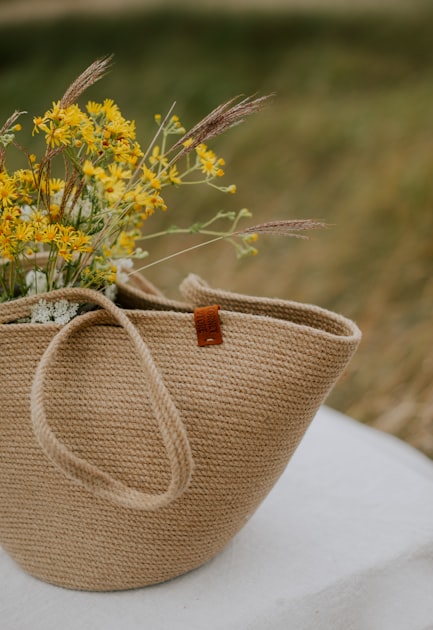
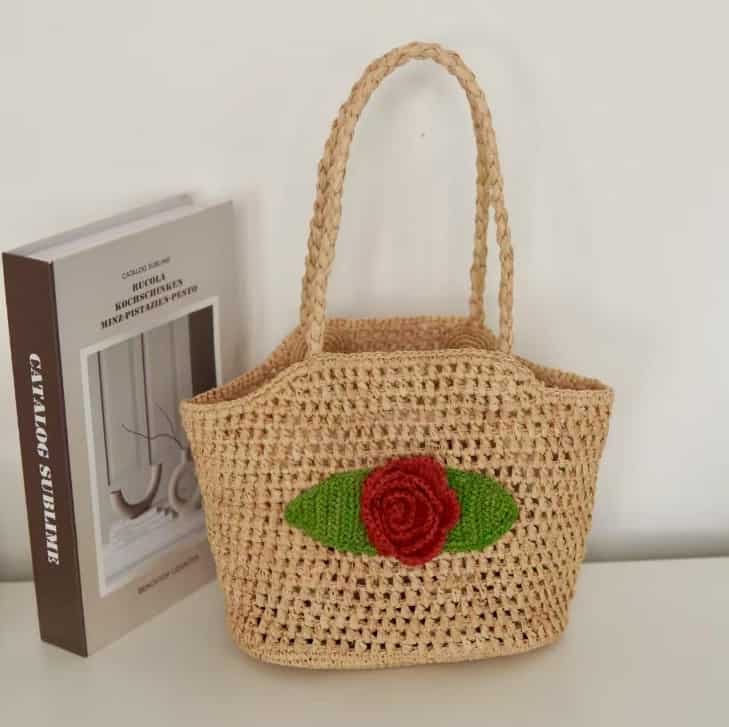
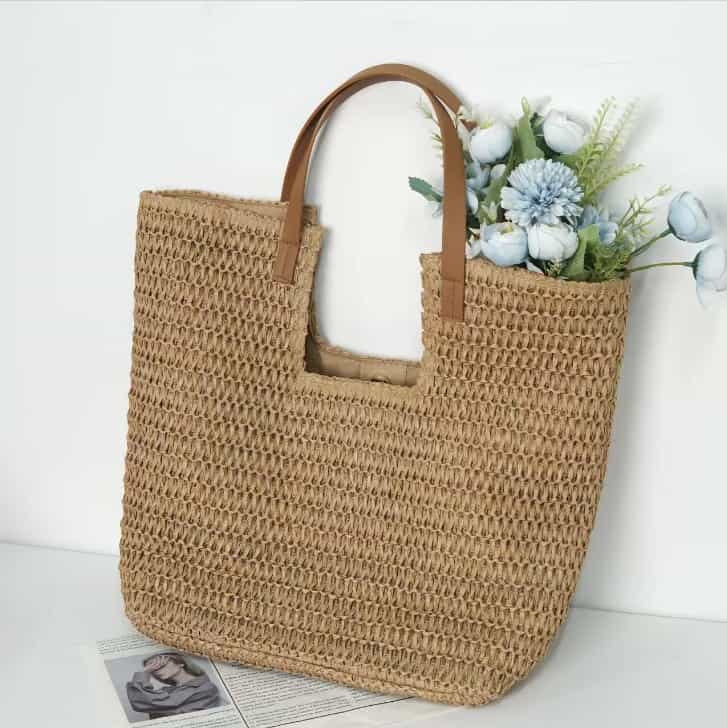
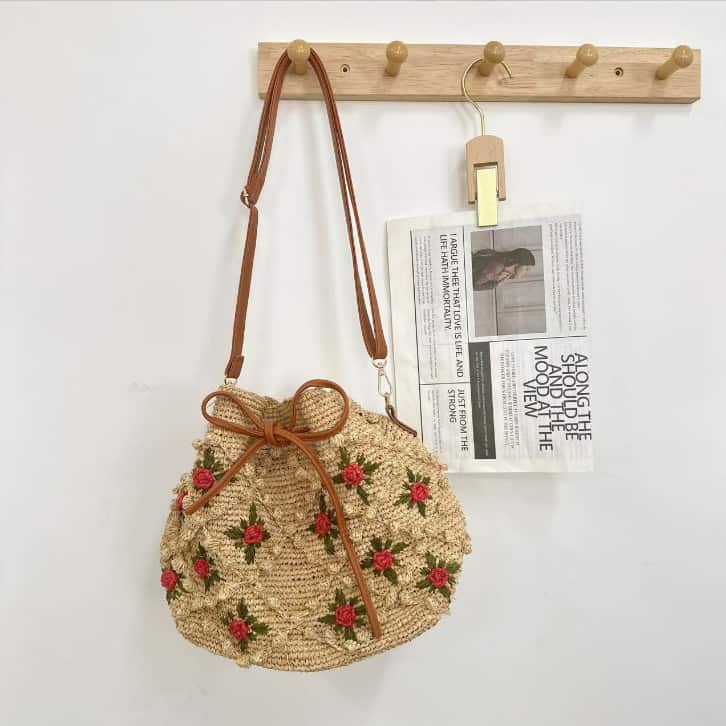
Here’s a question I get from buyers all the time: “Should I go with handcrafted raffia bags or machine-made ones? Is the price difference really worth it?”
And honestly? It depends on what you’re selling.
Both options have their place. But if you don’t know the difference — really know it — you could end up paying too much for the wrong product, or worse, disappointing your customers.
Let’s break down what actually sets handcrafted and machine-made raffia bags apart — so you can choose the right quality for your brand.
What’s the Real Difference Between Handcrafted and Machine Made?
Let’s start with the obvious: one is made by hand, the other by machine. But the difference goes way deeper than that.
Handcrafted Raffia Bags – The Artisan Touch
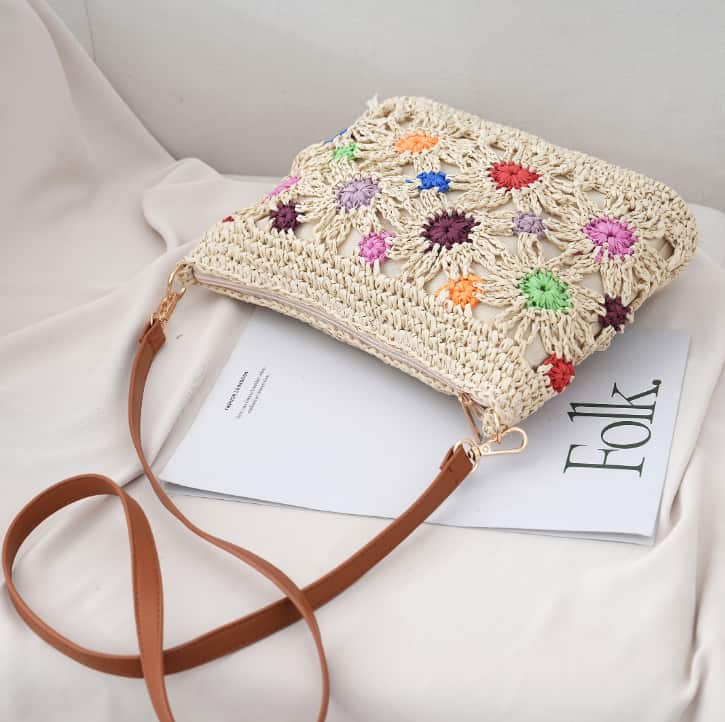
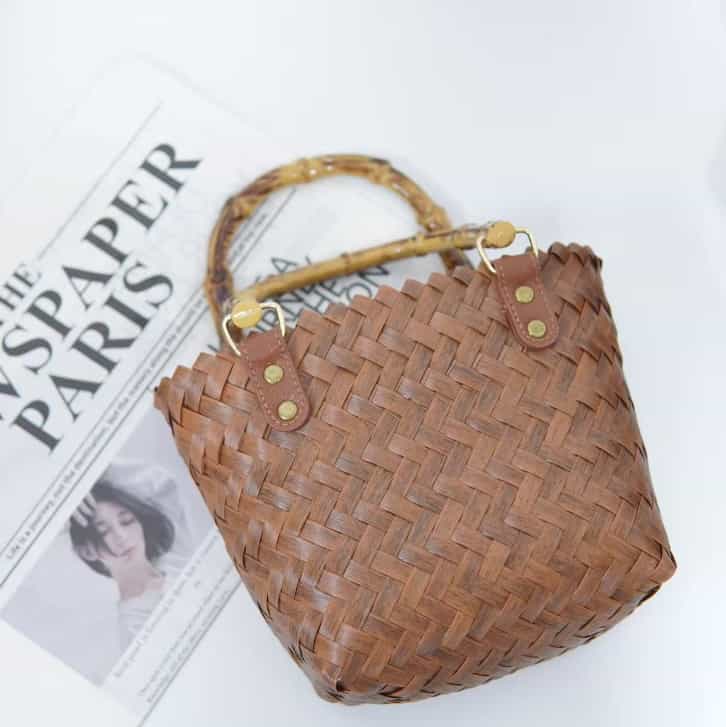
Handcrafted raffia bags are made by skilled artisans who weave each strand by hand. The process starts with harvested raffia palm leaves — native to Madagascar and parts of Africa — which are dried, stripped into thin strands, and then woven into bags using techniques passed down through generations.
What makes handcrafted special:
- Unique variations – No two bags look exactly the same. The slight differences in texture, weave, and tone aren’t flaws — they’re proof that something real made it.
- Artisan stories – Each bag carries the skill and tradition of the person who made it. In Madagascar, artisan groups (many led by women) specialize in hand-crocheted raffia. In Morocco, weavers like Dounia source fibers locally and build each bag around a wooden form for shape and durability.
- Unreplicable techniques – Some techniques, like crochet, machines still can’t replicate successfully. Each stitch is made by hand, ensuring every bag is truly one of a kind.
The trade-off: Handcrafted takes time — hours or even days per bag. That means higher cost, but also higher perceived value.
Machine Made Raffia Bags – Consistency at Scale
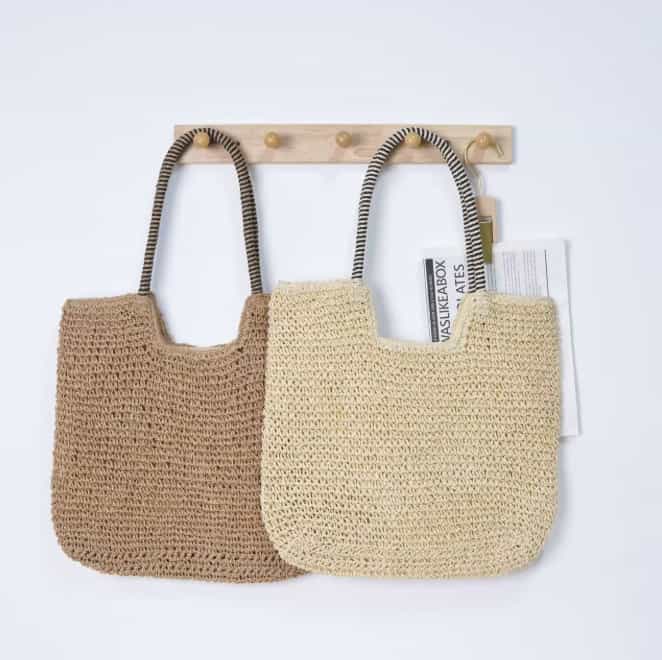
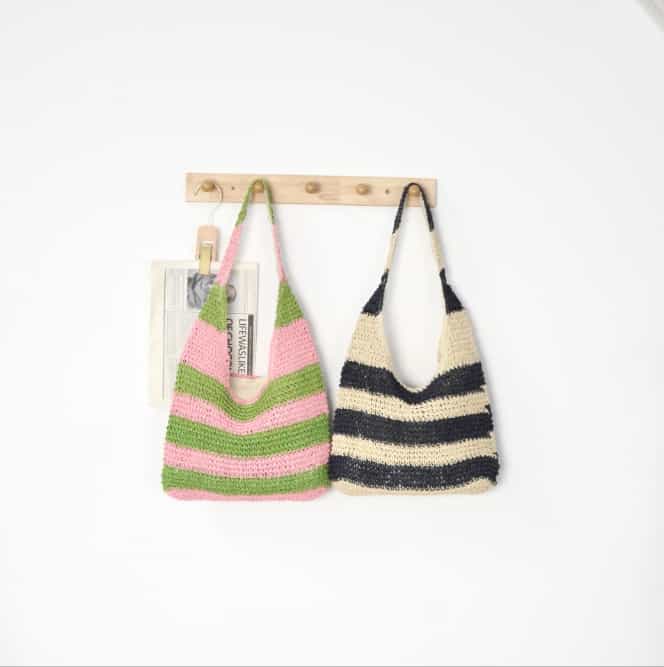
Machine-made raffia bags are produced using automated or semi-automated looms. They’re designed to mimic the look of raffia while offering more uniformity and faster production.
What machine made offers:
- Consistent appearance – Uniform weave, identical shapes, predictable quality across batches
- Lower cost – Minutes per bag instead of hours
- Scalability – Can produce thousands quickly to meet tight deadlines
The trade-off: Machine-made bags lack the artisanal story and unique character. And some types of raffia (like man-made fibers) are actually synthetic — designed to look like raffia but made from materials like rayon or polypropylene.
How to Tell Handcrafted from Machine Made — Even in Photos
You’re not always going to have the bag in your hands before you buy. Sometimes you’re working from photos, samples, or a video call.
So how do you spot the difference remotely?
What to look for in photos:
- Weave pattern – Handcrafted bags have slight irregularities. Look at the edges and corners. If the weave looks too perfect, it’s likely machine-made.
- Stitch consistency – In handcrafted bags, stitches vary slightly in tightness and angle. Machine-made is perfectly identical.
- Shape variation – Handcrafted bags don’t always sit perfectly flat. Machine-made bags are precise.
- Fiber texture – Zoom in on the fiber surface. Handcrafted raffia looks slightly uneven and organic. Machine-made often looks smoother because the fibers are processed more uniformly.
What to ask the supplier:
- “Are these handcrafted? Can you send photos of the weaving process?”
- “What’s the production time per bag?”
- “Can you show me a video of the bag being made?”
If they’re vague or can’t show you the process, that’s usually a sign it’s machine-made — or they’re hiding something.
The easiest test: Ask for a photo of the same bag style from different angles. Handcrafted bags have tiny variations. Machine-made ones are identical.
The Cost Breakdown — Why Handcrafted Costs More
Let’s talk about what you’re actually paying for.
What goes into a handcrafted bag’s price:
| Cost Component | Handcrafted | Machine Made |
| Raw material | Same or slightly higher (artisans select better fibers) | Same or lower (bulk processed) |
| Labor | Hours to days per bag — skilled artisan wages | Minutes per bag — machine operator wages |
| Skill/training | Years of experience built into every bag | Machine setup and maintenance |
| Quality control | Individual inspection of each bag | Batch sampling |
| Story/authenticity | Built into the price (you’re paying for the craft) | Not a factor |
When is handcrafted worth the premium?
- When your customers ask “where is this made?” – The story sells itself
- When you’re in a premium or luxury segment – Artisan-made commands higher retail prices
- When you need differentiation – Machine-made bags are everywhere. Handcrafted stands out
- When you’re selling to eco-conscious shoppers – They care about the maker
When does machine made make more sense?
- When you need 1,000+ identical pieces quickly
- When your target price point is under $30 retail
- When consistency matters more than uniqueness
- When you’re selling to a mass-market retailer that wants uniformity
Here’s the bottom line: Handcrafted costs 30–50% more than machine-made. But if your customers value authenticity and sustainability, they’ll happily pay it.
How to Spot the Difference — A Buyer’s Checklist
Not sure if you’re looking at handcrafted or machine-made? Here’s what to check.
| What to Look At | Handcrafted | Machine Made |
| Weave consistency | Slight variations, natural texture | Uniform, perfectly identical |
| Edge finishing | Slight irregularities, natural feel | Clean, precise, machine-perfect |
| Fiber feel | Soft, flexible, natural | Can be stiffer, sometimes synthetic |
| Price | Higher ($6–15+ per bag) | Lower ($3–8 per bag) |
| Production time | Hours to days per bag | Minutes per bag |
| Unique character | Each bag is different | Identical copies |
A few more clues:
- Smell test – Authentic raffia products often have a subtle herbal fragrance. Synthetic or heavily processed raffia won’t.
- Close inspection – Look closely at the weave. Handcrafted bags have tiny variations that machines can’t replicate. If it looks too perfect, it probably is machine-made.
- Ask the supplier – A good supplier should be able to tell you how the bag is made. If they’re vague or avoid the question, that’s a red flag.
Is Handcrafted Actually More Sustainable?
Handcrafted raffia bags aren’t just beautiful — they’re better for the planet. Here’s why.
Environmental impact comparison:
| Factor | Handcrafted Raffia | Machine-Made Raffia | Machine-Made Synthetic |
|---|---|---|---|
| Energy use | Very low | Moderate | Very high |
| Water use | Minimal | Minimal | Very high (petrochemicals) |
| Chemical use | None | Low | High |
| Carbon footprint | Very low | Low | High |
| Biodegradable | Yes | Depends on materials | No |
| Microplastics | No | No | Yes |
Why handcrafted is more sustainable:
- No electricity – Handcrafted bags use no electricity in the weaving process. Machine-made bags require power for looms.
- No factory emissions – Artisans work in small workshops, not large factories.
- Preserves traditional skills – Handcrafted production keeps artisan communities and their skills alive.
- Less waste – Artisans can adjust their technique to use more of each fiber, reducing waste.
What your customers care about:
- Shoppers who care about sustainability are willing to pay 20–30% more for products that are sustainably made.
- Handcrafted products are seen as more sustainable because they use less energy and fewer chemicals.
The bottom line: Handcrafted raffia bags aren’t just a marketing story — they’re genuinely better for the planet. If sustainability matters to your brand and your customers, handcrafted is the clear choice.
Which One Should You Choose for Your Brand?
Here’s the honest answer: it depends on what your customers want.
Choose Handcrafted If:
- You’re selling to eco-conscious shoppers who care about sustainability and artisan stories
- Your brand positions itself as premium, artisanal, or luxury
- You want a unique product that stands out from mass-market competitors
- You can price higher to reflect the craftsmanship
Handcrafted raffia supports artisan communities and offers a story that machine-made can’t replicate. For brands targeting eco-conscious consumers, this authenticity is valuable.
Choose Machine Made If:
- You need large volumes at competitive prices
- Consistency across batches is critical for your retail displays
- Your customers are price-sensitive and prioritize affordability over uniqueness
- You have tight deadlines and need fast turnaround
Machine-made bags are often more durable against wear and tear, making them a practical option for everyday use lines.
What Your Customers Actually Think – Handcrafted vs. Machine-Made
Here’s the truth: most customers can’t tell the difference by looking. But they can feel it — and that feeling affects whether they buy and whether they come back.
What customers notice without realizing it:
| Factor | Handcrafted Bag | Machine-Made Bag |
|---|---|---|
| First touch | Feels warmer, more organic | Feels uniform, sometimes stiffer |
| Weight | Slightly heavier (denser weave) | Lighter (more uniform fibers) |
| Texture | Slight variations, more interesting | Smooth, consistent, predictable |
| Price perception | “This must be expensive” | “This is a good deal” |
| Purchase motivation | “I’m buying a piece of craft” | “I’m buying a bag” |
What customers value most:
- Authenticity – Shoppers are willing to pay more for products that feel authentic and genuine. Handcrafted bags score high on authenticity.
- Durability – Both can be durable, but handcrafted bags with tight weaves and reinforced handles often last longer.
- Story – A handcrafted bag has a story to tell. Machine-made bags don’t.
The bottom line: Customers may not know why they like one bag more than another. But their hands know the difference. Handcrafted bags feel more valuable — and customers are willing to pay for that feeling
The Middle Ground – Hybrid Production
Some Indian manufacturers operate hybrid models — handcrafting the main body while using semi-automated lines for linings, zippers, or reinforced handles. This balances the artisanal look with the practicality of mass production. It’s worth asking suppliers if they offer this option.
Can You Tell Quality by Price Alone?
Not really. But price does give you clues.
| Price Range | What You’re Probably Getting |
| Below $3 | Likely machine-made, possibly with synthetic fibers |
| $3–6 | Machine-made or lower-quality handcrafted |
| $6–15 | Authentic handcrafted from decent quality raffia |
| $15+ | Premium handcrafted, often with leather trims or special designs |
Here’s a rough guide:
A word of caution: The cheapest option is often the most expensive in the long run. If you buy low-quality bags, you’ll spend more on returns, refunds, and unhappy customers than you saved upfront.
What You Should Expect at Each Price Tier
Lead-in: Price is a guide, not a verdict – know what each tier delivers, and you won’t be misled.
| Price Range (FOB, USD) | What You Should Expect | What You Should Not Expect | Supplier “Shortcuts” to Watch For |
|---|---|---|---|
| $15–30 | Basic weave, standard sizes, simple styles, minimal or no lining, lower-grade or blended raffia | Fine weave, complex designs, quality hardware, consistent sizing | Using “handmade” vaguely; switching material grades between sample and bulk |
| $30–60 | Good weave density, natural raffia (mid-grade), basic lining, simple hardware, reasonable size consistency | Precision weave patterns, vegetable-tanned leather handles, custom hardware, zero defects | Overstating “handmade” content; cutting corners on hardware plating |
| $60–120 | High-quality natural raffia, consistent weave, quality lining (cotton/linen), good hardware, acceptable tolerances | 100% flawless, perfect symmetry (±1cm tolerance is normal for handmade) | Using “custom” to markup standard options; inflating labor hours |
| $120+ | Premium materials, fine craftsmanship, quality components, strict QC, original design | Unlimited lifetime warranty, absolute perfection (natural materials have inherent traits) | Using “limited” as marketing gimmick rather than real scarcity |
Key takeaway: Price tells you a range, but not the full story. Higher prices must be backed by verifiable evidence – origin certificates, workshop credentials, sample measurements.
Quick Summary – Handcrafted vs Machine Made
| Factor | Handcrafted | Machine Made |
| Quality feel | Organic, artisanal | Uniform, predictable |
| Price | Higher | Lower |
| Production speed | Slow | Fast |
| Sustainability story | Strong (traditional craft, natural materials) | Varies (some use synthetic fibers) |
| Best for | Premium brands, eco-conscious shoppers | Mass market, price-sensitive buyers |
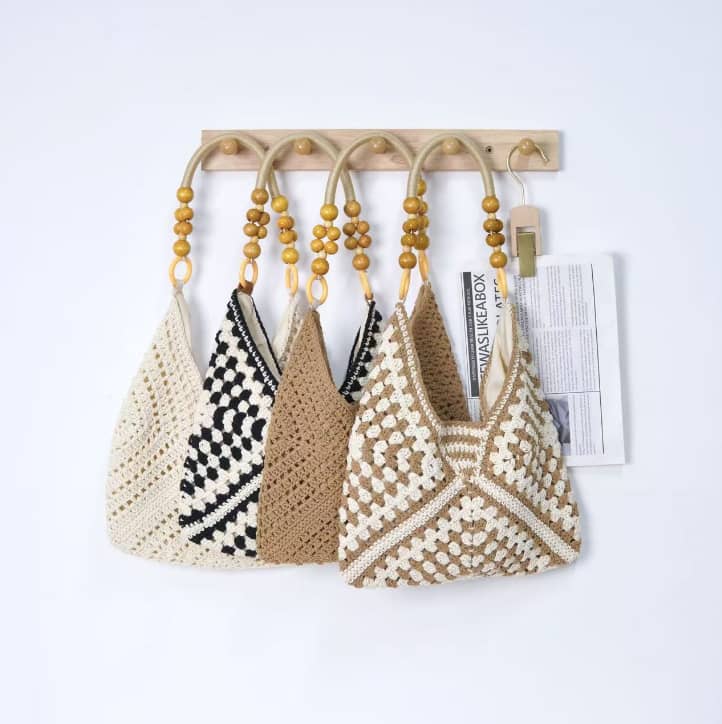
Hybrid Production – Using Handmade for Storytelling and Machine for Scale
Lead-in: You don’t have to choose between “all handmade” or “all machine” – the smartest move is a hybrid model that serves both brand and profit.
The core idea: use handmade as a design highlight and machine as a cost-control tool.
Three hybrid approaches:
- Handmade front + machine back/sides – The front panel (the visual focus) is hand-woven; the back and sides are machine-made to cut costs. In marketing, highlight the handmade part – don’t mention the rest. This isn’t deception – it’s “focusing on your selling point.”
- Handmade core collection + machine-made seasonal colors – Keep your classic styles handmade to preserve brand DNA. Use machine production for seasonal limited colors to test market response at lower prices. Price accordingly: classic at $120, seasonal at $65–75.
- Handmade samples → machine production – Test the market with handmade samples (pre-sales, social feedback, buyer input). Once demand is confirmed, move the best-selling style(s) to machine production for cost and capacity optimization.
Key takeaway: The bottom line is honesty. Never sell machine-made as handmade. But you’re free to shift most production to machine while keeping a small handmade line for brand storytelling. Customers care about what you promise – and whether you deliver.
Content Marketing Strategy for Handcrafted Raffia Bags
Lead-in: Don’t tell customers “handmade is better” – show them why it’s better. Let the process become the story.
These 5 content formats work best:
- Short process videos (15–30 seconds) – Capture close-up shots of hands weaving, textures forming, and final detailing. No voiceover needed – just ambient sounds (weaving, natural background). More convincing than any text.
- Artisan spotlights – Focus on one artisan’s daily work (no need to fabricate “moving stories” – keep it real). Example: “Maria has been weaving raffia bags for 17 years. Each bag takes her 6 hours – every step comes from muscle memory.” Authenticity beats sentimentality.
- “Raw to finished” timeline – Show a photo sequence: raw material → dyeing → weaving → trimming → finished bag. Let customers see how many steps and how much time goes into transforming a pile of fiber into a beautiful bag.
- Defect education – Teach customers what’s a “normal handmade mark” vs. what’s a “real defect.” Example: “Slight texture irregularities at weave knots are exactly what proves it’s handmade – machines can’t replicate this natural variation.”
- Artisan signature or numbering – Attach a signed tag or unique serial number to each handmade bag. This is the most tangible proof of handcrafting – and a natural conversation starter for customers to share on social media.
Key takeaway: Post consistently, not just once. Make artisan stories a regular column in your content calendar – like a series. Customer perception isn’t changed by a single ad, but by consistent exposure over time.
How to Justify the Handmade Premium
Lead-in: The premium isn’t about being “expensive” – it’s about being “worth it.” Your job is to make that “worth it” visible.
Four core pricing and communication strategies:
- Translate into hours – “This bag took 6 hours to weave.” Customers don’t just see $120 – they see “6 hours.” Make time visible, and the price becomes understandable.
- Embrace the “imperfection aesthetic” – “No two bags are exactly alike – natural texture variations and slight size differences are proof of uniqueness.” Redefine “flaws” as “exclusivity.”
- Give handmade a distinct name – Don’t mix everything under “handmade.” Give it a separate identity, like “Artisan Collection” or “Heritage Series.” Naming upgrade = structural support for premium pricing.
- Offer a lifetime care promise – “We provide free weaving repairs for life (customer pays shipping only).” This creates a “heirloom” perception – not a disposable fashion item, but a long-term companion.
Key takeaway: All of this must be backed by real quality. If customers can’t feel the difference, your premium will be seen through immediately. Get the quality right first – then tell the price story.
Making Quality Control Work for You
The Golden Rule of QC Communication
Lead-in: The way you say it matters more than what you’re checking. A collaborative tone gets better results than a critical one.
- Instead of saying “This is wrong” → say “This doesn’t match our agreed spec. Let’s figure out why.”
- Instead of saying “Fix this immediately” → say “How can we adjust the process so this doesn’t happen again?”
- Instead of saying “Quality is getting worse” → say “I’ve noticed a pattern in the last two batches. Let’s review it together.”
Key takeaway: Factories and workshops respond to problem-solving partners, not fault-finding inspectors. Your tone sets the tone for the entire relationship.
Wrapping it Up
Choosing between handcrafted and machine-made raffia bags isn’t about which is “better.” It’s about which is better for your brand.
Handcrafted bags offer authenticity, uniqueness, and a story that sells itself — but they cost more and take longer to produce. Machine-made bags offer consistency and affordability — but they lack the artisanal charm that many shoppers are looking for today.
Know your customers. Know your brand. And choose accordingly.
Ready to source quality raffia bags for your brand?
Contact Rafico Accessories for a custom raffia bag quote or wholesale pricing. We’ll help you find the right quality — handcrafted, machine made, or somewhere in between