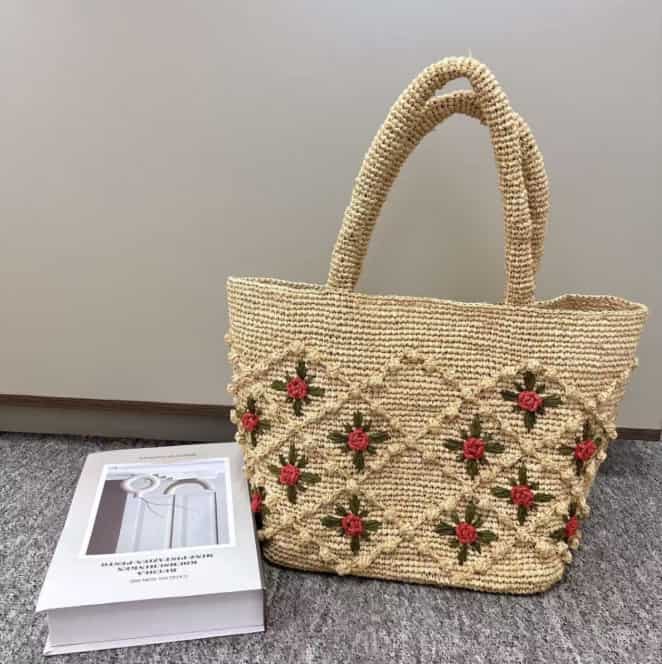
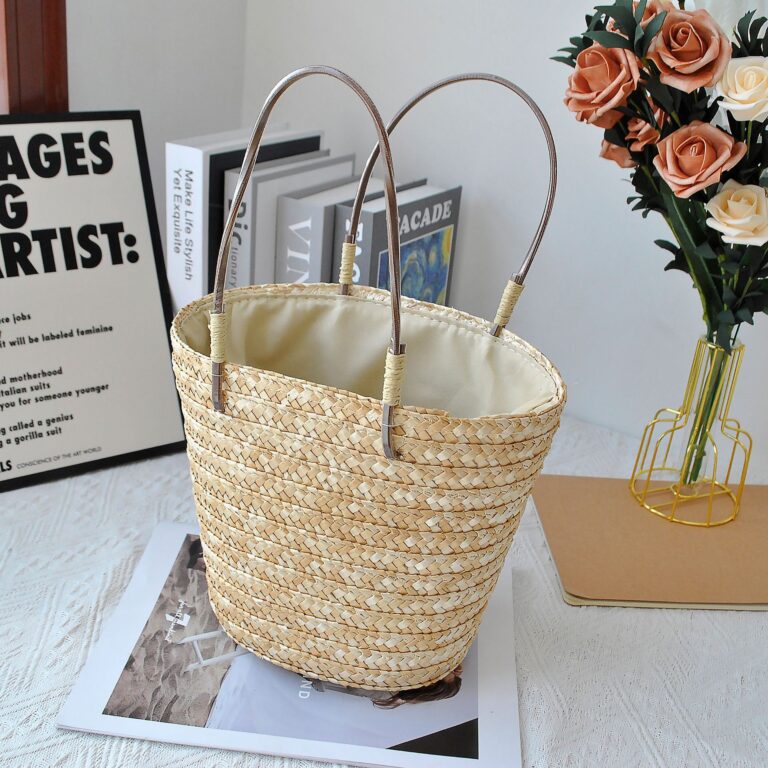
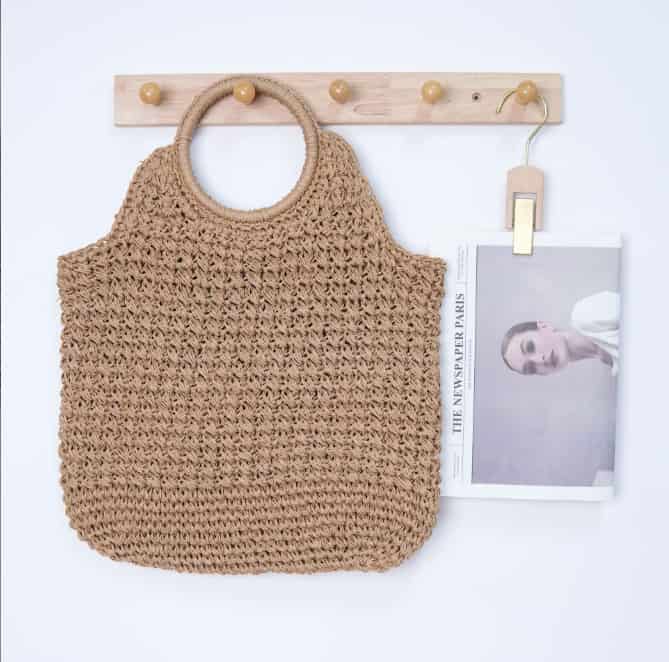
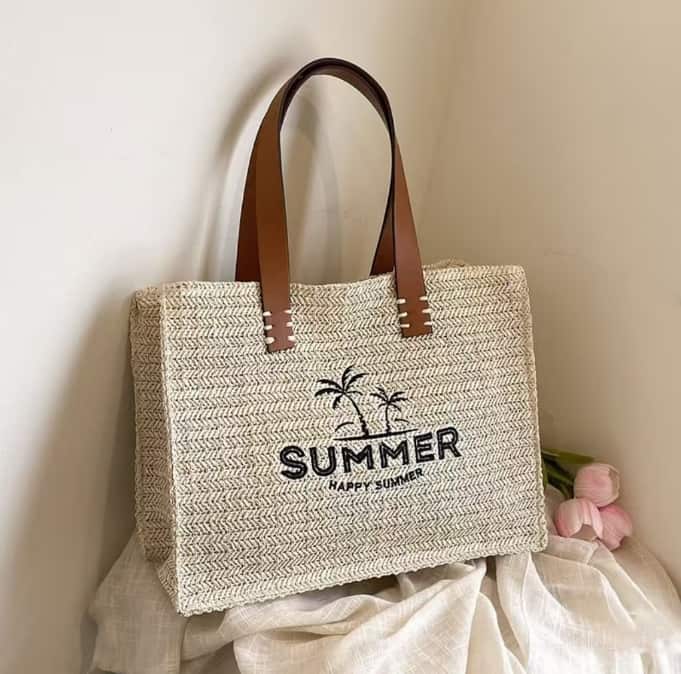
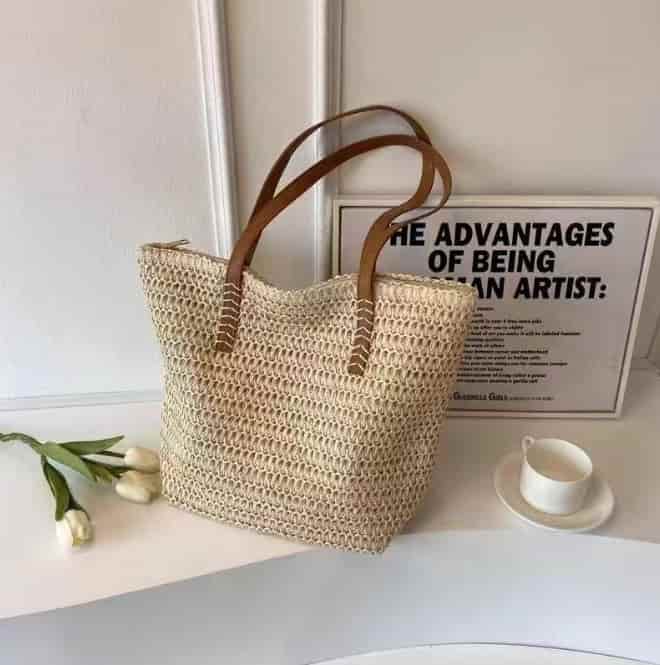
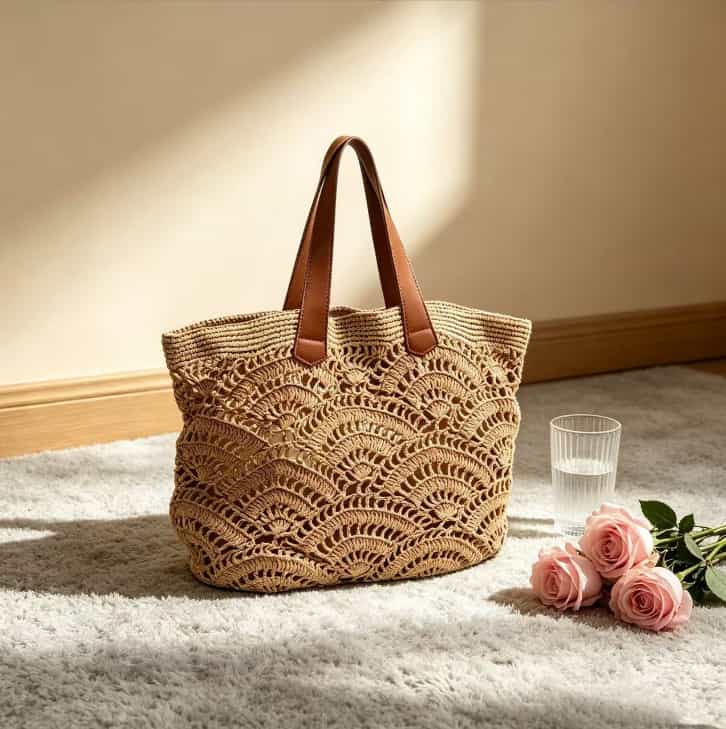
So you keep hearing about raffia bags. They’re everywhere — Instagram, beach photos, even fancy stores.
But here’s the real question: What makes raffia bags the ultimate sustainable accessory?
Is it just hype? Or is there actually something behind it?
I sell raffia bags for a living. And honestly? They’re not just trendy. They’re genuinely one of the most sustainable accessories out there. Let me tell you why.
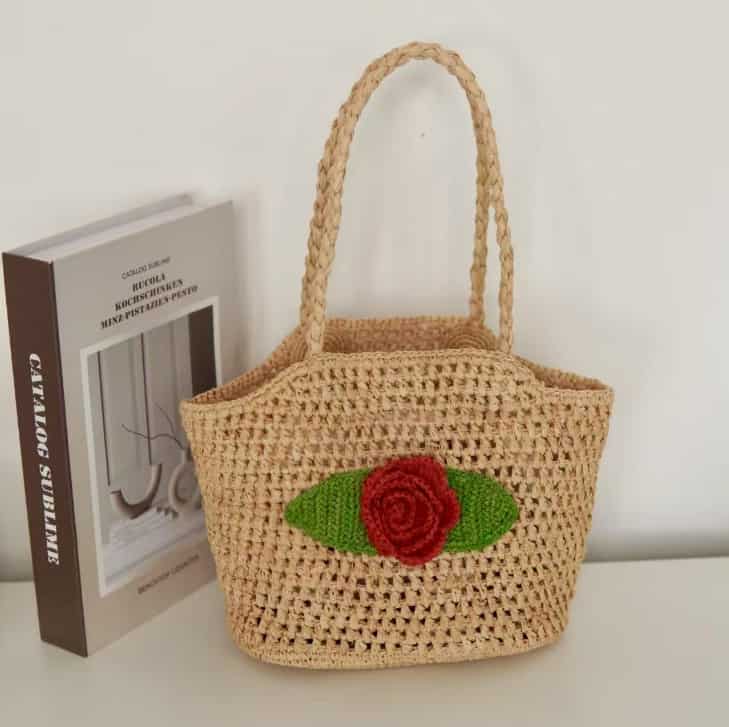
1. They Come From a Plant. That’s It.
Sounds simple, right? But that’s the whole point.
Raffia bags are made from palm leaves. Specifically, from a type of palm tree that grows in places like Madagascar and other tropical regions.
Here’s what that means:
- No plastic. Zero.
- The leaves grow back after being cut
- The whole thing breaks down naturally when you’re done with it
Compare that to a polyester or nylon bag. Those are basically plastic. They’ll sit in a landfill for hundreds of years.
A raffia bag? Toss it in the ground and it’ll disappear. That’s real sustainability.
How Raffia Grows – From Palm to Bag
Raffia comes from a plant – but how does it actually get from the tree to your hands?
The journey from palm to bag:
| Stage | What Happens | Why It Matters |
|---|---|---|
| Harvesting | Leaves are pruned from the raffia palm – the tree stays standing | Renewable – no deforestation |
| Stripping | The outer layer is removed to reveal long, flexible fibers | Reveals the usable material |
| Drying | Fibers are laid in the sun for 1–3 days | Natural drying – no energy needed |
| Sorting | Fibers are graded by quality, color, and thickness | Consistency in finished product |
| Weaving | Artisans hand-weave the fibers into bags | Traditional craftsmanship |
| Finishing | Handles, linings, and hardware are added | Final touches |
Why it matters for your customers:
- No chemicals – Raffia is processed naturally
- No deforestation – The tree keeps growing
- Minimal energy – Sun-drying only
- Artisan skill – Handwoven by skilled craftspeople
The bottom line: Raffia comes from a plant – and that’s what makes it sustainable. From harvest to finished bag, the process is natural, renewable, and low-impact. That’s a story your customers will appreciate.
Why Natural Materials Matter in Fashion
Raffia is part of a larger shift toward natural materials. Here’s why that matters.
Why natural materials are gaining popularity:
| Reason | Why It Matters |
|---|---|
| Sustainability | Natural materials biodegrade and don’t create microplastics |
| Health | No toxic chemicals or synthetics |
| Authenticity | Customers value natural, honest products |
| Durability | Natural materials often last longer when well-made |
| Beauty | Unique textures and variations – each piece is different |
How raffia compares to synthetics:
| Factor | Raffia (Natural) | Synthetics (Plastic) |
|---|---|---|
| Source | Renewable palm leaves | Petroleum-based |
| End of life | Biodegradable | Landfill forever + microplastics |
| Chemicals | Minimal processing | Heavy chemical processing |
| Texture | Unique, natural variations | Uniform, mass-produced |
| Customer appeal | Strong sustainability story | Weak or negative |
The bottom line: Natural materials are better for the planet, better for customers, and better for your brand. Raffia is a natural material that delivers on sustainability, quality, and style.
2. They Last Longer Than You’d Expect
I know what you’re thinking. “Natural fibers? Sounds fragile.”
Nope.
A good raffia bag is tough. Like, surprisingly tough.
Think about it — palm leaves have to survive wind, rain, and sun out in nature. They’re naturally strong.
When they’re woven tightly by skilled hands, a raffia bag can handle:
- Your laptop and water bottle
- Groceries (even the heavy stuff)
- Beach days with sand and wet towels
A cheap plastic tote might rip in a month. A well-made raffia bag? Years.
And here’s the thing — the longer it lasts, the more sustainable it is. You’re not throwing it away every season.
How Long a Raffia Bag Actually Lasts
Customers want to know: “How long will this bag last?” Here’s a realistic answer.
Estimated lifespan by use:
| Use Case | Typical Lifespan |
|---|---|
| Occasional use (beach, travel) | 3–5 years |
| Regular use (everyday errands) | 2–3 years |
| Daily use (work, commute) | 1–2 years |
| Heavy use (carrying laptops, books) | 1–2 years |
What affects lifespan:
| Factor | What Good Looks Like |
|---|---|
| Weave quality | Tight, even weave |
| Handle attachment | Woven-in or double-stitched |
| Bottom reinforcement | Extra layer or stiff insert |
| Care and maintenance | Stored properly, not overfilled |
The bottom line: A well-made raffia bag can last years — even with daily use. It’s not disposable. That’s part of what makes it sustainable.
What Makes Raffia Bags Last So Long
Raffia bags are surprisingly durable. Here’s why they last.
Why raffia is durable:
- Long, strong fibers – Raffia fibers are naturally long and flexible, with fewer weak points
- Tight weave – Distributes weight across hundreds of interlocking points
- Natural flexibility – Bends without breaking or cracking
- Reinforced stress points – Handles and bottoms are double-stitched or woven-in
- Quality construction – Well-made raffia bags hold up to daily use
What affects a raffia bag’s lifespan:
| Factor | What Good Looks Like | What Shortens Life |
|---|---|---|
| Weave density | Tight, even, no gaps | Loose weave, visible gaps |
| Handle attachment | Woven-in or double-stitched | Single-stitched or glued |
| Bottom | Reinforced, extra layer | Thin, flimsy |
| Care | Stored properly, kept dry | Overstuffed, damp, direct sun |
The bottom line: A well-made raffia bag is built to last. Tight weave, reinforced handles, and proper care can extend its life for years. Customers who take care of their bags will enjoy them for a long time – and come back for more.
How to Help Customers Extend the Life of Their Raffia Bag
Your customers will love their raffia bags more if they know how to care for them. Here’s how to help them extend the life of their bag.
Simple care tips to share with customers:
| Care Tip | Why It Matters |
|---|---|
| Spot clean with a damp cloth | Keeps the bag clean without damaging the weave |
| Don’t overstuff | Prevents stretching and deformation |
| Store in a cool, dry place | Prevents mold and mildew |
| Avoid direct sunlight | Prevents fading and brittleness |
| Use a fabric dust bag | Protects from dust while allowing air circulation |
| Air out after use | Prevents musty smells and moisture buildup |
What to tell customers about care:
| Customer Question | Your Answer |
|---|---|
| “How do I clean it?” | “Spot clean with a damp cloth and air dry completely.” |
| “Will it stretch?” | “If you don’t overstuff it, the tight weave will hold its shape.” |
| “What if it gets wet?” | “Shake off excess water, stuff with paper to maintain shape, and air dry in the shade.” |
| “How should I store it?” | “Store flat or upright in a cool, dry place away from sunlight.” |
| “How long will it last?” | “With proper care, 2–5 years of regular use.” |
The bottom line: Help your customers care for their raffia bags. Share simple care tips and answer their questions honestly. A bag that lasts years builds customer loyalty and keeps them coming back for more.
3. It’s Handmade, Not Factory Mass-Produced
Most accessories these days come out of a factory. Hundreds at a time. Machines running 24/7.
Raffia bags? Different story.
Most of them are handwoven by artisans. Real people. Real skills.
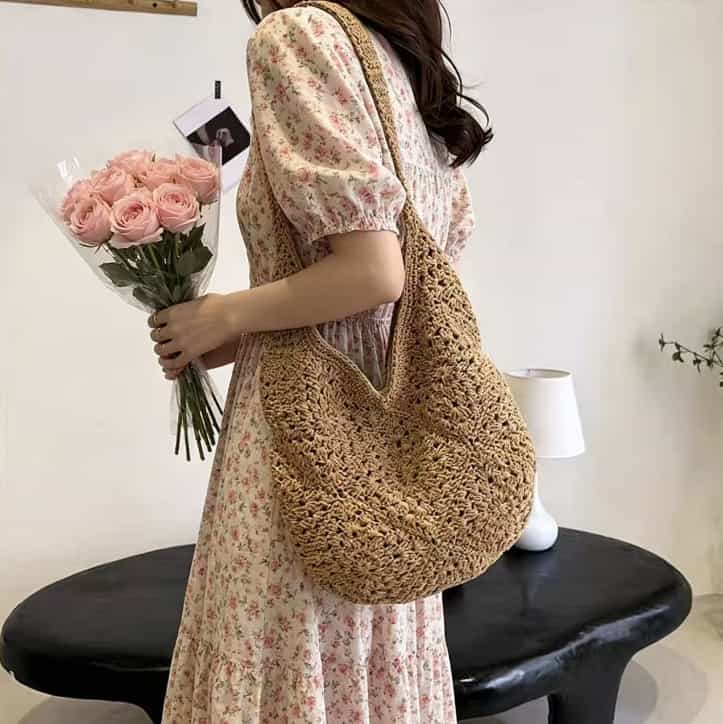
What “Handmade” Really Means
“Handmade” means someone made it with their hands. But there’s more to it than that.
What handmade actually involves:
| Aspect | What It Means |
|---|---|
| Hours of labor | 2–20 hours per bag depending on complexity |
| Skill and training | Artisans learn techniques passed down through generations |
| Individual attention | Each bag is made by one person, start to finish |
| Unique character | No two bags are exactly alike |
Why handmade matters:
- Preserves traditional skills and cultural heritage
- Provides fair wages and dignified work
- Creates a connection between the maker and the buyer
- Supports communities, not machines
The bottom line: Handmade isn’t just a label — it’s a commitment to people, culture, and quality.
Why Handmade Matters – The Value of Artisan Craftsmanship
Handmade raffia bags are more than just products. Here’s why they matter.
What handmade means:
- Made by skilled artisans, not machines
- Each bag is unique – no two are exactly alike
- Traditional techniques passed down through generations
- Fair wages and dignified work for artisans
- Cultural heritage preserved
Why customers value handmade:
| Reason | Why It Matters |
|---|---|
| Authenticity | Customers can feel the difference |
| Uniqueness | No one else has the exact same bag |
| Quality | Artisans take pride in their work |
| Connection | Customers feel connected to the maker |
| Ethical choice | Supports fair wages and communities |
The bottom line: Handmade is about more than just production method. It’s about preserving skills, supporting communities, and creating something real. Customers are willing to pay more for products with a human connection – and that’s what makes handmade special.
Handmade vs. Factory-Made – What’s the Real Difference?
People often ask: “Is handmade really better?” Here’s what the difference actually means.
| Factor | Handmade Raffia | Factory-Made Raffia |
|---|---|---|
| Production time | Hours to days per bag | Minutes per bag |
| Skill level | Years of training required | Basic machine operation |
| Uniqueness | Every bag is different | Identical copies |
| Quality | Depends on the artisan | Consistent (but not special) |
| Story | A story to tell your customers | No story |
| Price | Higher | Lower |
The bottom line: Handmade bags cost more because they take more time and skill. But they also offer something factory bags can’t: authenticity, uniqueness, and a story that sells.
4. No Harmful Dyes or Chemicals
Here’s something people don’t talk about enough.
A lot of “eco-friendly” products still use nasty chemicals to dye or treat the material.
But natural raffia bags? They often come in their original color — that beautiful golden tan. Or they use natural, low-impact dyes.
That means:
- No toxic runoff into rivers
- Safer for the people making them
- Safer for you to carry around every day
Just make sure you’re buying from a supplier who keeps it natural. Not everyone does.
Natural vs. Chemical Dyes – What to Look For
Dyes can make or break the eco-friendly story of a raffia bag. Here’s what to know.
The difference between natural and chemical dyes:
| Factor | Natural Dyes | Chemical Dyes |
|---|---|---|
| Source | Plants, roots, minerals | Petroleum-based chemicals |
| Toxicity | Non-toxic, safe | Can contain heavy metals and toxins |
| Water impact | Minimal pollution | Can pollute local water sources |
| Color range | Limited, earthy tones | Wide range, bright colors |
| Colorfastness | May fade over time | Usually more stable |
What to look for:
| Certification | What It Means |
|---|---|
| OEKO-TEX Standard 100 | No harmful chemicals in dyes or materials |
| GOTS | Certified organic, no synthetic chemicals |
| Natural dyes | Plant-based or mineral-based dyes |
The bottom line: Natural dyes are better for the planet — and your customers. If you want a genuinely sustainable bag, choose OEKO-TEX certified or natural dyes.
Why Chemical Dyes Are a Problem
Chemical dyes can harm the environment and the people who make your bags. Here’s why it matters.
Problems with chemical dyes:
| Problem | Why It Matters |
|---|---|
| Toxic chemicals | Heavy metals and harmful substances in some dyes |
| Water pollution | Chemical runoff contaminates water sources |
| Health risks | Workers can be exposed to harmful chemicals |
| Non-biodegradable | Some dyes don’t break down naturally |
| Skin irritation | Customers may experience allergic reactions |
What to look for instead:
| Good Alternative | Why It’s Better |
|---|---|
| Natural dyes | Plant-based, non-toxic, biodegradable |
| OEKO-TEX certification | No harmful chemicals |
| Low-impact dyes | Reduced environmental impact |
The bottom line: Chemical dyes are a problem. They harm the environment, pose health risks to workers, and can affect customers. Choose natural dyes or OEKO-TEX certified dyes for a safer, more sustainable product.
How to Verify Dye Safety Before You Buy
Don’t assume dyes are safe. Here’s how to verify dye safety before ordering.
How to verify dye safety:
| What to Do | How to Check | Why It Matters |
|---|---|---|
| Ask for certifications | Request OEKO-TEX or similar certification | Proves no harmful chemicals |
| Request test reports | Ask for dye test results | Verifies safety claims |
| Ask about dye type | Natural vs. chemical dyes | Know what you’re getting |
| Test a sample | Check for color bleeding or fading | Ensures quality and safety |
| Check compliance | REACH compliance for EU markets | Meets legal standards |
Red flags in dye safety:
| Red Flag | What It Means |
|---|---|
| “No information available” | They don’t know or won’t share |
| “We think it’s safe” | Vague – no proof |
| No certifications | May not meet safety standards |
| Very cheap dyes | Likely chemical, not natural |
The bottom line: Dye safety matters. Always verify dye safety before placing a bulk order. Certifications, test reports, and transparency are the best ways to ensure your dyes are safe for people and the planet.
5. It’s Actually Fashionable
Let’s be real — sustainable accessories used to be… kind of ugly.
Burlap sacks. Weird brown things. You know what I mean.
But raffia bags? They’re genuinely stylish.
That natural texture. The warm golden color. The way they look with a summer dress or a casual outfit.
People don’t buy raffia bags just to save the planet. They buy them because they look good. The sustainability part is just a bonus.
And that’s what makes it the ultimate sustainable accessory. It doesn’t force you to choose between looking good and doing good.
Why Raffia Is a Fashion Staple in 2026
Raffia isn’t just sustainable — it’s stylish. Here’s why it’s everywhere right now.
What makes raffia fashionable:
| Factor | Why It Works |
|---|---|
| Natural texture | Adds visual interest to any outfit |
| Versatility | Works for beach, city, and everything in between |
| Designer appeal | Loewe, Prada, Chloé, and Stella McCartney all use raffia |
| Photogenic | Looks great on social media |
| Seasonless | Works from spring to fall |
What’s trending in 2026:
- Structured raffia totes with leather trim
- Crochet raffia bags with intricate patterns
- Darker raffia colors (brown, black, navy) for year-round wear
- Refined finishes — stronger shapes, polished handles
The bottom line: Raffia isn’t a “beach-only” material anymore. It’s a fashion staple that works in every season.
How to Style Raffia Bags – A Quick Guide for Your Customers
Help your customers style their raffia bags. Here’s a simple guide.
Outfit pairings for any occasion:
| Occasion | Bag Style | Pair With |
|---|---|---|
| Beach day | Large tote | Swimsuit, cover-up, sunglasses |
| City commute | Structured tote | Tailored trousers, blazer, silk blouse |
| Weekend brunch | Crochet bag | Linen dress, sandals |
| Evening event | Clutch or mini bag | Slip dress, heels |
| Travel | Crossbody | Denim, simple tee, comfortable shoes |
The bottom line: Raffia is versatile. Show your customers how to wear it — and they’ll buy more than one.
6. It’s Biodegradable and Compostable
This is a big one.
At the end of its life, a raffia bag doesn’t become a problem. It becomes dirt.
No special recycling process. No shipping it somewhere. Just cut it up and throw it in your compost or garden.
Plastic bags? They break down into microplastics that get into the ocean, into fish, into us.
A raffia bag? It goes back to the earth. Simple as that.
What Does Biodegradable Actually Mean for Raffia?
Raffia is biodegradable — but what does that actually mean?
What biodegradable means:
| Term | What It Means |
|---|---|
| Biodegradable | Breaks down naturally through the action of microorganisms |
| Compostable | Breaks down in specific composting conditions |
| Home compostable | Breaks down in backyard compost |
| Industrial compostable | Breaks down in industrial composting facilities |
How raffia biodegrades:
- Microorganisms break down the plant fibers
- No toxic residue or microplastics
- Returns nutrients to the soil
- Complete process can take months to a few years depending on conditions
The bottom line: Raffia doesn’t just “go away” — it turns back into soil. That’s what makes it truly circular.
So, What Makes Raffia Bags the Ultimate Sustainable Accessory?
Let me sum it up:
✅ Comes from a renewable plant — not plastic
✅ Tough and long-lasting — fewer replacements
✅ Handmade with low carbon footprint
✅ Natural or low-impact dyes available
✅ Actually looks good — people want to wear it
✅ Biodegradable — no landfill forever
That’s a pretty strong list.
Plastic bags can’t say any of that. Even cotton totes need tons of water to grow.
Raffia bags hit the sweet spot. Sustainable, durable, and stylish.
Raffia vs Other Common Bag Materials Full Eco Comparison Table
| Material | Renewable Source | Water Consumption | End-of-Life Impact | Carbon Footprint |
|---|---|---|---|---|
| Natural Raffia Palm | Fast regrowing palm fronds | Minimal rain-fed growth, no irrigation | Fully biodegradable in soil | Ultra-low, sun-dried no industrial heating |
| Plastic Synthetic Straw | Petroleum (non-renewable fossil fuel) | Heavy factory processing water | Permanent microplastic pollution | High energy for melting & molding |
| Conventional Cotton | Seasonal crop farm | Massive irrigation water demand | Slow decomposition with chemical residues | High pesticide & transport emissions |
| Faux PU Leather | Oil-based plastic polymer | Chemical treatment wastewater | Non-compostable plastic waste | Heavy energy for coating production |
How sustainability sells to your target customers
- Eco-focused Gen Z & millennial shoppers This group actively filters products with green credentials and prioritizes zero-plastic accessories for daily wear. You can highlight raffia’s biodegradable trait in product descriptions to win their trust and loyalty.
- Resort & boutique brand positioning Coastal and slow-fashion boutiques use sustainable raffia lines to build a green brand identity, separating themselves from fast fashion plastic goods.
- Corporate eco gift buyers Companies with ESG policies favor raffia bags as client gifts, replacing plastic merch to meet internal environmental standards.
How to turn raffia’s eco advantages into your store’s marketing talking points
- Social media storytelling: Share raw palm harvesting, sun-drying and hand-weaving footage to showcase the low-impact craft process
- Product page labels: Add clear badges like “100% Biodegradable Palm Fiber” and “Plant-Based Dyes” for quick visual recognition
- Packaging synergy: Pair raffia bags with recycled paper tags and plastic-free wrapping to reinforce your full sustainable brand image
- Seasonal campaign focus: Frame raffia as the zero-waste summer essential to compete against disposable plastic beach bags
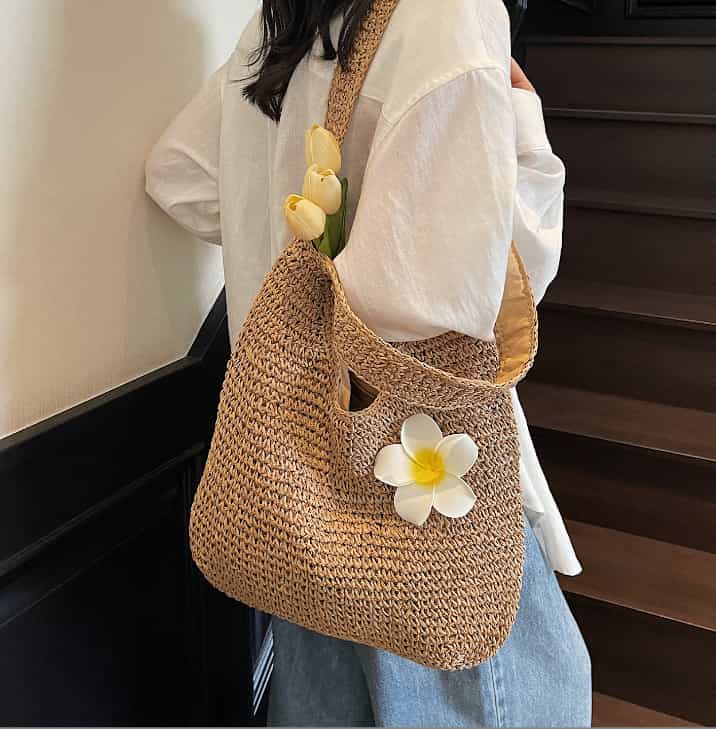
A Quick Word for Buyers
If you’re thinking about adding raffia bags to your product line, here’s my advice:Don’t just grab the cheapest option.
Cheap raffia bags use thin fibers and shoddy craftsmanship, leading to loose weaves, faded color and lots of customer returns. Bad reviews will drag down your store’s reputation and hurt long-term sales.
Well-made handwoven raffia lets you price higher, attract eco-conscious shoppers, and earn loyal repeat customers. Always order samples first to check quality before bulk orders.