So you’re looking to source straw bags — maybe for a resort wear line, a summer collection, or an eco-friendly brand. And pretty soon, you hit that classic question: do I go with machine-made or handmade ?
Honestly, both have their place. But here’s what really matters: which one actually works better for your business, your customers, and your bottom line?
Let me walk you through it.
1. Production Process & Speed
| Aspect | Handmade Straw Bags | Machine-Made Straw Bags |
| Production method | Woven by hand, often by skilled artisans | Mass-produced using automated looms or molding |
| Production speed | Slow — a single bag can take hours or days | Fast — hundreds per hour |
| Lead time | 4–8 weeks (depends on artisan availability) | 2–4 weeks (ready for bulk production quickly) |
| Scalability | Hard to scale quickly | Very easy to scale |
So who wins?
Speed and scalability? Machine-made, no question.
Craftsmanship and uniqueness? Handmade takes it.
Look, if you need 10,000 pieces by next month, machine-made is really your only option. But if you’re building a slow-fashion brand with a story to tell, handmade gives you something special that machines just can’t copy.
How Production Speed Affects Your Business
Production speed directly impacts your business operations. Here’s how to plan accordingly.
How speed affects your business:
| Factor | Handmade | Machine-Made |
|---|---|---|
| Order lead time | Longer (45–75 days) | Shorter (25–45 days) |
| Seasonal planning | Must order 3–4 months ahead | Can order 2–3 months ahead |
| Flexibility | Less flexible – difficult to rush | More flexible – faster turnaround |
| Reordering | Slower – plan ahead | Faster – can reorder quickly |
| Inventory risk | Higher – need to plan further ahead | Lower – can respond to demand faster |
How to plan for handmade speed:
- Order samples at least 3–4 months before you need stock
- Build buffer time into your schedule (add 2–3 weeks)
- Approve samples quickly – delays push everything back
- Plan your orders early to secure production slots
- Monitor demand and reorder early
How to plan for machine-made speed:
- Order samples 2–3 months before you need stock
- Monitor sales closely and reorder quickly
- Use the faster turnaround to respond to trends
- Take advantage of faster reorder cycles
- Keep safety stock for best-sellers
The bottom line: Production speed affects your entire business. Handmade requires longer lead times and more planning. Machine-made is faster and more flexible. Choose based on your business needs, and plan accordingly. If you’re new to the category, start with a faster production method to test demand before committing to longer lead times.
How to Plan Your Order Timeline for Maximum Efficiency
Planning your order timeline properly ensures you have stock when customers are ready to buy. Here’s how to structure your ordering schedule.
Order timeline by production type:
| Timeframe | Handmade | Machine-Made |
|---|---|---|
| Sample order | 3–4 months before needed | 2–3 months before needed |
| Sample approval | 1–2 weeks after receiving | 1 week after receiving |
| Bulk order placement | After sample approval | After sample approval |
| Production | 30–45 days | 15–25 days |
| QC and packing | 3–5 days | 2–3 days |
| Shipping | 10–30 days | 7–14 days |
| Total lead time | 45–75 days | 25–45 days |
Seasonal ordering guide:
| Season | Handmade Order Deadline | Machine-Made Order Deadline |
|---|---|---|
| Spring collection (March–May) | November–December | January–February |
| Summer collection (June–August) | February–March | March–April |
| Fall collection (September–November) | May–June | June–July |
| Winter/Holiday (December–February) | August–September | September–October |
Tips for efficient planning:
- Set calendar reminders for order deadlines
- Order samples at least 2 styles at a time to save on shipping
- Consolidate multiple styles into one order to reduce costs
- Keep a calendar of seasonal ordering deadlines
- Build in buffer time (2 weeks) for unexpected delays
The bottom line: Planning your order timeline is essential for having stock when customers are ready to buy. Handmade requires longer lead times and earlier planning. Machine-made is more flexible but still requires advance planning. Map out your seasonal needs and work backwards to determine your order deadlines. Good planning prevents stockouts and missed sales opportunities.
2. Quality & Consistency
What “Quality” Looks Like in Handmade vs. Machine-Made
Quality is different for handmade and machine-made bags. Here’s what to expect.
| Quality Aspect | Handmade | Machine-Made |
|---|---|---|
| Weave consistency | Slight variations = normal | Perfectly uniform = expected |
| Edge finishing | Natural, slightly irregular | Clean, precise, uniform |
| Defect tolerance | Small variations accepted | Defects are rejected |
| Quality control | Individual inspection | Batch sampling |
| Quality consistency | High variation between artisans | High consistency across all units |
What “good quality” looks like:
| Indicator | Handmade | Machine-Made |
|---|---|---|
| Even weave | Yes – slight variations are fine | Yes – must be perfect |
| No loose threads | Yes – checked individually | Yes – machine-checked |
| Reinforced handles | Yes – woven-in or double-stitched | Yes – stitched consistently |
| Smooth edges | Natural feel – not rough | Clean and precise |
The bottom line: Handmade quality varies from bag to bag. Machine-made quality is consistent. Know what to expect from each.
Is Your Batch Consistent?
Consistency is easier to control with machine-made bags. Here’s how to check both.
| What to Check | Handmade | Machine-Made |
|---|---|---|
| Color | Check 10+ bags from the same batch | Check 5+ bags from the batch |
| Weave density | Count stitches per inch on multiple bags | Should be identical |
| Size | Check 5+ bags — expect slight variations | Should be identical |
| Handle placement | Check 10+ bags — small variations are normal | Should be identical |
Pro tip for handmade: If you order 500 bags, expect 5–10% to have minor variations. That’s normal. Only reject bags with major defects like loose weave, broken handles, or color mismatches.
The bottom line: Handmade bags have variations – that’s part of their appeal. Machine-made bags are identical – that’s their advantage. Know which you’re buying.
3. Material & Durability
How Durability Differs – Handmade vs. Machine-Made
Durability depends more on construction than whether it’s handmade or machine-made.
| Factor | Handmade | Machine-Made |
|---|---|---|
| Weave tightness | Can be very tight – artisan controlled | Consistent – machine controlled |
| Handles | Woven-in or reinforced – very strong | Stitched – consistent but not always reinforced |
| Bottom | Can be reinforced – if requested | Usually standard – no extra reinforcement |
| Overall strength | Depends on artisan skill | Depends on machine settings |
| Risk of defects | Varies by artisan skill | Low – machines are consistent |
What to look for:
| Durability Factor | Handmade | Machine-Made |
|---|---|---|
| Tight, even weave | Check each bag | Should be consistent across all |
| Reinforced handles | Look for woven-in or double-stitched | Check stitch density |
| Reinforced bottom | Ask for extra layer or insert | Standard – may not have reinforcement |
| Quality stitching | Check for loose threads | Machine stitching is usually consistent |
The bottom line: Both can be durable – but handmade depends more on skill, while machine-made depends on machine settings and QC.
Which One Lasts Longer – Handmade or Machine-Made?
Customers often ask: “Which bag will last longer?”
| Factor | Handmade | Machine-Made |
|---|---|---|
| Construction | Individual attention, reinforced stress points | Consistent, but may cut corners for speed |
| Repairability | Can be repaired by hand | Harder to repair – machine stitching is difficult to replicate |
| Material quality | Often higher – artisans select better materials | Consistent – but not always premium |
| Lifespan (average) | 2–5 years with care | 1–3 years with care |
What makes a bag last:
| Factor | Handmade | Machine-Made |
|---|---|---|
| Tight weave | Yes – if made well | Yes – machine-controlled |
| Reinforced handles | Yes – woven-in or double-stitched | Depends – not always reinforced |
| Reinforced bottom | Yes – if requested | Rarely reinforced |
| Quality materials | Often higher | Standard materials |
The bottom line: A well-made handmade bag often lasts longer than a machine-made bag because it’s built with more care and better materials. But a poorly made handmade bag will fail faster than a consistent machine-made bag. The skill of the artisan matters.
4. Pricing & Cost Structure
What You’re Paying For – Handmade vs. Machine-Made Cost Breakdown
Understanding the cost breakdown helps you make an informed decision.
| Cost Component | Handmade | Machine-Made |
|---|---|---|
| Raw materials | $1–3 per bag | $1–3 per bag |
| Labor | $4–10 per bag | $1–2 per bag |
| Machine costs | None | $0.50–1 per bag (amortized) |
| QC | Individual inspection | Batch sampling |
| Overhead | Small workshop costs | Factory overhead |
| Supplier margin | $1–2 per bag | $1–2 per bag |
| Total wholesale cost | $6–15+ per bag | $3–6 per bag |
Why handmade costs more:
| Reason | Impact |
|---|---|
| Labor is the largest cost | Hours per bag vs. minutes per bag |
| Artisan skill | Years of experience built into each piece |
| Individual attention | Every bag is checked individually |
| Smaller batch sizes | No economies of scale |
The bottom line: Handmade costs 2–3x more than machine-made. Most of that difference is labor – the time and skill required to make each bag by hand.
Which One Gives You Better Margins – Handmade vs. Machine-Made?
Margin isn’t just about cost – it’s about what customers are willing to pay.
| Factor | Handmade | Machine-Made |
|---|---|---|
| Wholesale cost | $6–15+ | $3–6 |
| Retail price | $60–200+ | $30–80 |
| Perceived value | High – artisan story, unique | Medium – consistent, affordable |
| Selling point | Craftsmanship, authenticity | Price, consistency |
| Profit margin per unit | Higher ($40+ per bag) | Lower ($10–30 per bag) |
Which makes you more money?
- Handmade – Higher margin per unit, but lower volume
- Machine-made – Lower margin per unit, but higher volume
The bottom line: Handmade gives you higher margins per bag. Machine-made gives you higher volume. Choose based on your business model.
5. Sustainability & Marketing Story
Handmade:
- Biodegradable and usually plastic-free — that’s a huge selling point right now
- Supports rural communities and helps preserve traditional crafts
- Certifications you can look for: Fair Trade, WFTO, B Corp
- Marketing value is very high — customers genuinely love hearing “handwoven by artisans,” “supports local communities,” or “slow fashion”
- Perfect for Instagram storytelling, brand documentaries, and justifying higher price points
Machine-made:
- It’s a mixed bag — some synthetic materials are plastic-based, which turns off eco-conscious buyers
- That said, some factories now use recycled PP or eco-friendly coatings
- Certifications available: BSCI, ISO, Global Recycled Standard
- Marketing value is lower — let’s be real, “machine-made” just doesn’t sound romantic
- But you can still market it as “affordable,” “durable,” or “waterproof” — just be honest about the materials
My two cents: If your brand is built around sustainability and ethics, handmade is really hard to beat. But if your main selling point is affordability and practicality, machine-made is perfectly fine — just don’t try to pretend it’s something it’s not.
How Handmade Raffia Bags Tell a Stronger Sustainability Story
Handmade raffia bags have a natural advantage in sustainability storytelling. Here’s why.
Why handmade tells a stronger sustainability story:
| Factor | Why It Matters |
|---|---|
| Natural materials | Raffia is 100% plant-based – no synthetics, no plastic |
| Minimal processing | Sun-dried and hand-woven – no chemical baths, no high-energy factories |
| Artisan production | Low energy use – no machinery, no factory emissions |
| Fair labor | Supports artisans and communities – not machines or factory workers |
| Biodegradable | At end of life, returns to earth – no microplastics |
| Traditional skills | Preserves cultural heritage and craftsmanship |
How to tell the sustainability story:
| Where to Tell It | What to Say |
|---|---|
| Product page | “Handwoven from 100% natural raffia – biodegradable, plastic-free, and made by skilled artisans.” |
| Hang tag | “This bag is crafted by hand using traditional techniques passed down through generations.” |
| Social media | Behind-the-scenes videos of artisans at work, materials being prepared |
| Email marketing | “Why we chose handmade – and why it matters” |
| In-store signage | “Natural materials, traditional craftsmanship, sustainable fashion.” |
The bottom line: Handmade raffia bags tell a strong sustainability story because they’re natural, low-impact, and support artisan communities. Share the story honestly and your customers will connect with it.
How to Build a Marketing Story for Handmade vs. Machine-Made Bags
The story you tell should match the product you’re selling. Here’s how to build the right marketing story for each.
Marketing story for handmade raffia bags:
| Story Element | What to Emphasize | Why It Works |
|---|---|---|
| Artisan origin | “Made by skilled artisans using traditional techniques” | Adds human connection and authenticity |
| Uniqueness | “Each bag is one of a kind – slight variations are part of the craft” | Creates exclusivity |
| Sustainability | “100% natural raffia – biodegradable and plastic-free” | Appeals to eco-conscious shoppers |
| Heritage | “Preserving skills passed down through generations” | Adds depth and meaning |
| Time investment | “Hours of handwork go into every bag” | Justifies higher price |
Marketing story for machine-made raffia bags:
| Story Element | What to Emphasize | Why It Works |
|---|---|---|
| Consistency | “Every bag is made to the same high standard” | Appeals to customers who value reliability |
| Affordability | “Quality raffia at an accessible price” | Appeals to budget-conscious shoppers |
| Availability | “Ready to ship – available in large quantities” | Appeals to urgency buyers |
| Durability | “Consistent quality you can count on” | Builds trust |
| Scalability | “Available for retail, events, and corporate gifting” | Appeals to business buyers |
The bottom line: Handmade bags sell on story, uniqueness, and craftsmanship. Machine-made bags sell on consistency, affordability, and availability. Match your marketing to your product type and your customers will respond. A clear, honest story builds trust and drives sales.
Which One Should You Actually Pick?
Go with handmade straw bags if:
- You sell to boutiques, resort wear brands, or eco-conscious consumers
- Your customers love unique, one-of-a-kind products — imperfections and all
- You can accept natural variation — slight differences in size or color won’t bother you
- You need low MOQs — say, 100–500 pieces to start
- You want a strong story for marketing and social media
Go with machine-made straw bags if:
- You need high volume — like 5,000–50,000+ pieces — with consistent quality
- You’re selling on Amazon, doing dropshipping, or targeting mass-market platforms
- Your customers care more about price and durability than “authenticity”
- You need waterproof, weather-resistant bags for beach or travel use
- You want fast lead times and predictable quality control you can rely on
What core profit differences separate handmade and machine-made lines?
Handmade raffia bags
- Higher retail markup space: The artisanal and sustainable background lets you price 30%–60% higher
- Lower inventory risk: Small MOQs mean you won’t tie up large capital in unsold stock
- Free organic marketing value: Craft and eco stories drive social media content and customer word-of-mouth
- Slower production speed: Longer lead times are required for manual handweaving
Machine-made straw bags
- Lower unit production cost: Mass mechanical weaving cuts down labor expenses
- Scalable revenue potential: Huge bulk orders support large retail chain cooperation
- Minimal post-sales complaints: Uniform size, color and shape eliminate variation disputes
- Thin profit margins: Intense market competition forces frequent discounting to attract buyers
Side-by-side comparison table for wholesale business planning
| Comparison Item | Handmade Raffia Bags | Machine-Made Straw Bags |
|---|---|---|
| Minimum order quantity | Flexible 100–500 units | Strict large batches starting at 5000 units |
| Product uniformity | Natural minor color & weave variations | 100% identical across all batches |
| Target sales channel | Independent boutiques, resort shops, private label brands | E-commerce mass platforms, supermarket chains, fast fashion brands |
| Material eco-performance | 100% biodegradable natural palm fiber | Synthetic plastic-based, non-compostable |
| Core selling highlight | Handcraft uniqueness, zero-chemical raw materials | Low cost, waterproof, stable mass supply |
How to mix two styles to expand your customer groups
- Use handmade raffia as your flagship core collection Place lightweight handwoven styles as store bestsellers for social media display and high-margin sales to eco and boutique buyers.
- Add a small machine-made range for entry-level customers Launch affordable machine-woven options to capture price-sensitive mass shoppers without competing directly with your premium handmade line.
- Separate marketing positioning clearly Avoid mixing the two lines in one promotion: Highlight craftsmanship for handmade items, and focus on cost performance for machine-made styles to prevent brand positioning confusion.
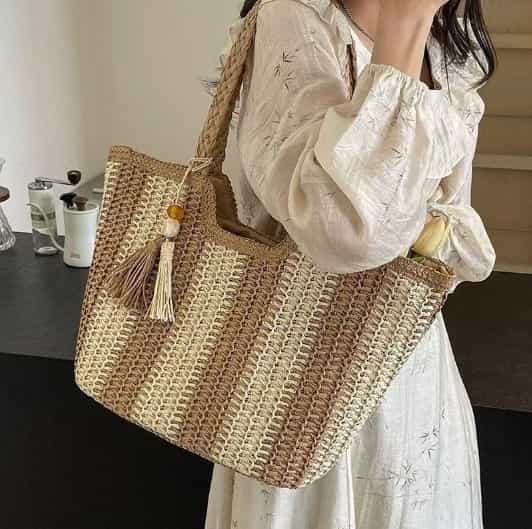
How to Source Both Handmade and Machine-Made Raffia Bags
Many brands benefit from sourcing both handmade and machine-made raffia bags. Here’s how to do it effectively.
Why source both:
| Reason | How It Benefits Your Business |
|---|---|
| Different customer segments | Appeal to both premium and budget-conscious customers |
| Different use cases | Offer bags for different occasions and needs |
| Risk diversification | If one supply chain has issues, the other can compensate |
| Testing new designs | Test machine-made first, then upgrade to handmade |
| Seasonal flexibility | Machine-made for high volume, handmade for exclusivity |
How to source both:
| Step | What to Do | Why |
|---|---|---|
| 1 | Identify which styles work best for each production type | Handmade for premium, machine-made for volume |
| 2 | Find separate suppliers for each type | Each supplier specializes in one method |
| 3 | Maintain separate quality standards | Handmade requires different QC than machine-made |
| 4 | Keep separate inventory | Handmade = lower volume, machine-made = higher volume |
| 5 | Market them differently | Handmade = story, machine-made = value |
The bottom line: Sourcing both handmade and machine-made bags allows you to serve different customer segments, test new designs, and diversify your supply chain. Just make sure you source from the right suppliers for each production method and market them appropriately.
How to Identify Which Production Method Fits Your Brand Goals
Not every brand needs both handmade and machine-made bags. Here’s how to determine what’s right for you.
Questions to help you decide:
| Question | Handmade | Machine-Made |
|---|---|---|
| What’s your target price point? | Premium ($100+) | Entry to mid ($30–80) |
| What’s your brand story? | Artisan, authentic, unique | Consistent, accessible, reliable |
| What’s your order volume? | Small to medium (100–500 pieces) | Large (500+ pieces) |
| What’s your lead time? | Flexible (45–75 days) | Faster (25–45 days) |
| What’s your customer’s priority? | Uniqueness, story, sustainability | Price, consistency, availability |
When to choose handmade:
- Selling premium or luxury products
- Emphasizing artisan craftsmanship and story
- Targeting eco-conscious or high-end customers
- Smaller order quantities (100–500 pieces)
- Flexible timeline
- Unique designs that benefit from handcrafting
When to choose machine-made:
- Selling entry-level or mid-range products
- Emphasizing consistency and affordability
- Targeting budget-conscious customers
- Larger order quantities (500+ pieces)
- Faster timeline needed
- Standard designs that require consistency
The bottom line: Your brand goals should guide your production choice. Handmade fits premium, artisan brands. Machine-made fits entry-level, volume-focused brands. Choose the method that aligns with your brand positioning and customer expectations.
How to Manage Quality Across Both Production Types
Managing quality across both handmade and machine-made production requires a different approach for each.
Quality control differences:
| Quality Aspect | Handmade | Machine-Made |
|---|---|---|
| Weave consistency | Slight variations are normal | Must be perfectly uniform |
| Defect tolerance | Minor variations acceptable | No variations tolerated |
| Inspection method | Individual bag inspection | Batch sampling |
| Common issues | Uneven tension, color variations | Machine errors, consistent defects |
| QC approach | Check for craftsmanship | Check for consistency |
How to manage quality across both:
- Set clear standards for each type – Different standards for handmade vs. machine-made
- Use different QC checklists – Handmade checklist focuses on craftsmanship; machine-made on consistency
- Inspect accordingly – Individual inspection for handmade; batch sampling for machine-made
- Communicate expectations – Tell each supplier exactly what you expect
- Keep separate records – Track quality trends separately for each production type
The bottom line: Managing quality across both production types requires understanding the differences. Handmade is about craftsmanship and uniqueness. Machine-made is about consistency and uniformity. Set clear standards for each, inspect accordingly, and communicate your expectations clearly to each supplier. Quality is not one-size-fits-all.
Final Verdict
Look, here’s the honest truth: neither one is “better.” They’re just different tools for different jobs.
- Going for slow fashion, authenticity, and a beautiful story? → Go with handmade.
- Going for scale, consistency, and affordability? → Go with machine-made.
And guess what? A lot of smart brands actually do both. They launch a core line of machine-made bags for volume sales, and then release limited handmade collections for brand elevation and higher margins. Best of both worlds, really.