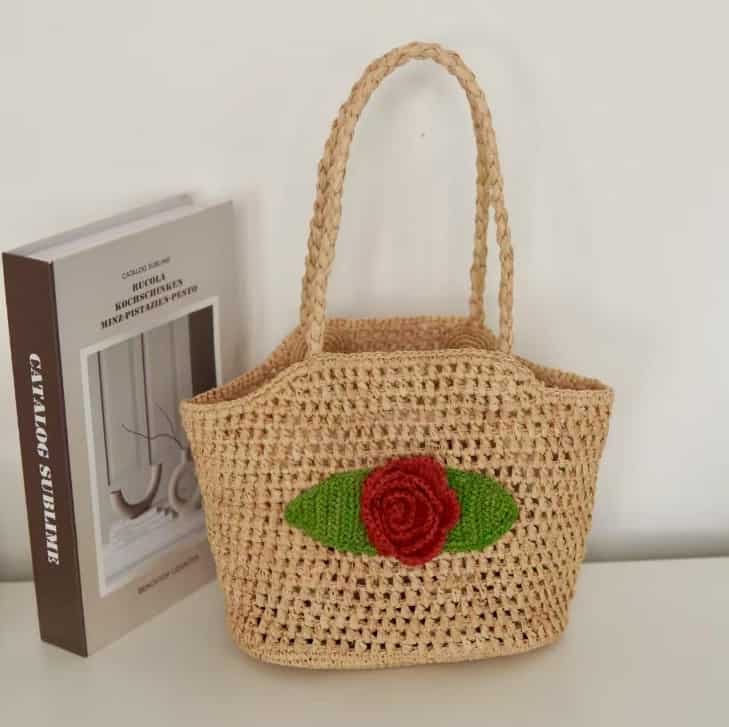
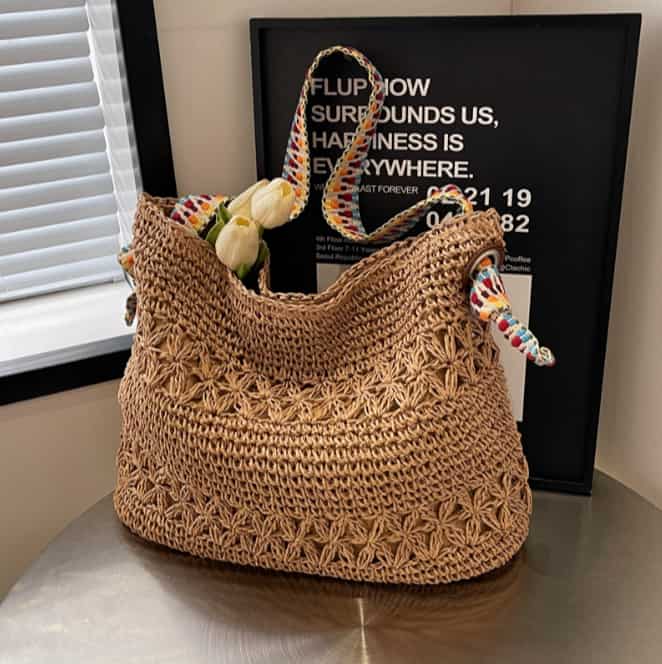
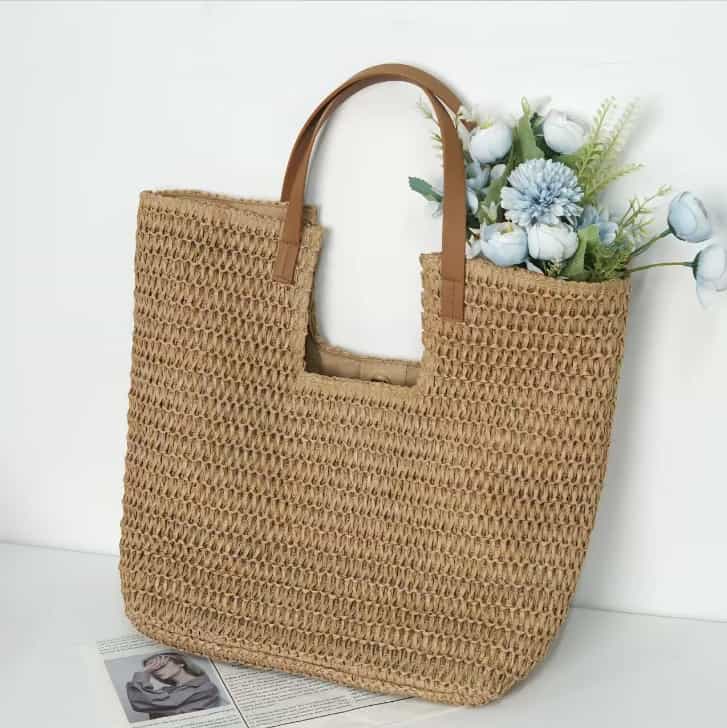
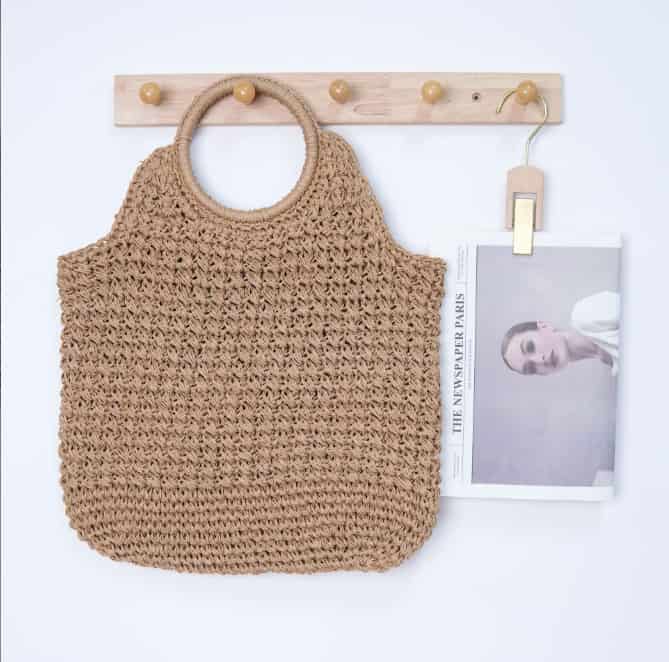
Let’s be honest — starting your own raffia bag business is exciting. But figuring out where to start can feel overwhelming.
The brands that succeed in this space aren’t just selling bags. They’re telling stories, building communities, and doing it with a material that’s naturally sustainable, beautiful, and deeply rooted in artisan traditions.
Whether you’re a boutique owner wanting your own line, a designer launching a collection, or an entrepreneur entering sustainable fashion, this guide will walk you through exactly how to start a raffia bag business — from concept to market.
Step 1 – Find Your Concept and Niche
Before you even touch a piece of raffia, you need to know what your brand stands for and who you’re making bags for.
Why Raffia for Your Brand?
Before you build a brand around raffia, you need to understand why this material is worth building on.
What makes raffia special:
- 100% natural – No plastic, no synthetics — aligns with eco-conscious values
- Biodegradable – Returns to earth at end of life — no landfill forever
- Lightweight – Easy to carry, easy to ship
- Durable – Tight weaves last years with proper care
- Handwoven appeal – Every bag is unique — not mass-produced
- Artisan heritage – Supports traditional skills and communities
Why customers choose raffia:
- They want natural materials over synthetic
- They care about sustainability
- They appreciate handmade craftsmanship
- They want something different from mass-market bags
The bottom line: Raffia isn’t just a material — it’s a statement. It tells customers that your brand cares about quality, sustainability, and authenticity. That’s a story worth building a business around.
Choosing Your Customer – Who Are You Making Bags For?
One of the biggest mistakes new brands make is trying to sell to everyone. When you design for everyone, you connect with no one.
Questions to define your customer:
- What’s their lifestyle? – Determines which styles they’ll buy
- What’s their budget? – Determines your pricing and materials
- What do they value? – Sustainability? Style? Price? Convenience?
- Where do they shop? – Determines your sales channels
- What problem does your bag solve for them? – Defines your value proposition
Example customer profiles:
| Profile | Lifestyle | Budget | What They Value | Best Styles |
| Beach-goer | Vacation, resort living | $40–80 | Lightweight, sand-friendly | Large totes, open weave |
| City commuter | Office, urban lifestyle | $100–250 | Professional look, durability | Structured totes, leather trim |
| Eco-conscious shopper | Sustainable lifestyle | $60–120 | Natural materials, ethical production | Natural raffia, cotton lining |
| Fashion-forward buyer | Trend-driven, social media active | $50–150 | Unique design, photogenic | Crochet, bold colors |
| Luxury collector | High-end, brand loyal | $300–800+ | Exclusivity, craftsmanship | Limited editions, artisan-made |
The bottom line: Choose one customer profile and design for them. You can add more later — but start with a clear picture of who you’re selling to. Everything else — design, pricing, marketing — follows from that.
Seasonal Positioning Strategy for Raffia Bags
Lead-in phrase: Don’t let the weather dictate your sales—give your brand a reason to sell in every season.
| Positioning Direction | Suitable Scenarios | Product Adjustment Suggestions |
|---|---|---|
| Summer/Vacation Style | Beaches, travel, music festivals | Bright colors, large capacities, styled with hats and sunglasses |
| Year-Round Daily Style | Commuting, grocery shopping, parenting, light office work | Neutral tones, small-to-medium sizes, lined interiors with compartments and zippers |
| Holiday/Gift Line | Christmas, New Year, Mother’s Day, wedding favors | Custom embroidered initials, gift box packaging, limited-edition colors |
Define your primary seasonal battlefield, then decide your first batch’s color palette and size mix accordingly.
Step 2 – Study the Market and Competition
What to Look for in a Competitor’s Raffia Bag Line
Before you design your collection, study what’s already out there. Here’s what to analyze.
What to check in competitor brands:
- Price points – Understand market expectations: entry, mid, and premium pricing
- Styles offered – Identify gaps in the market — what’s missing? What’s oversaturated?
- Materials used – See what quality level customers expect — natural raffia vs. synthetic blends
- Color palette – Identify trends and gaps — neutrals vs. brights vs. earth tones
- Marketing positioning – Understand how they communicate — sustainability? Luxury? Affordability?
- Customer reviews – Learn what customers like and dislike — common complaints and praises
How to use competitor analysis:
| What You Find | What to Do |
| All competitors use the same colors | Differentiate with a unique color palette |
| Most brands are entry-level | Consider a premium positioning |
| No one offers crochet styles | Launch a crochet collection |
| Customers complain about weak handles | Make reinforced handles your selling point |
The bottom line: Competitor analysis isn’t about copying — it’s about finding opportunities. Study what’s working, see what’s missing, and fill the gap.
Understanding Your Customer’s Buying Behavior
Knowing what drives your customer’s purchase decisions helps you design, price, and market effectively.
Key factors that influence purchase decisions:
- Price sensitivity – Determines your pricing strategy
- Material preference – Natural vs. synthetic influences your product choices
- Brand values – Customers buy from brands they trust
- Style preference – Totes vs. crossbodies vs. clutches
- Purchase frequency – One-time vs. repeat customers
- Shopping channels – Online vs. in-store influences your sales strategy
What customers consider when buying a raffia bag:
- Quality – They want a bag that lasts
- Price – They want value for money
- Style – It must match their wardrobe
- Sustainability – They want to feel good about their purchase
- Uniqueness – They want something different from mass market
- Brand story – They connect with brands that share their values
The bottom line: Your customer’s buying behavior drives every decision. Understand what they value, what they’re willing to pay, and what turns them off. Design, price, and market accordingly.
Step 3 – Source High-Quality Raffia and Artisans
The quality of your bags starts with the quality of your materials and the people who make them.
How to Identify Quality Raffia at a Glance
Not all raffia is equal. Here’s how to spot good quality before you commit to a supplier.
Signs of good quality raffia:
| What to Check | Good Quality | Poor Quality |
| Fiber thickness | Consistent, 1–2mm thick | Uneven, some too thin, some too thick |
| Color | Natural, even tone (if undyed) | Discolored or splotchy |
| Flexibility | Bends without breaking | Snaps or cracks when bent |
| Surface | Smooth, slightly rough | Rough, scratchy, or brittle |
| Smell | Earthy, herbal | Musty, chemical, or moldy |
The quick test: Take a strand of raffia and bend it. Good raffia bends without snapping. Poor raffia cracks or breaks immediately. Then rub it between your fingers. Quality raffia feels smooth and consistent — not rough or scratchy.
Raffia Origin Differences and Procurement Negotiation Essentials
Lead-in: Not all raffia is the same—origin determines the quality ceiling.
Key origins and their characteristics:
- Madagascar – Features long fibers, strong toughness, and natural luster. This is the industry gold standard. It sits at a higher price point, so it’s best to source through local cooperatives to cut out middlemen markups.
- Kenya and Tanzania – Fibers are slightly shorter with a darker tone, making them suitable for dyeing. The price is moderate, but you should conduct small-batch tests to verify dye stability before placing bulk orders.
- Southeast Asia (Alternatives) – These are mostly palm-fiber imitations with a stiffer texture and higher breakage risk. The price is lower, but this material is not recommended as your primary option—only suitable for budget lines.
Key takeaway: Request 3–5 kg of samples for your first order and complete a full weaving test before placing a bulk order.
How to Evaluate an Artisan Workshop’s Partnership Readiness
- Production Capacity Stability: Maximum monthly output? Can they scale up during peak seasons?
- Communication Responsiveness: Do they reply within 24–48 hours? (Factor in time zone differences)
- Quality Consistency: Are 10 units of the same style close in size/color/weave density?
- Flexibility: Are they open to small trial batches (e.g., 10–20 units)?
- Cost Transparency: Willing to break down “materials + labor + packaging” costs?
- Social Responsibility Awareness: Basic record of working hours and fair pay practices?
Step 4 – Design Your Collection
This is where your vision becomes tangible. Design is what sets your brand apart.
How to Translate Your Concept into a Workable Design
Having a vision is one thing. Making it manufacturable is another. Here’s how to bridge the gap.
From concept to design:
- Sketch your ideas – Draw rough concepts of your bag shapes. Visualizes your vision before production.
- Create a mood board – Collect images, colors, textures that inspire you. Defines your brand’s visual identity.
- Refine specifications – Define exact dimensions, materials, and finishes. Ensures supplier understands your requirements.
- Get supplier feedback – Ask if your design is feasible and cost-effective. Prevents expensive design changes later.
Common design mistakes to avoid:
| Mistake | Why It’s a Problem | Solution |
| Too many colors | Increases production cost and complexity | Stick to 2–3 colors per style |
| Complex patterns | Adds significant labor time and cost | Start simple, add complexity later |
| Unclear specifications | Supplier may misinterpret your vision | Provide detailed sketches and references |
| Ignoring supplier feedback | Some designs aren’t practical for hand weaving | Listen to your supplier’s advice |
The bottom line: A clear, detailed design brief saves time, money, and frustration. Work with your supplier early to ensure your vision is feasible.
How to Choose Materials and Finishes That Fit Your Brand
The materials and finishes you choose affect everything — cost, quality, durability, and customer perception.
Key material decisions to make:
- Raffia type – Natural raffia vs. paper raffia vs. synthetic blend. Natural raffia = premium story; synthetic = lower cost.
- Lining – Cotton vs. polyester vs. no lining. Cotton = premium feel; polyester = budget-friendly.
- Handles – Leather vs. PU vs. braided raffia vs. cotton webbing. Leather = luxury; raffia = authentic; cotton = practical.
- Hardware – Metal vs. plastic zippers, clasps, magnets. Metal = durable; plastic = cheaper but less premium.
- Dye type – Natural dyes vs. chemical dyes. Natural dyes = eco-friendly story; chemical = wider color range.
How to match materials to your brand positioning:
| Brand Position | Recommended Materials | Why |
| Entry-level | Synthetic raffia or paper raffia, no lining, simple handles | Keeps costs low |
| Mid-range | Natural raffia, cotton lining, PU or braided handles | Good balance of quality and cost |
| Premium | Natural raffia, cotton lining, leather handles, quality hardware | Premium materials justify higher prices |
| Luxury | Premium natural raffia, leather trim, custom hardware, artisan-made | Every detail signals quality |
The bottom line: Your material choices should match your price positioning. Customers at higher price points expect premium materials. Don’t use cheap materials and charge premium prices — customers will notice.
Balancing Functionality and Aesthetics – 5 Details Customers Actually Care About
Lead-in phrase: A good-looking but impractical bag ends up in the closet—weave usability into your design.
- Closure Type: Zipper > Magnetic snap > Open-top (trade-off between security and convenience)
- Strap Length: Clearly state “underarm drop” and “crossbody height”—offer 2–3 adjustable holes
- Internal Organization: At least 1 inner slip pocket (for phone/keys)—add a zippered compartment if possible
- Base Reinforcement: Add a stiff base layer (e.g., PP board or leather bottom) to prevent sagging under weight
- Handle Comfort: Handle width ≥ 2.5 cm to avoid digging into hands—or add a leather-wrapped section
Mark these 5 points on your design sketches before moving to sampling.
Seasonal Color and Texture Pairing Plans
Lead-in: Three colors plus two textures equal one complete visual language.
Build your seasonal collections around these pairing principles:
- Spring and High Summer (Resort theme) – Use natural off-white and sand as main colors, with coral orange and lemon yellow as accents. Apply natural flat weave with occasional accent-color weaving. This works well for large totes and round bucket bags.
- Autumn and Early Winter (Urban theme) – Choose caramel brown and olive green as main colors, with cream white and deep burgundy as accents. Use dyed mixed weaves with herringbone or diamond patterns. This suits Boston bags and baguette bags.
- Year-Round Basics – Stick with raw white and light gray as main colors, with navy and black as accents. Keep the natural texture with no dye. These work across all sizes and styles.
Key takeaway: No more than three main colors and two accent colors per season—this maintains collection unity and reduces inventory complexity.
Step 5 – Build Your Brand Story and Identity
A strong story is what turns customers into loyal fans. Storytelling is crucial for luxury brands. Your raffia bags should reflect craftsmanship and your brand’s values.
What Makes a Compelling Brand Story?
| Brand | Story |
| LIMAIA | Founded by Lilas, who left Madagascar and returned to build a bridge between her roots and her new life in France. Each bag bears the artisan’s name. |
| Les Ateliers Feel Good | Empowers women in Madagascar with training and professional opportunities. Uses eco-friendly techniques and sustainable dyeing. |
| Made For A Woman | A social enterprise employing 750 artisans from vulnerable communities, offering fair wages, healthcare, and education. |
Elements to Include in Your Brand Story
- Origin of materials – Where does your raffia come from?
- Artisan story – Who makes your bags? What’s their story?
- Your personal journey – Why did you start this brand?
- Your values – What do you stand for?
- Impact – What difference are you making?
The bottom line: Products with a story sell better. A compelling brand story justifies higher prices and builds customer loyalty.
Position Your Pricing
| Positioning | Approach | Price Range |
| Basic/Eco-friendly | Sustainable, natural fiber story | $30–60 |
| Artisan/Mid-range | Handwoven by skilled artisans | $60–150 |
| Premium artisan | Handcrafted in Madagascar, 100% natural raffia | $150–300 |
| Luxury | Limited edition, exclusive collaborations | $300–800+ |
The bottom line: Your price positioning isn’t just about numbers. It’s about what your brand stands for. An entry-level brand competes on price. A premium brand competes on quality and story.
Minimum Viable Brand Visual Identity System
Lead-in: You don’t need to hire an expensive agency—but these four elements must be consistent.
Build your visual foundation around these four components:
- Brand color palette – Choose three colors: one primary, one secondary, and one accent. All should be drawn from raffia’s natural tones or your brand personality.
- Logo application guidelines – Prepare horizontal, vertical, and circular mark versions for hang tags, care labels, dust bags, and packaging stickers.
- Typography – Use one serif or script font for headlines to convey a handcrafted feel, and one sans-serif font for body text to keep clarity.
- Photography style guide – Standardize white-background angles including front, side, back, and interior shots. Also define a consistent lifestyle filter, whether warm or cool tone.
Key takeaway: Document these four items in a two-page “Brand Visual Handbook” and share it with all photographers, designers, and packaging suppliers.
Step 6 – Choose the Right Production Partner
Once you have your design and story, you need someone who can actually make it happen.
Choosing Between Factory Models
| Option | Pros | Cons | Examples |
| Direct Artisan Partnership | Deep quality control, authentic story, direct social impact | Time-intensive, requires on-the-ground relationships | LIMAIA, Made For A Woman |
| OEM/ODM Factory Supplier | Faster to market, lower MOQs, established infrastructure | Less control over artisan story | Basketgem, Panoramic Exports |
| Hybrid (Design + Factory) | You handle design and branding, they handle production | Need to verify artisan practices | Growing trend |
Supplier selection best practices:
- Prioritize suppliers with ≥4.8 review scores – This indicates consistent quality and client satisfaction
- Check response time – Suppliers responding within ≤4 hours are more likely to provide reliable service
- Request samples – Physical verification of quality is essential before ordering
- Start with a trial order – Test the partnership before committing to large volumes
The bottom line: Working with a reliable supplier ensures consistency and quality across your products. A good supplier is a partner, not just a vendor.
Five Critical Clauses in Your Partnership Contract
Lead-in: Good relationships are built on clear terms, not trust alone.
Make sure your contract includes these five essential clauses:
- Delivery terms – Specify whether it’s “FOB factory price” or “CIF door-to-door.” Set a late delivery penalty of 1–3% per day.
- Quality acceptance standards – Define an AQL (Acceptable Quality Limit) level, such as 1.5 or 2.5. Include re-inspection and rejection procedures.
- Intellectual property ownership – State clearly that design drawings, molds, and sampling results belong to the brand. The factory cannot resell or copy them.
- Non-disclosure agreement – The factory must not disclose your procurement costs, design details, or sales channels to any third party.
- Termination clause – Specify the notice period for contract termination (suggest 60–90 days) and how remaining inventory will be handled.
Key takeaway: For first-time cooperation, start with a single-batch order contract. Transition to an annual framework agreement only after a smooth run.
Step 7 – Test and Optimize Your First Samples
Seven-Day “Torture Test” Plan for Samples
Lead-in: Critique your samples as if they’re from a customer demanding a refund—the earlier you find issues, the less you lose.
Run your samples through these five tests:
Lead-in: Your own approval doesn’t count—if five or more people say yes, then it’s production-ready.
Gather feedback in two rounds:
- Internal evaluation – Have three to five people from design, operations, sales, and external advisors fill out a one-to-five score sheet covering appearance, handfeel, practicality, packaging, and price perception.
- Seed user testing – Invite 10 to 15 potential customers to try the bag for free. In exchange, ask them to complete a detailed questionnaire and allow them to post on social media for earned exposure.
Key takeaway: After compiling all feedback, create two lists: “Must Fix” and “Can Keep.” Only fix what’s truly broken—avoid endless sample iterations.
Sample Feedback Collection Process
Lead-in: Your own approval doesn’t count—if five or more people say yes, then it’s production-ready.
Gather feedback in two rounds:
- Internal evaluation – Have three to five people from design, operations, sales, and external advisors fill out a one-to-five score sheet covering appearance, handfeel, practicality, packaging, and price perception.
- Seed user testing – Invite 10 to 15 potential customers to try the bag for free. In exchange, ask them to complete a detailed questionnaire and allow them to post on social media for earned exposure.
Key takeaway: After compiling all feedback, create two lists: “Must Fix” and “Can Keep.” Only fix what’s truly broken—avoid endless sample iterations.
Wrapping it Up
Starting a raffia bag business is a journey — and a rewarding one at that.
The brands that succeed in this space share a few things in common: they understand their material, they honor the people who make their products, they tell a compelling story, and they build real relationships with their artisans and suppliers.
Whether you start with a small artisan workshop like LIMAIA or partner with an established factory, the key is to stay true to your vision and values.
Ready to start your raffia bag business?
Contact Rafico Accessories for a custom raffia bag quote or consultation. We’ll help you from concept to collection — and everything in between.