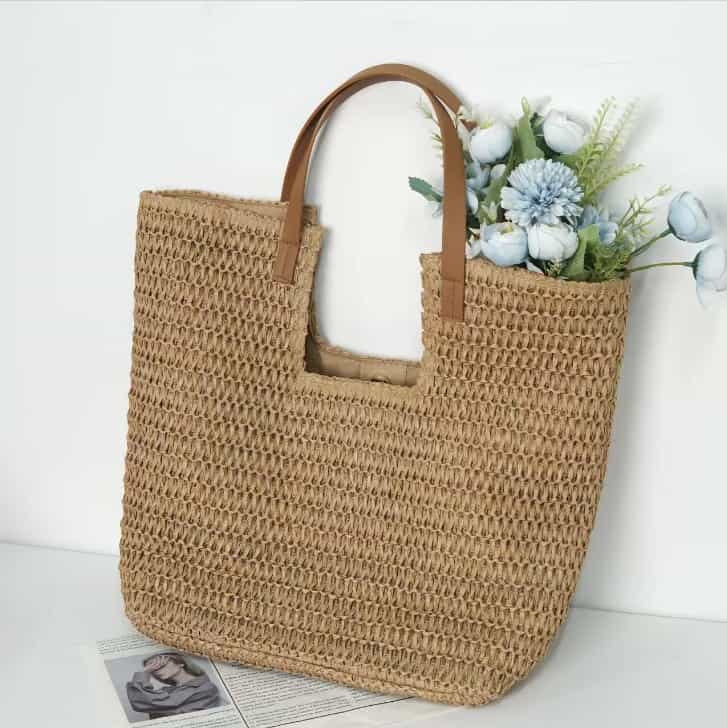
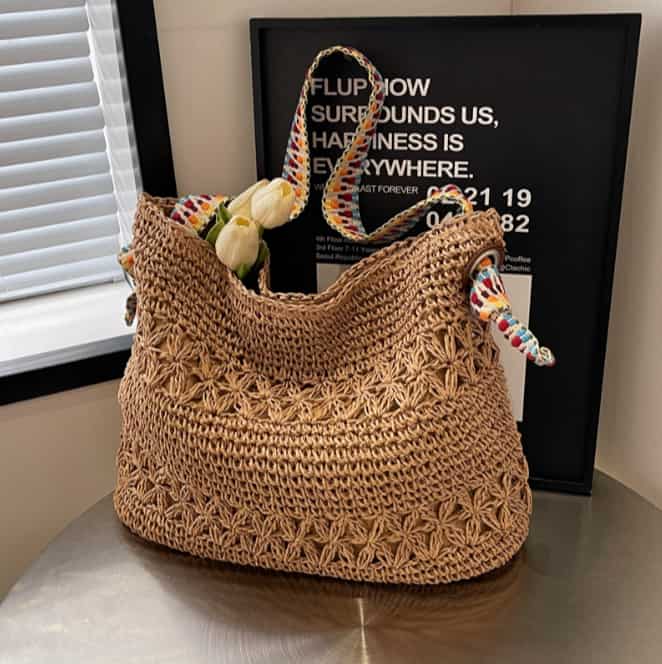
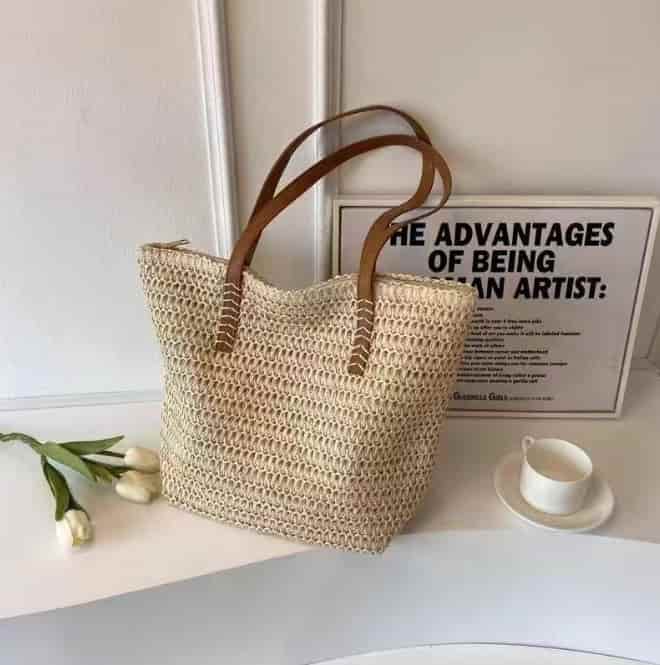
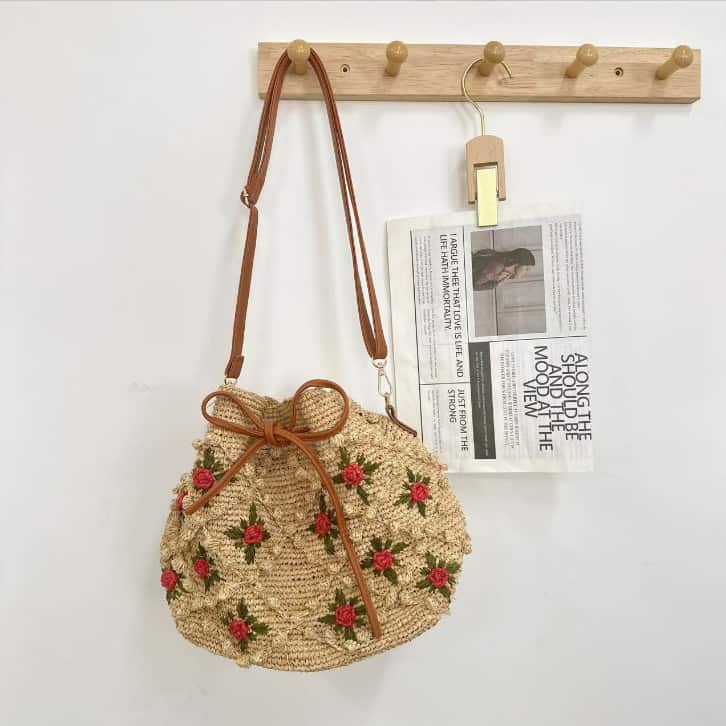
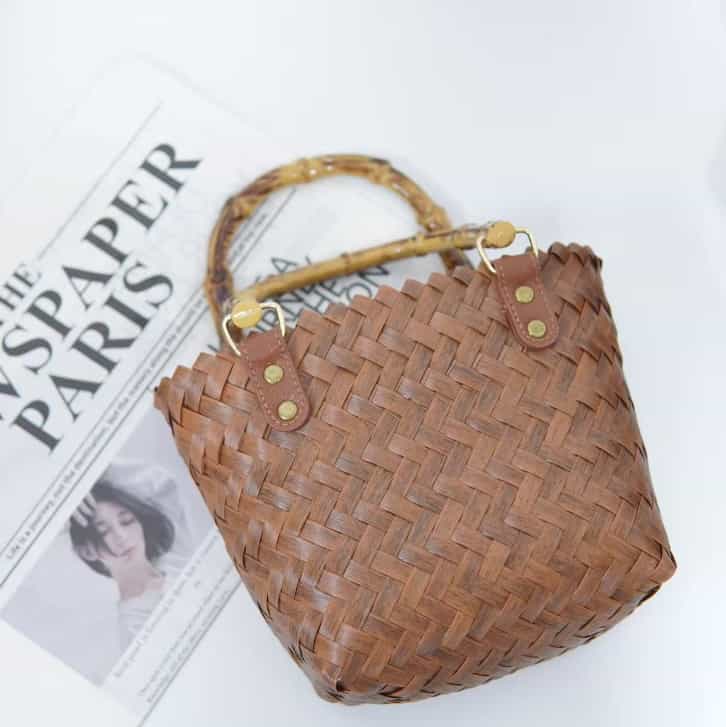
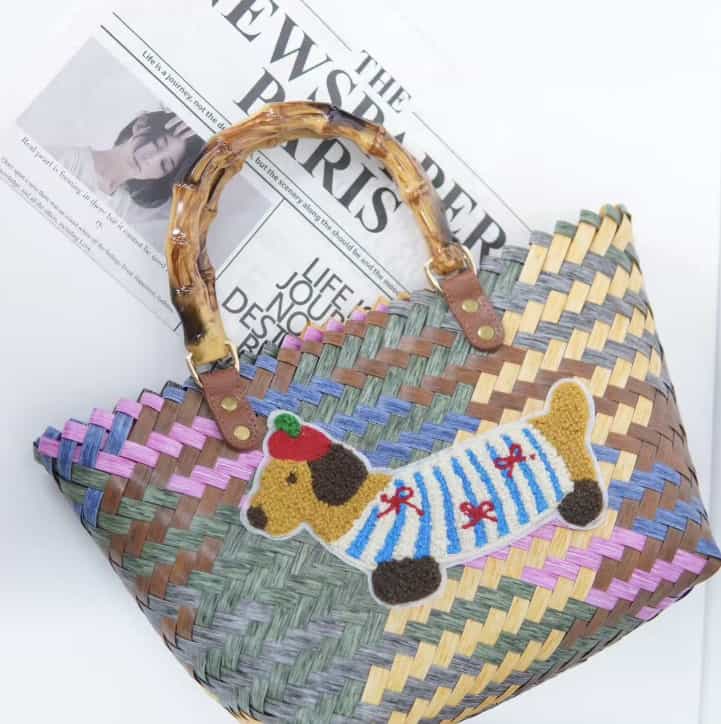
Honestly, People want products that look good and don’t hurt the planet. That’s why handwoven raffia bags made from natural palm fiber material are getting so popular. Let me walk you through why.
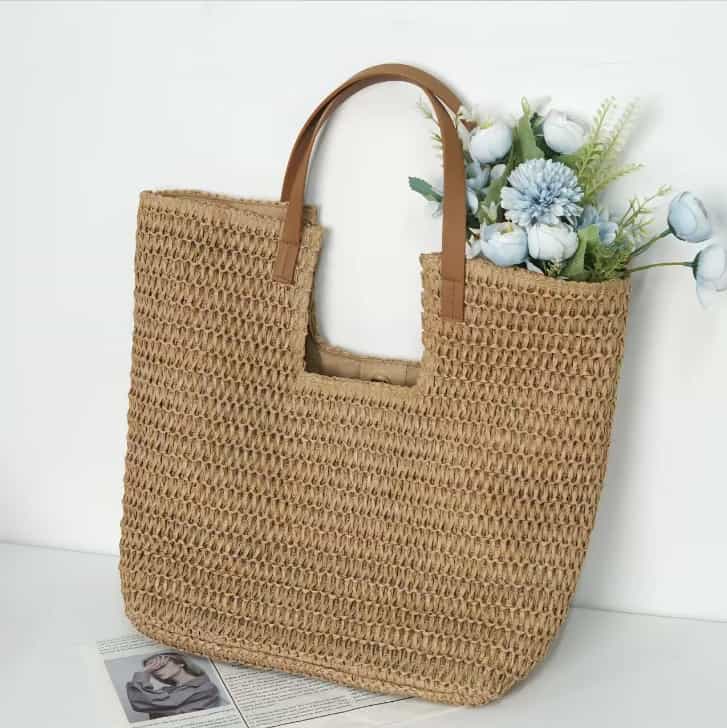
what actually is raffia? Where does it come from?
- It’s a natural fiber from raffia palm leaves – grown in Madagascar, Africa, and Southeast Asia.
- How we get it: peel the leaves, take out the long fibers, and dry them in the sun. No chemicals, no heavy machines. That’s it.
- The cool part? Unlike synthetics, it’s 100% biodegradable and renewable. Plus, it doesn’t take much energy to process. So yeah, it’s about as eco-friendly as it gets.
- And when I say handwoven raffia bags – I mean exactly that. Skilled artisans weave them by hand. No mass production, no identical pieces. Just traditional craftsmanship.
How does raffia outperform synthetic woven fabrics?
| Comparison Point | Natural Raffia Fiber | Plastic/Synthetic Straw |
|---|---|---|
| Raw material source | Regrowing palm fronds, fully renewable | Petroleum, non-renewable resource |
| Production processing | Sun-dried, zero harsh chemical treatments | High-temperature melting, chemical dye fixation |
| End-of-life disposal | Breaks down naturally in soil within 2 years | Leaves microplastics, hundreds of years to decompose |
| Wearing texture | Soft, lightweight, breathable for hot summer | Rigid, scratchy, traps heat against skin |
| Unique product trait | Subtle natural texture variations from hand weaving | Uniform, artificial look with no artisanal charm |
What extra selling talking points does raffia bring to your store?
- Appeals to eco-conscious shoppers Today’s buyers actively seek zero-waste fashion choices. You can highlight raffia’s chemical-free harvesting and biodegradable trait in product descriptions to attract green consumers who avoid plastic accessories.
- Delivers exclusive artisanal value Every handwoven bag carries slight unique texture differences. This one-of-a-kind detail lets you market the item as a premium handmade piece, justifying higher retail pricing compared to mass-manufactured plastic straw bags.
- Matches summer seasonal demand perfectly Raffia’s lightweight, breathable fiber stays comfortable in hot weather, solving the common pain point of heavy, sweaty synthetic carryalls for beach, travel and daily warm-weather outings.
Can raffia material maintain long-term durability?
- Properly processed raffia fiber resists stretching and tearing when woven tightly by experienced craftspeople.
- Our production uses reinforced stitching at stress points to prevent loose weaving after months of daily use.
- Natural fiber won’t crack or harden under sunlight, unlike cheap plastic straw that turns brittle after UV exposure.
- Simple care tips (spot clean with damp cloth, air dry only) extend the bag’s service life for multiple summer seasons.
How do we actually make these bags?
Let me break down our full production workflow step by step. Every premium lightweight raffia hobo begins with strict raw material screening: we only select the longest, sturdiest and most pliable palm fibers to guarantee soft, long-lasting finished bags.
Step 1: Harvesting And Natural Sun Drying
- We hand-harvest mature raffia palm fronds to ensure thick, intact fiber layers.
- Workers gently peel off the delicate outer leaf skin to extract clean, unbroken core fibers.
- All fibers are laid out outdoors for full sun curing, no industrial drying ovens involved. Natural air & sun treatment keeps fibers lightweight and flexible, avoiding brittleness from artificial high-heat processing.
Step 2: Eco-Friendly Plant Dyeing
Some boutique and brand buyers request custom colored raffia styles, and we rely entirely on plant-based, low-impact eco dyes for every tint.
- Zero harsh chemical additives that irritate skin or pollute wastewater
- Color locks evenly into fibers without fading after repeated daily use Even with custom color options, natural warm beige remains our year-round bestseller. Shoppers gravitate toward its pure, earthy organic aesthetic that pairs seamlessly with all summer outfits.
Step 3: Artisan Handweaving
This stage is what sets our bags apart from mass-produced synthetic straw goods.
- Skilled local craftsmen weave every piece on classic hand looms and hand needles
- One single raffia bag requires 1–3 full working days of careful manual weaving
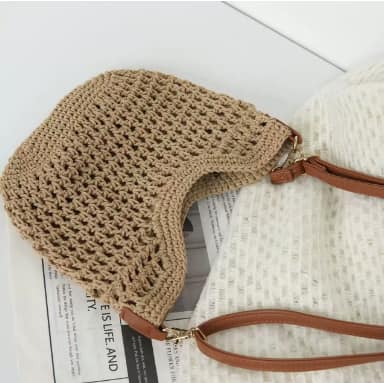
- Slight organic texture variations appear on every finished bag, delivering exclusive artisanal charm The slow, labor-intensive process cuts down rigid uniform mass-production flaws, creating lightweight bags that feel soft and one-of-a-kind to touch.
Step 4: Finishing & Strict Full Quality Control
Once weaving is complete, every individual bag goes through multi-point manual inspection:
- Trim loose stray raffia threads across the whole surface
- Reinforce weak stitching and thin weave stress points
- Fit soft cotton or scratch-free PU inner lining neatly
- Install rust-proof metal hardware with secure, tight fastenings
- Double-check uniform sizing and controlled lightweight weight under 400g
Any imperfect items get reworked immediately instead of being shipped out, so your wholesale orders only carry flawless, retail-ready stock.
What separates our production from cheap raffia manufacturers?
| Production Link | Low-Quality Mass Suppliers | Our Handcrafted Production Standard |
|---|---|---|
| Raw fiber selection | Mixed short, brittle palm scraps | Only long premium flexible palm fibers |
| Dye materials | Harsh chemical synthetic dyes | Natural plant eco-friendly colorants |
| Weaving method | Fast semi-machine assisted weaving | 100% full hand-weaving by skilled artisans |
| Inspection process | Random quick spot checks only | 100% full manual inspection per bag |
| Weight regulation | Uncontrolled heavy empty weight | Strictly capped under 400g lightweight design |
What value does this full handmade process bring to your wholesale business?
- Higher perceived retail value: Handcrafted production lets you market bags as premium sustainable accessories
- Lower return rates: Rigorous quality checks eliminate loose weave, fading and sizing complaints
- Strong eco-selling points: Chemical-free sun processing and plant dyes attract eco-focused shoppers
- Unique product differentiation: One-of-a-kind handwoven texture beats generic identical fast-fashion straw bags
Why should you choose handwoven raffia bags? Let me give you five reasons.
For wholesalers and retailers, knowing the real benefits helps you make better decisions. So here you go:
- First off, you get eco-friendliness. Customers today care about the planet. A bag made from natural palm fiber? No plastic, no waste. That’s a huge selling point.
- Another thing – they’re lightweight but strong. You’d be surprised. These bags can easily carry your phone, wallet, keys, even a small water bottle. And they don’t fall apart.
- Plus, they look naturally beautiful. That slightly rustic texture gives each bag a unique, artisanal feel. Fits perfectly with boho chic, coastal style, or just casual everyday wear.
- Here’s a good one – they breathe. Unlike leather or synthetics, raffia lets air circulate. So no weird smells, no moisture buildup. Get them wet? They dry fast.
- Last but not least, you can customize them. Want different shapes? Totes, crossbody, clutches, round bags – we’ve got them. Want leather handles, fabric linings, tassels, or your logo? Done. Whatever matches your brand.
How handwoven raffia bags lift your store’s sales performance
- Wider target customer coverage These bags attract eco-advocates, vacation shoppers, boho fashion lovers and gift buyers all at once, expanding your potential customer pool compared to single-style synthetic handbags.
- Higher acceptable retail price range The handmade, sustainable value lets you set a higher price tag. Shoppers recognize the artisanal craft and natural material, and they won’t hesitate to pay more than cheap plastic woven alternatives.
- Low seasonal inventory risk Raffia styles sell steadily every warm season instead of fading after one summer, so leftover stock can still be sold the next year without heavy discounting.
Handwoven raffia vs synthetic straw: Full practical comparison table
| Practical Feature | Handwoven Natural Raffia Bags | Mass-Produced Synthetic Straw Bags |
|---|---|---|
| Long-term durability | Tight hand-weaving resists stretching and tearing | Thin plastic strands fray and break after short use |
| Daily wearing comfort | Ultra-lightweight under 400g, no shoulder strain | Bulky, rigid plastic adds obvious carrying weight |
| Odor & moisture resistance | Breathable fiber avoids stuffy odors | Traps sweat, develops unpleasant plastic smells easily |
| Environmental impact | 100% biodegradable, zero plastic waste | Petroleum-based, creates permanent microplastic pollution |
| Customization flexibility | Support shape, hardware, logo and lining adjustments | Fixed mold design with very limited modification space |
What marketing angles can you use to promote these bags?
- Green lifestyle marketing: Highlight biodegradable palm fiber to draw sustainability-focused buyers
- Artisan craft storytelling: Share the 1–3 day hand-weaving process to emphasize one-of-a-kind value
- Summer lifestyle matching: Match raffia bags with beachwear, vacation outfits and casual daily looks in social media content
- Private label selling point: Promote full custom design service for boutique and brand wholesale partners
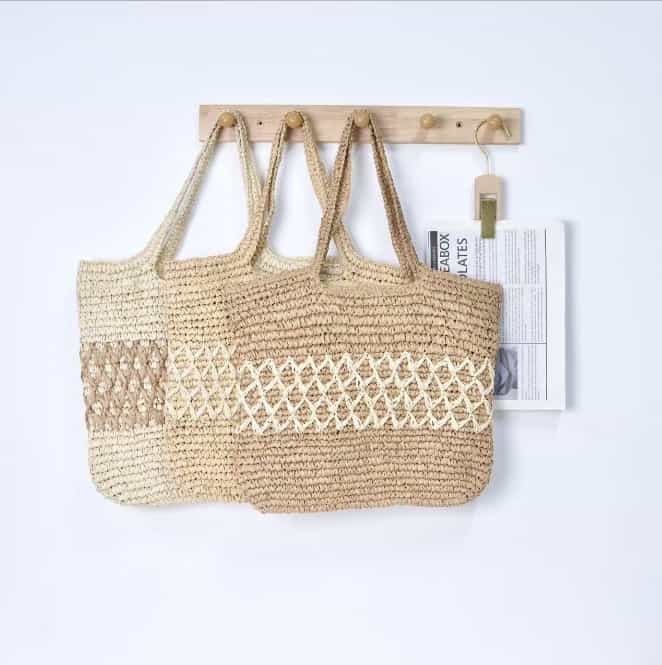
Where can you sell these bags?
From what I’ve seen working with global buyers, handwoven raffia bags work well in quite a few places:
- Summer and vacation collections – beach bags, resort accessories, holiday gifts
- Farmers’ markets and organic stores – shopping bags that fit a natural image
- Boutique fashion brands – high-end or mid-range handbags with a story
- Gift and souvenir shops – unique, handmade-feel products
- Eco-friendly subscription boxes – a beautiful and practical extra item
Online Channels – Where Raffia Bags Sell Best
Beyond physical stores, online platforms offer huge opportunities for raffia bag sales.
Top online sales channels:
| Channel | Why It Works | Best For |
|---|---|---|
| Your own website | Full control, highest margins, brand building | Established brands with existing traffic |
| Etsy | Built-in audience of shoppers looking for handmade goods | Artisan, handcrafted, unique designs |
| Amazon | Massive reach, fast shipping, trust factor | High-volume, consistent demand |
| Instagram Shopping | Visual platform, direct purchase from posts | Lifestyle brands, photogenic products |
| Discovery platform, shoppers planning purchases | Trend-driven, aesthetic-focused brands | |
| TikTok Shop | Viral potential, younger audience | Trendy, affordable styles |
| Farfetch / Net-a-Porter | Luxury audience, premium positioning | High-end, designer-quality bags |
What’s selling where:
| Platform | What Sells | Price Range |
|---|---|---|
| Etsy | Handmade, unique, artisan-crafted | $40–200 |
| Amazon | Affordable, practical, high-volume | $30–80 |
| Trend-driven, visually appealing | $50–200 | |
| TikTok Shop | Affordable, trendy, impulse buys | $30–100 |
| Luxury platforms | Premium, designer, limited edition | $200–800+ |
The bottom line: Different channels work for different price points and customer types. Choose the platforms that match your brand and target audience.
How to Sell Raffia Bags Through Corporate Gifting and Events
Corporate gifting is a growing market for raffia bags. Here’s how to tap into it.
Corporate gifting opportunities:
| Opportunity | Why It Works | What to Offer |
|---|---|---|
| Employee gifts | Companies want sustainable, thoughtful gifts | Branded raffia totes, customized with company logo |
| Client gifts | Impress clients with premium, sustainable products | Premium handwoven raffia bags, gift packaging |
| Event giveaways | Memorable, useful, and shareable | Mini bags, clutches, simple totes |
| Corporate gift boxes | Curated boxes with multiple items | Raffia tote + cotton pouch + care card |
| Sustainability-focused gifting | Companies want eco-friendly corporate gifts | Natural raffia, sustainable packaging |
How to approach corporate clients:
| Step | What to Do | Why |
|---|---|---|
| 1 | Identify companies that value sustainability | They’re more likely to buy |
| 2 | Offer custom branding (logo embroidery, custom colors) | Makes it special for their company |
| 3 | Provide premium packaging | Corporate gifts need to look professional |
| 4 | Offer bulk pricing | Corporate orders are larger |
| 5 | Share your sustainability story | Companies want to feel good about their gifts |
The bottom line: Corporate gifting is a growing opportunity for raffia bags. Companies are looking for sustainable, thoughtful gifts that stand out. Offer custom branding, premium packaging, and bulk pricing to tap into this market. A single corporate order can be larger than many retail orders.
A few quick tips if you’re buying wholesale
Thinking about placing an order? Here’s what I recommend:
- Check the weave – tight and even means good quality and better durability.
- Ask where the palm fiber comes from – Madagascar or well-managed farms in Southeast Asia are your best bet.
- Request samples – feel the bag, check the weight, even smell it. Natural raffia has a mild earthy scent, not a chemical one.
- Plan your lead times – handwoven takes time. Don’t expect fast fashion speed.
- Look for ethical sourcing – many buyers love supporting artisans. It’s a great story to tell your customers.
How to Build a Successful Wholesale Buying Strategy
A clear strategy makes wholesale buying easier and more profitable. Here’s how to build one.
Elements of a successful wholesale buying strategy:
| Element | What to Do | Why It Matters |
|---|---|---|
| Know your customer | Understand who you’re selling to | Guides your style and price decisions |
| Plan your budget | Set a clear budget for each order | Prevents overspending |
| Research suppliers | Compare multiple suppliers | Finds the best quality and price |
| Order samples | Test quality before bulk | Prevents costly mistakes |
| Start small | Test with 100–200 pieces | Reduces risk |
| Track sales | Monitor what sells | Guides future orders |
| Re-order fast | Restock best-sellers quickly | Captures demand |
| Build relationships | Invest in supplier relationships | Better pricing and service |
Seasonal buying calendar:
| Season | What to Order | When to Order |
|---|---|---|
| Spring | Lightweight totes, pastel colors | November–December |
| Summer | Beach bags, bright colors | February–March |
| Fall | Structured totes, earth tones | May–June |
| Winter/Holiday | Giftable items, mini bags | August–September |
The bottom line: A clear buying strategy helps you order the right products at the right time. Know your customer, plan your budget, research suppliers, and track sales. A successful strategy is built on data, not guesswork. Be prepared – and your wholesale buying will be more profitable.
How to Price Handwoven Raffia Bags for Maximum Profit
Pricing handwoven raffia bags correctly is essential for profitability. Here’s how to set prices that work for your brand.
Pricing by production type:
| Production Type | Wholesale Cost | Retail Price | Markup |
|---|---|---|---|
| Handwoven Raffia | $8–15 | $50–120 | 5–8x |
| Machine-Made Raffia | $4–8 | $25–60 | 5–8x |
| Synthetic Straw | $2–5 | $15–40 | 5–8x |
Factors that justify higher prices:
| Factor | Why It Justifies Higher Price |
|---|---|
| Handwoven construction | Customers pay more for craftsmanship |
| 100% natural raffia | Natural materials cost more than synthetics |
| Artisan story | A compelling story justifies premium pricing |
| Certifications | OEKO-TEX, OK Compost, or GOTS logos build trust |
| Ethical production | Fair wages and sustainable practices add value |
| Limited quantities | Exclusivity supports higher prices |
The bottom line: Handwoven raffia bags command higher prices because they take more time, skill, and care to produce. Price them accordingly – your customers will pay for quality and authenticity.
How to Communicate Value to Justify Higher Handwoven Prices
Higher prices need justification. Here’s how to communicate the value of handwoven raffia bags to your customers.
How to justify higher prices:
| What to Communicate | How to Say It | Why It Works |
|---|---|---|
| Artisan craftsmanship | “Handwoven by skilled artisans – hours of handwork go into every bag” | Customers pay for skill and time |
| Natural materials | “Made from 100% natural raffia – biodegradable and plastic-free” | Natural materials are valued over synthetics |
| Uniqueness | “Each bag is one of a kind – no two are exactly alike” | Exclusivity justifies premium pricing |
| Sustainability | “Sustainable production – low impact on the planet” | Eco-conscious customers pay more |
| Durability | “Built to last – a bag you’ll use for years” | Value over time justifies the price |
| Ethical production | “Fair wages for artisans – supporting communities” | Customers want to feel good about their purchase |
Where to communicate value:
| Channel | What to Say |
|---|---|
| Product page | “Handwoven by artisans in Madagascar using 100% natural raffia – a bag that lasts for years.” |
| Hang tag | “Hours of handwork – each bag is one of a kind.” |
| Social media | Behind-the-scenes of the weaving process |
| Email marketing | “Why handwoven raffia costs more – and why it’s worth it.” |
The bottom line: Higher prices need higher value communication. Tell the story behind the product – the artisan craftsmanship, the natural materials, the uniqueness. When customers understand the value, they’re willing to pay more. Price reflects not just the product, but the story behind it.
How to Spot a Quality Handwoven Raffia Bag
Not all handwoven raffia bags are created equal. Here’s what to look for in a quality product.
Quality checkpoints for handwoven raffia bags:
| Checkpoint | What to Look For | What to Avoid |
|---|---|---|
| Weave consistency | Even, tight weave throughout | Loose spots, visible gaps |
| Handle attachment | Woven-in or double-stitched | Single-stitched or glued handles |
| Bottom reinforcement | Extra layer or stiff insert | Thin, flimsy bottom |
| Stitching | Even, tight, no loose threads | Loose or skipped stitches |
| Color | Even, consistent throughout | Uneven, blotchy color |
| Edges | Clean, finished edges | Fraying, rough edges |
| Smell | Earthy, herbal scent | Chemical or musty smell |
Quick quality tests:
| Test | How to Do It | Pass | Fail |
|---|---|---|---|
| The pull test | Pull the handles with moderate force | Handles stay secure | Handles move or stretch |
| The light test | Hold the bag up to a light source | No visible gaps | Gaps or holes visible |
| The feel test | Rub the surface with your hand | Smooth, consistent | Rough, loose fibers |
The bottom line: Quality is in the details. Check the weave, handles, bottom, stitching, and color. A quality handwoven raffia bag will last for years – and your customers will notice the difference.
How to Train Your Customers to Spot Quality Raffia Bags
Your customers will trust you more if you help them understand quality. Here’s how to educate them.
What to tell your customers about quality:
| Quality Indicator | What to Tell Them | Why It Matters |
|---|---|---|
| Weave density | “Tight, even weave means the bag will hold its shape and last longer.” | Customers learn what to look for |
| Handle attachment | “Handles should be woven-in or double-stitched – not glued or single-stitched.” | Prevents handle failure |
| Bottom reinforcement | “A reinforced bottom prevents sagging and keeps your bag looking great.” | Maintains shape and durability |
| Natural color variations | “Slight color variations are a sign of natural raffia – not a defect.” | Customers appreciate authenticity |
| No chemical smell | “Real raffia smells earthy and natural – not like chemicals.” | Helps customers identify real raffia |
How to educate your customers:
| Method | How to Do It | Why It Works |
|---|---|---|
| Product descriptions | Explain quality features and why they matter | Educates while selling |
| Social media | Share quality tips and behind-the-scenes content | Builds trust and authority |
| Hang tags | Include quality information on your tags | Reaches customers at the point of purchase |
| Email marketing | “How to spot quality in a raffia bag” | Builds your reputation as an expert |
| In-store signage | Display quality checkpoints next to your bags | Helps customers make confident decisions |
The bottom line: Educated customers are confident customers. When you teach them what quality looks like, they trust your brand more – and they’re more likely to buy from you again. Quality education builds long-term loyalty.
How to Use Quality to Build a Premium Brand Reputation
Quality is the foundation of a premium brand. Here’s how to build your brand around quality.
How quality builds a premium reputation:
| Action | How It Builds Reputation |
|---|---|
| Consistent quality | Customers trust your brand because they know what to expect |
| Clear quality standards | Shows you care about your products |
| Quality education | Positions you as an expert |
| Quality guarantees | Builds trust and reduces purchase risk |
| Customer feedback | Shows you listen and improve |
| Artisan transparency | Builds authenticity and connection |
What a premium quality brand looks like:
| Brand Element | What It Means |
|---|---|
| Consistent product quality | Every bag meets the same high standards |
| Clear communication | You explain what makes your bags special |
| Strong artisan story | Customers know who made their bag |
| Quality guarantees | You stand behind your products |
| Positive customer reviews | Customers confirm your quality claims |
| Professional presentation | Packaging and branding reinforce quality |
The bottom line: Quality is the foundation of a premium brand. When you consistently deliver quality, communicate your standards, and educate your customers, you build a reputation that commands higher prices and loyal customers. Quality isn’t just about the product – it’s about everything you do.
let’s wrap it up
Look, handwoven raffia bags made from natural palm fiber material aren’t just a passing trend. They’re a solid, sustainable product that people actually want.
If you’re a retailer or brand looking for something natural, unique, and handmade – these bags are a great choice.
We supply them directly, with competitive pricing, consistent quality, and full customization support. We also work directly with skilled artisans, so every bag meets international standards.
Want to see our catalog or request some samples? Just reach out. Let’s build something greener together.