Here’s a scenario I hear from buyers all the time: “I found a great raffia bag supplier, but they want me to order 2,000 pieces. I’m just testing the market.”
Or worse: “I placed my order two months ago and they’re still not ready.”
For small brands, boutiques, and retailers testing a new category, high MOQs and slow turnaround are the two biggest barriers to getting started.
But here’s the good news — not all suppliers work that way. There are factories that offer low minimum orders (starting from 100 pieces or even 2 pieces) and fast turnaround (samples in 5–7 days, bulk in 15–25 days).
Let me show you what to look for and which suppliers are leading the way.
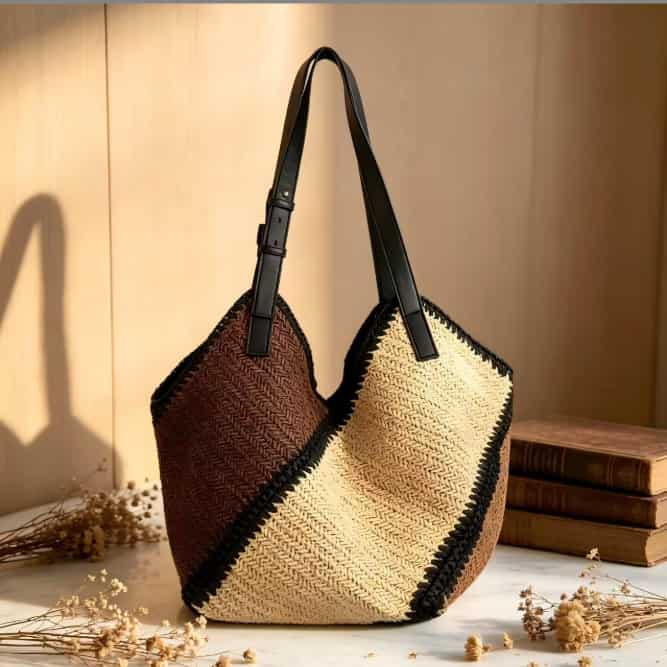
What Does “Low MOQ” Really Mean for Raffia Bags?
MOQ stands for Minimum Order Quantity — the smallest number of units a supplier will accept for a bulk order.
Typical MOQ ranges in the raffia bag industry:
| Supplier Type | Typical MOQ | Best For |
| Large-scale factories | 500–2,000+ pieces | Big retailers, mass market |
| Standard suppliers | 300–500 pieces | Mid-sized brands |
| Low-MOQ suppliers | 100–300 pieces | Boutiques, test runs, small brands |
| Ultra-low MOQ | 2–10 pieces | Samples, very small collections, designers |
Who offers low MOQs?
Several suppliers have recognized this demand and adapted their business models:
| Supplier | MOQ | Notes |
| Panoramic Exports | 100 pieces | Flexible order quantities, private label support |
| Qingdao Zhuoxin Crafts | 2 pieces | Luxury totes, minimal inventory risk |
| Guangzhou Baosha Leather | 150 pieces | Premium finishes, hardware integration |
| Dongguan Sundd | 5–300 bags | Fashion-forward designs, handwoven styles |
Why low MOQ matters:
- Test the market – Launch a new collection without committing to thousands of pieces
- Lower inventory risk – You’re not sitting on unsold stock if something doesn’t sell
- More flexibility – Order small batches, test designs, then scale what works
- Better cash flow – Smaller upfront investment frees up capital for other things
Who Benefits from Low MOQ?
Low MOQ isn’t for everyone. Here’s who it makes the most sense for.
Low MOQ is perfect for:
- Small boutiques – You don’t have warehouse space for 2,000 bags. You need 100–200 pieces that sell through quickly.
- Brands launching a new category – You’ve never sold raffia before. Test it before you bet big on it.
- DTC/online stores – You want to test multiple SKUs, not commit to one style. Low MOQ lets you spread your budget across 5–10 designs.
- Seasonal or event-driven brands – You need small runs for weddings, resorts, or summer pop-ups. Once the season ends, you don’t want leftover stock.
- Designers and sample collections – You’re showcasing a collection and only need 50–100 pieces for wholesale.
High volume still makes sense for:
- Large retailers – You’ve got shelf space and proven demand. Higher volume = lower per-unit cost.
- Repeat collections – You know exactly what sells and need consistent restocking.
- Bulk distribution – You’re supplying to other retailers and need 1,000+ pieces to meet demand.
Here’s the simple rule:
Test with low MOQ. Scale with high MOQ.
Low MOQ is your experimental phase. High MOQ is your profitable phase. You don’t need to skip the first step.
The Cost Trade-Off – What You Pay
Here’s something a lot of buyers don’t realize: low MOQ usually means higher per-unit cost. And that’s not a trick — it’s just how manufacturing works.
Why low MOQ costs more per unit:
- Setup time – Setting up production takes the same time whether you’re making 100 or 1,000 pieces
- Material waste – Smaller orders mean less efficiency in material cutting and preparation
- Labor allocation – Artisans need the same training, whether they’re making 100 or 1,000
- Factory scheduling – Smaller orders get squeezed in between larger ones
But here’s what you also get:
| What You Pay More For | What You Get In Return |
| Higher per-unit cost | Lower total investment |
| Less negotiating leverage | More design flexibility |
| Slightly longer lead time (sometimes) | Risk reduction |
| Not getting the “best” price | Getting the right price for your situation |
Here’s the math:
| Order Size | Per-Unit Cost | Total Investment | Risk If It Flops |
| 100 pieces | $8.00 | $800 | $800 |
| 500 pieces | $5.50 | $2,750 | $2,750 |
| 1,000 pieces | $4.50 | $4,500 | $4,500 |
If the product flops, you lose $800, not $4,500. That’s the value of low MOQ.
The bottom line: You’re paying a premium for flexibility and lower risk. For many small brands, that’s absolutely worth it. Just make sure you understand the trade-off before you negotiate.
Low MOQ vs. High MOQ – A Side-by-Side Comparison
Lead-in: Low MOQ isn’t always better – it depends on your stage, budget, and goals.
| Factor | Low MOQ (50–200 units) | High MOQ (500–1000+ units) |
|---|---|---|
| Unit cost | Higher | Lower |
| Upfront investment | Low – easy to start | High – significant capital tied up |
| Design flexibility | High – test and pivot quickly | Low – changes are costly |
| Inventory risk | Low – less dead stock | High – overstock kills cash flow |
| Supplier interest | Limited | High – factories prioritize large buyers |
| Best for | New brands, testing, limited editions | Mature brands, bestsellers, bulk replenishment |
Key takeaway: Low MOQ buys flexibility and safety. High MOQ buys cost efficiency. Choose based on your current stage.
How Suppliers View “Low-MOQ Buyers”
Lead-in: Small buyers are seen as “high-risk” – understand their concerns to get them to say yes.
Factories hesitate on low-MOQ orders for four reasons:
- High setup cost – Changing styles/colors takes time. Small orders use the same setup time but generate far less profit.
- Uneconomical material purchasing – Raffia is bought in bulk. Small orders leave leftover materials that tie up inventory and capital.
- Disproportionate communication – Small orders consume as much time as large ones (quoting, sampling, confirming) – but return is much lower.
- Quality risk – New brands = uncertain order future. Factories prioritize clients with proven track records.
Key takeaway: To win them over, reduce their uncertainty – offer higher deposits (50% vs. 30%), accept shorter revision windows, or commit to a second order if the first goes well. Action speaks louder than requests.
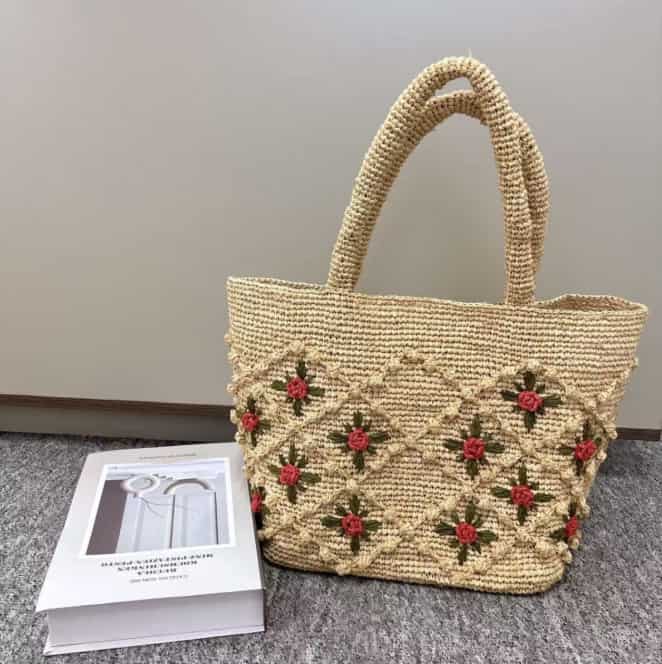
Fast Turnaround – What’s Realistic for Raffia Bags?
Turnaround time covers everything from sample approval to delivery. Here’s what you can realistically expect.
The typical timeline:
| Stage | Standard (Days) | Fast (Days) |
| Sample production | 7–15 | 5–7 |
| Sample revision (if needed) | 5–10 | 3–5 |
| Bulk production | 30–45 | 15–25 |
| QC & packing | 3–5 | 2–3 |
| Shipping | 7–30 | 7–14 |
| Total | 45–75 | 25–45 |
Suppliers known for fast turnaround:
- Laizhou Dongyuan Arts & Crafts Factory – 100% on-time delivery record, fastest response time
- Qingdao Huayi Union Trading – Quick prototyping, ≤2-hour average response
- Dongguan Sundd – ≤1-hour response, fast sampling process
What speeds things up:
- Having clear design references ready
- Approving samples quickly
- Choosing standard materials (vs. custom-dyed or rare materials)
- Working with suppliers who have established QC systems
Pro tip: Some suppliers offer sample production within 5–7 days for simple designs. Always ask about lead time before committing — and add 1–2 weeks of buffer for unexpected delays.
What Affects Turnaround Time – Supplier Factors
Not all suppliers deliver at the same speed. Here’s what determines how fast you get your bags.
Key supplier factors that affect lead time:
| Factor | Fast Supplier | Slow Supplier |
|---|---|---|
| Dedicated sample team | Has a separate team just for samples | Same team handles samples and bulk |
| Material stock | Keeps common raffia colors and hardware in stock | Orders materials after you place your order |
| Production capacity | Has flexible scheduling and available artisans | Running at full capacity — your order waits in line |
| QC process | Established systems, consistent quality | Inspects at the end, finds issues late |
| Communication | Responds within 24 hours, keeps you updated | Slow replies, you have to chase for updates |
What to ask your supplier:
- “Do you have a dedicated sample team?”
- “Do you keep materials in stock, or do you order them after I place my order?”
- “What’s your current production capacity — are you running at full capacity right now?”
- “How do you handle QC — is it checked throughout production or only at the end?”
The bottom line: Speed isn’t just about how fast they work. It’s about how their factory is set up. A supplier with a dedicated sample team and materials in stock will always be faster than one without.
Sample vs. Bulk – Why Lead Times Are Different
A lot of buyers assume sample lead time = bulk lead time. It’s not.
Here’s the difference:
| Samples | Bulk Orders | |
| Production method | Handcrafted, one-off | Batch production, assembly line |
| Materials | Often from existing stock | Sourced specifically for your order |
| Setup time | Minimal | Significant (pattern making, cutting, scheduling) |
| Labor | 1–2 artisans | Whole team |
| Typical lead time | 5–15 days | 15–45 days |
Why samples are faster:
- They don’t require full material sourcing — factories use what they have on hand
- They’re made in small quantities, so they’re easier to prioritize
- No complex scheduling — one artisan can focus on your sample
Why bulk takes longer:
- Bulk orders require ordering specific quantities of materials — sometimes from other suppliers
- Production lines need to be set up and scheduled
- More pieces = more QC time
- If you have custom colors or logo work, that adds extra time
The key point: Don’t assume your bulk order will arrive as fast as your sample. Ask your supplier for a realistic timeline upfront — and add a buffer. A reliable factory will give you a clear breakdown of sample and bulk lead times.
Where Can Turnaround Time Be Compressed
Lead-in: Some production steps can be accelerated – others are bound by physical time. Know the difference.
- Material sourcing – Room to compress (3–7 days). Using stock colors cuts 1–2 weeks down to 2–3 days.
- Weaving – Very limited (can’t compress). Labor-intensive – no machine shortcut. More workers help, but skilled artisans are finite.
- Assembly & finishing – Moderate (3–5 days). Adding staff speeds up cutting, stitching, hardware installation – but quality must not suffer.
- Quality control – Very limited (don’t compress). Rushing QC increases defect risk. Use “split shipments” instead.
- Packaging & shipping – Significant (5–15 days). Air freight over sea freight saves weeks – at a cost.
Key takeaway: Weaving is “hard time” – it can’t be meaningfully shortened. If you’re in a rush, simplify the design, use stock materials, or choose faster shipping. Don’t ask factories to “weave faster” – that means sacrificing quality.
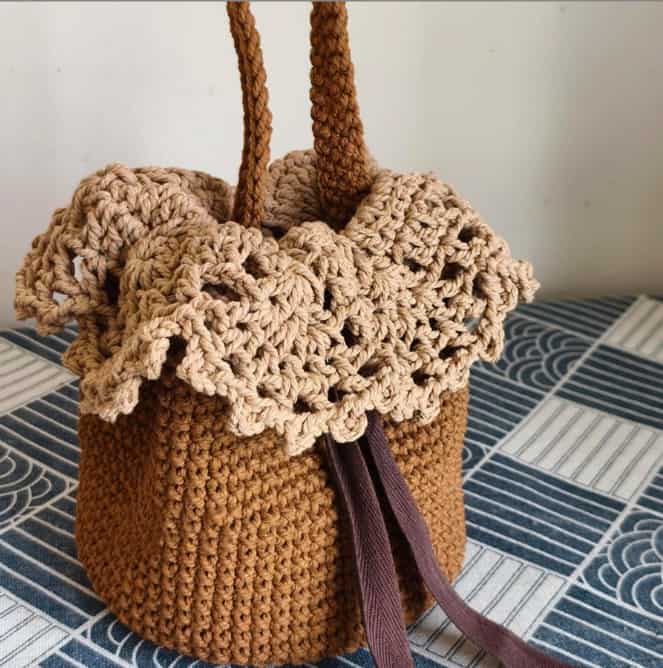
How Low MOQ and Fast Turnover Help Your Business
If you’re a small brand or testing a new category, low MOQ and fast turnaround can make a real difference to your cash flow, inventory, and agility.
Here’s what it enables:
- Test and learn – Order 100 pieces. See what sells. Reorder the winners. Stop the losers.
- Seasonal agility – Raffia is a seasonal product. If you miss the spring/summer window, you’re stuck with inventory for a year. Fast turnaround helps you hit the right timing.
- No overcommitment – You don’t need to bet your whole budget on one style. Spread it across multiple designs and see what sticks.
- Quick reaction to trends – A style takes off? You can reorder fast while the trend is hot.
The math: A 100-piece order at $8 per unit = $800 upfront investment. That’s a test you can afford. Even if only 60% sell, you’ve learned something valuable — without losing your shirt.
The Hidden Costs of High MOQ – What You Don’t See
High MOQ doesn’t just tie up your cash. It creates hidden costs that many buyers don’t factor in.
What high MOQ actually costs you:
| Hidden Cost | What It Means | Real Impact |
| Storage costs | You need space for 1,000+ bags | Warehouse rent, insurance |
| Cash flow blockage | Your money is sitting in inventory, not your bank | Can’t invest in other products or marketing |
| Markdown risk | If it doesn’t sell, you need to discount it | Lost profit margins |
| Opportunity cost | The money you spent could have been used elsewhere | Missed chances to test other products |
| Dead stock risk | If the product flops, you’re stuck with it | Total loss of investment |
The math on hidden costs:
| Order Size | Visible Cost | Hidden Costs | Total Real Cost |
| 100 pieces | $800 | Low | ~$900 |
| 500 pieces | $2,750 | Storage + cash flow | ~$3,200+ |
| 1,000 pieces | $4,500 | Storage + cash flow + markdown risk | ~$5,500+ |
Here’s the bottom line: High MOQ only makes sense when you’re confident your product will sell. If you’re testing, low MOQ is often cheaper in the long run.
Seasonal Agility – Why Timing Matters for Raffia
Raffia is a seasonal product. Miss the spring/summer window and you’ve got a warehouse full of bags for a year.
Here’s the seasonal window:
| Period | What’s Happening | Why Timing Matters |
| January–February | Pre-season planning | Place orders early to get ahead |
| March–April | Spring launch | Stock needs to be ready |
| May–June | Early peak | High selling volume |
| July–August | Peak season | Maximum demand |
| September–October | Fall transition | Last chance to sell before clearance |
A fast turnaround supplier (25–45 days) gives you:
- 2–3 months of extra selling time compared to standard suppliers
- Flexibility to respond to trends – If a style takes off in June, you can reorder and get it by July
- Less end-of-season discounting – You’re not clearing out stock at 50% off
The worst-case scenario: You order from a standard supplier (60+ days). By the time your bags arrive, it’s July. You have 2 months to sell before the season ends. You end up discounting 30% of your stock.
The smart way: You order from a fast supplier. Your bags arrive in April. You have 6 months to sell at full price.
The bottom line: Fast turnaround isn’t just convenient — it directly impacts your profit margins.
Which Styles Sell Best? – Let Real Orders Tell You
Lead-in: Instead of spending months guessing which style will sell, use small-batch fast turnaround to let customers vote with their wallets.
Low MOQ + fast turnaround enables three types of market testing:
- A/B test different styles – Order 2–3 styles in small batches (50–100 each). List them side by side and track sell-through, conversion, and feedback. In 2–3 weeks, you’ll have real data – not opinions.
- Test social media response – Post real product images on Instagram, TikTok, or Xiaohongshu. Collect likes, comments, and saves before committing to a larger restock.
- Validate price sensitivity – Test the same style at different price points ($68 vs $78) across channels. Find the profit-maximizing price.
Key takeaway: The biggest advantage of low-MOQ fast turnaround isn’t saving money – it’s saving time. You can compress a year’s worth of market validation into a few months. Treat every small batch as a low-cost experiment, not just a purchase.
How Fast Turnaround Gives You a Seasonal Edge
Lead-in: The real winners in peak season aren’t the earliest planners – they’re the closest to the market. Fast turnaround lets you make better last-minute decisions.
| Advantage | Slow Supply Chain | Fast Turnaround Supply Chain | Impact |
|---|---|---|---|
| Restocking bestsellers | Need 3–4 months forecast – can’t replenish quickly | Restock within 2–4 weeks | Capture full seasonal demand – maximize revenue |
| Competitor response | Can’t react to competitor hits | Quickly launch similar styles | Don’t lose pricing power due to slow reaction |
| End-of-season clearance | Leftover stock = deep discounts | Small, frequent orders = better inventory accuracy | Less discount pressure – higher margins |
Key takeaway: Fast turnaround isn’t about “getting goods faster” – it’s about “keeping pricing power during peak windows.” While competitors discount to clear stock, you’re still selling at full price. That’s the true premium of a fast, flexible supply chain.
How to Balance MOQ, Turnaround, and Quality
The “Impossible Triangle” – What to Sacrifice
Lead-in: Low MOQ, fast turnaround, and high quality form an “impossible triangle” – know which two you can trade off.
| Your Priority | You Get | You Sacrifice | Best For |
|---|---|---|---|
| Low MOQ + Fast | Small batch, quick delivery | Quality (standard materials, basic process) | Market testing, emergency restock |
| Low MOQ + High Quality | Small batch, premium finish | Turnaround (longer wait) | Limited editions, brand debut |
| Fast + High Quality | Premium, quick delivery | MOQ (must buy more) | Mature brands, peak-season restock |
Key takeaway: Set your priority order before starting – tell the factory clearly, and they’ll find the best path.
How to Negotiate Lower MOQ
Lead-in: MOQ isn’t fixed – it depends on the factory’s capacity and your bargaining chips.
Four strategies that work:
- Use stock colors – Standard natural raffia colors need no extra dyeing. MOQ can drop 30–50%.
- Offer split shipments – Commit to total volume but take delivery in 2–3 batches. Same total revenue for the factory, lower risk for you.
- Start with simple styles – Fewer pockets, hardware, or complex weaves. Factory accepts smaller runs more willingly. MOQ can drop 40–60%, unit cost saves 15–25%.
- Order in off-season – Factories are more flexible when production lines are idle. Off-season MOQ can be 50–70% of peak-season requirements.
Key takeaway: Don’t use “I’m a new brand” as leverage during peak season. Timing matters more than negotiation skills.
How to Find and Grow with a Low-MOQ Supplier
Question Quick Screening for Low-MOQ Suppliers
Lead-in: Many suppliers claim low MOQ – but few deliver both low MOQ and stable quality.
| Question | Ideal Answer |
|---|---|
| 1. What’s your standard MOQ? Lowest possible? | ≤500 standard; accepts 100–200 trial |
| 2. What stock colors do you keep? | At least 3–5 natural tones |
| 3. Shortest lead time from sample approval to shipment? | ≤30 days |
| 4. Do you have ready-made “basic” samples? | Yes – can customize from existing styles |
| 5. Price difference between small and large orders? | Small order premium ≤30% |
| 6. Have you worked with small brands before? | 2–3 reference brands |
| 7. What’s the deposit percentage for first order? | ≤50% |
Key takeaway: If a supplier fails 5+ questions, move on – they’re not built for small brands.
When to Upgrade Your Supplier from Your Low-MOQ Supplier
Lead-in: Your first supplier is a springboard, not a forever partner – know when to move up.
| Phase | Order Size | Supplier Type | Focus | When to Move On |
|---|---|---|---|---|
| Testing | 50–100 units | Small workshop | Quality, reliability, communication | After 2 stable batches + 90% customer satisfaction |
| Growing | 100–300 units | Mid-size workshop | Cost optimization, more custom options | When a single style sells 100+ units/month |
| Scaling | 300–1000+ units | Large factory | Cost control, capacity, supply chain depth | When entering multi-category production |
Key takeaway: Don’t leave your first supplier too early – they know your brand best. Even when scaling up, keep one classic style with them as a relationship anchor and supply chain hedge.
Wrapping it Up
High MOQs and slow turnaround don’t have to be barriers. There are factories that offer low minimum orders (starting from 100 pieces or even 2 pieces) and fast turnaround (samples in 5–7 days, bulk in 15–25 days).
Low MOQ lets you test the market without overcommitting. Fast turnaround gives you seasonal agility and helps you hit the right timing. Together, they reduce risk and improve cash flow.
Ready to start with a low-MOQ, fast-turnaround raffia bag supplier?
Contact Rafico Accessories for a custom raffia bag quote. We’ll help you launch your collection — without the stress of overcommitting.